Best in Show CES 2026: Gear Culture’s 9 That Actually Matter
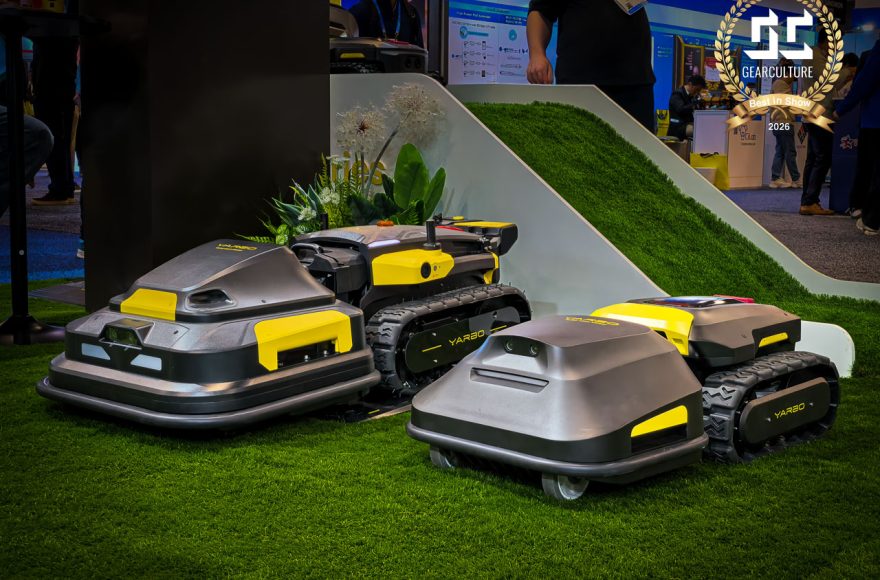
CES 2026 did not suffer from a lack of innovation. It suffered from too much of it. The show floor was packed with ambitious concepts, AI labels stretched thin, and hardware that looked impressive under lights but less convincing in daily life. Gear Culture’s Best in Show list exists to cut through that noise.
We’re late. CES wrapped weeks ago. But that delay let us filter the hype from the hardware that actually holds up under scrutiny. These ten products stood out because they solved real problems, respected design fundamentals, and showed restraint where others chased spectacle. This is not a list of trends. It is a list of gear we believe will matter after the banners come down.
1. Yarbo M Modular Robotic Platform
Category: Outdoor Robotics
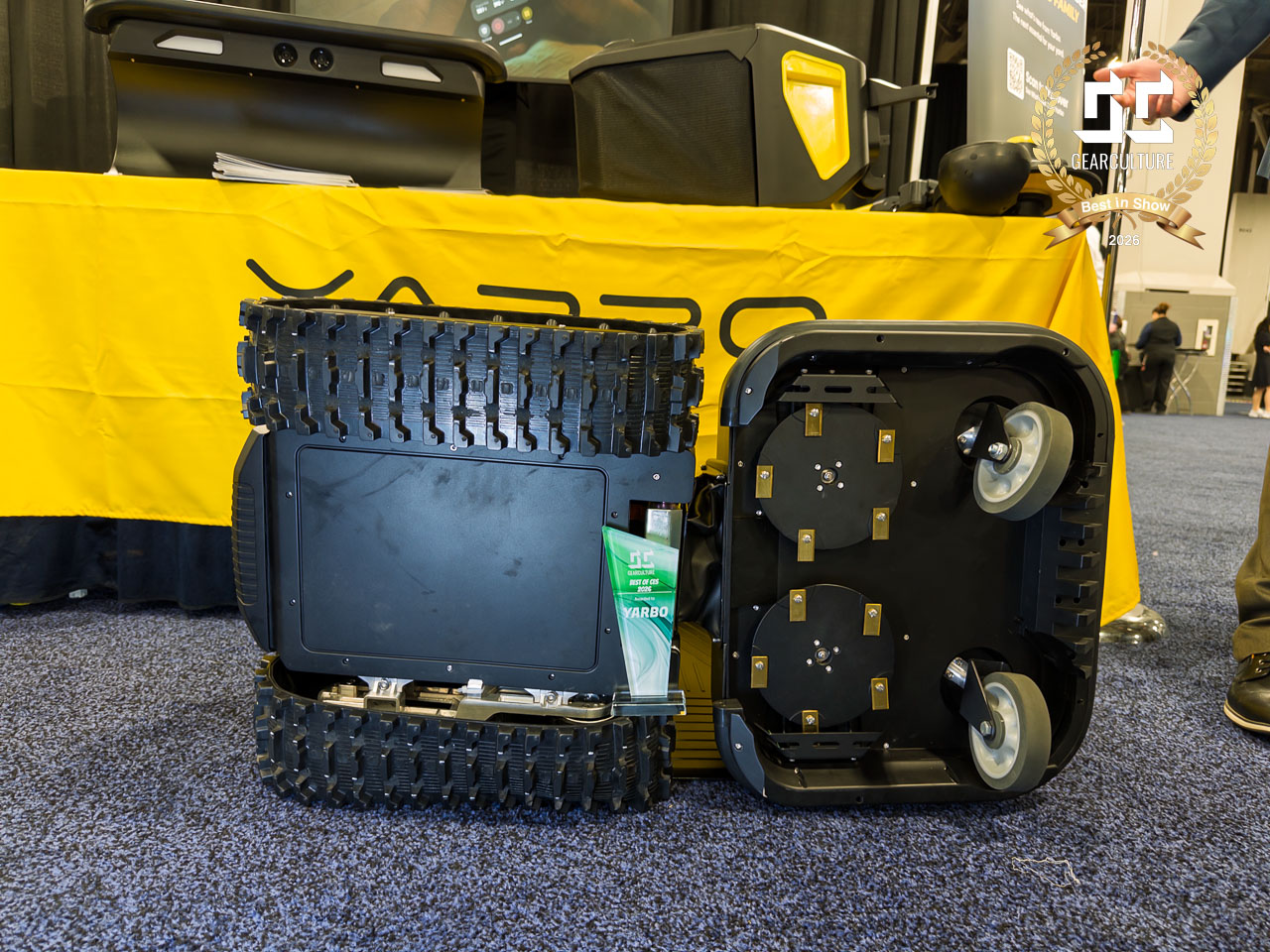
Yard equipment has become a storage problem disguised as a convenience. Most garages quietly accumulate redundancy: a mower for summer, a leaf blower for fall, a snow thrower for winter. Each machine solves one seasonal problem, then sits idle for months demanding space, maintenance, and a fresh learning curve every time conditions change.
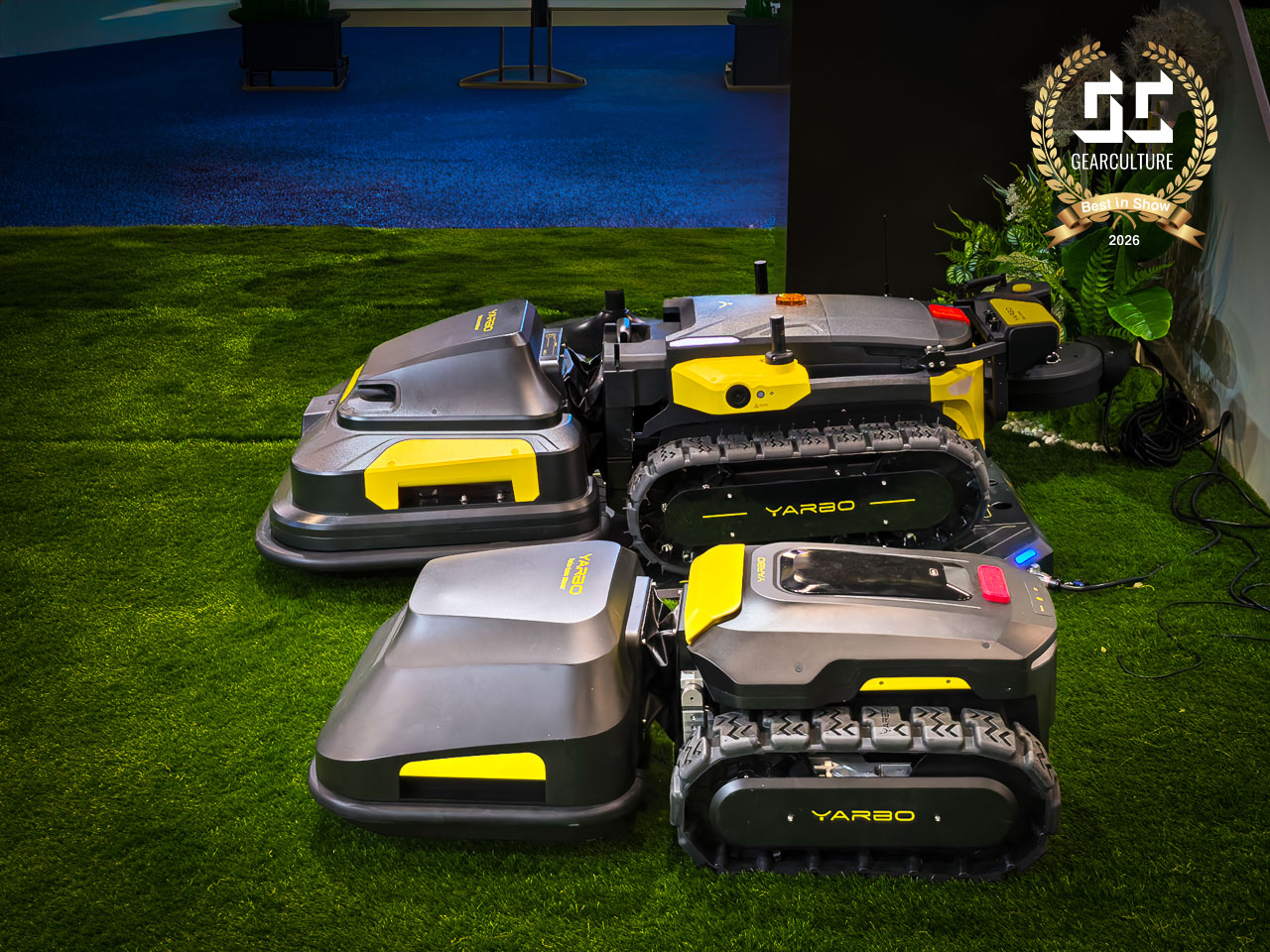
Yarbo M earns Gear Culture’s top honor because it redefines what outdoor automation can look like when it’s designed as a system rather than a single-purpose device. Instead of selling separate machines for mowing, snow removal, or yard cleanup, Yarbo built a 36V modular robotic base that adapts through attachments. One tracked chassis. Four seasonal jobs. The mowing module cuts a 15.7-inch swath. The snow plow handles a 25.6-inch blade with adjustable angle. The collector deals with leaves and debris. The trimmer manages edges autonomously.
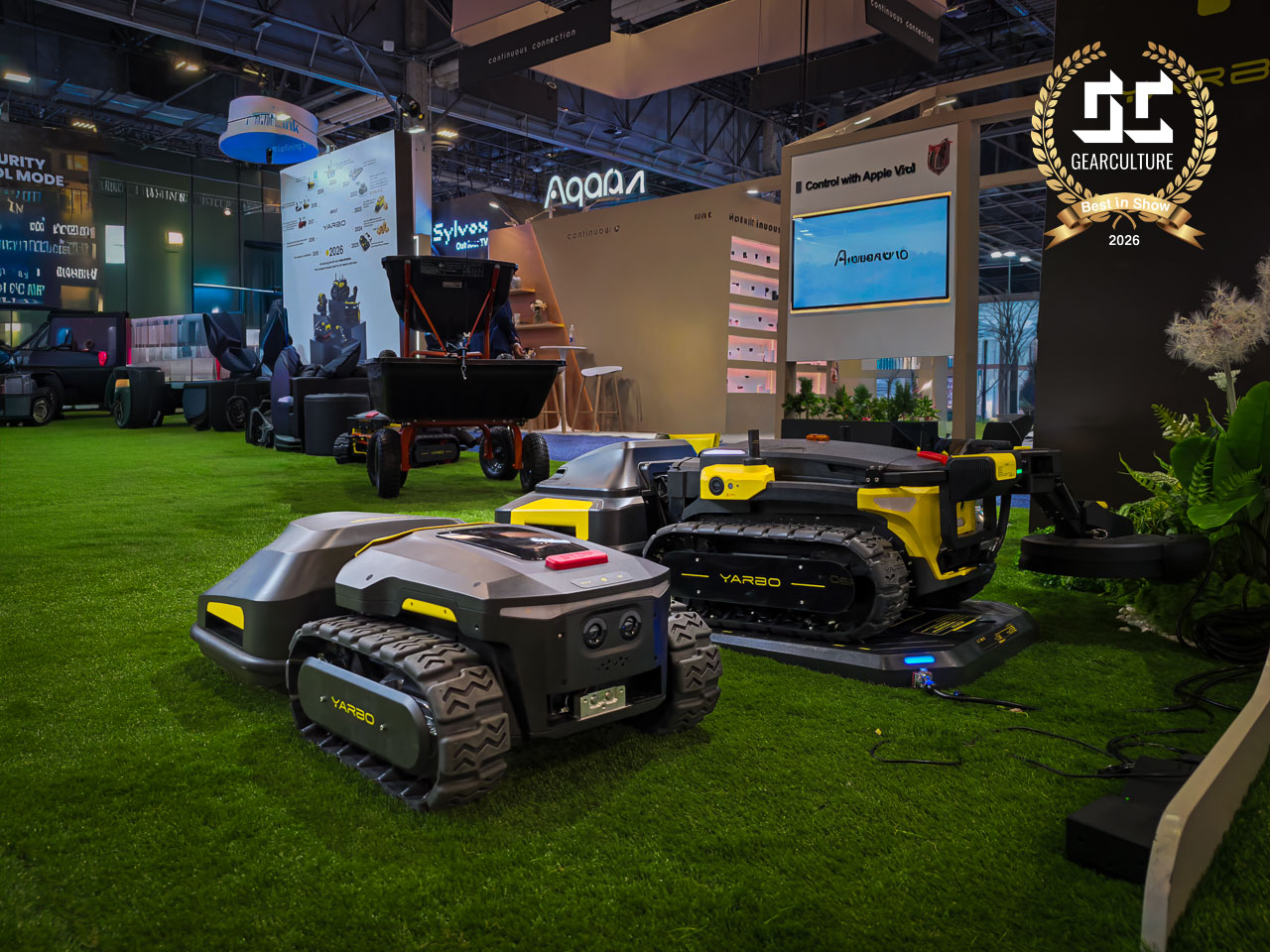
Navigation accuracy was a major differentiator at CES 2026. Yarbo combines LiDAR, cameras, and bumper sensors powered by a 6 TOPS AI chip. That combination allows it to build its own map wire-free and operate confidently across uneven properties in changing conditions. The rubber tracks handle slopes up to 70 percent. The all-wheel drive hardware is not decorative. It is functional.
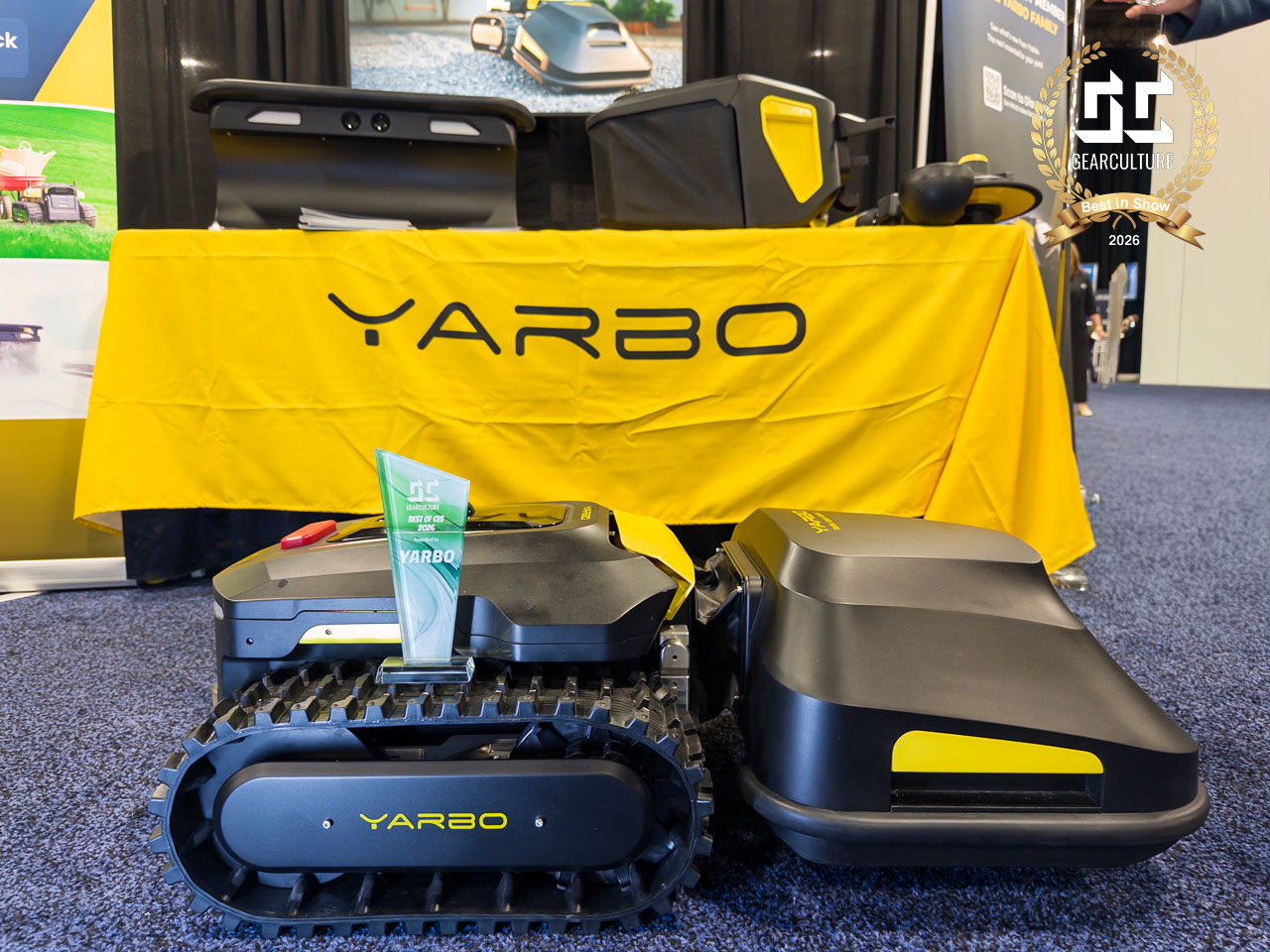
Why it earned Best in Show: Consolidation backed by real engineering. Fewer machines mean less maintenance, less storage, and fewer points of failure.
Who it’s for: Property owners who want infrastructure, not gadgets. Homeowners tired of seasonal equipment that sits idle eleven months a year.
Availability: The Yarbo M Series launches on Kickstarter in February 2026 with early-bird pricing for backers. Global pre-orders follow the campaign.
2. Lenovo ThinkBook Plus Gen 7 Auto Twist
Category: Productivity Computing
A motorized hinge that responds to context instead of waiting for user input. That’s the entire value proposition, and it’s enough.
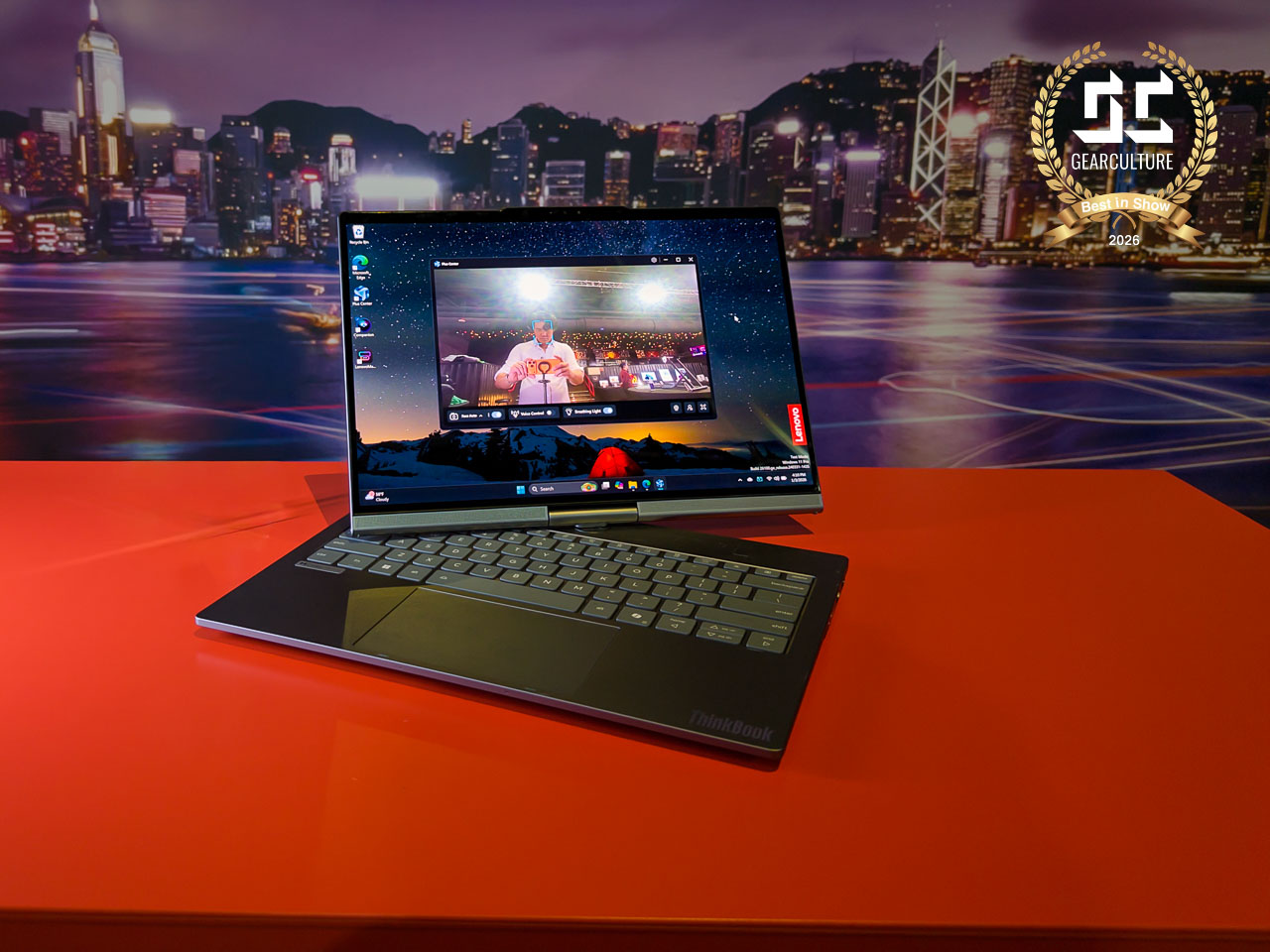
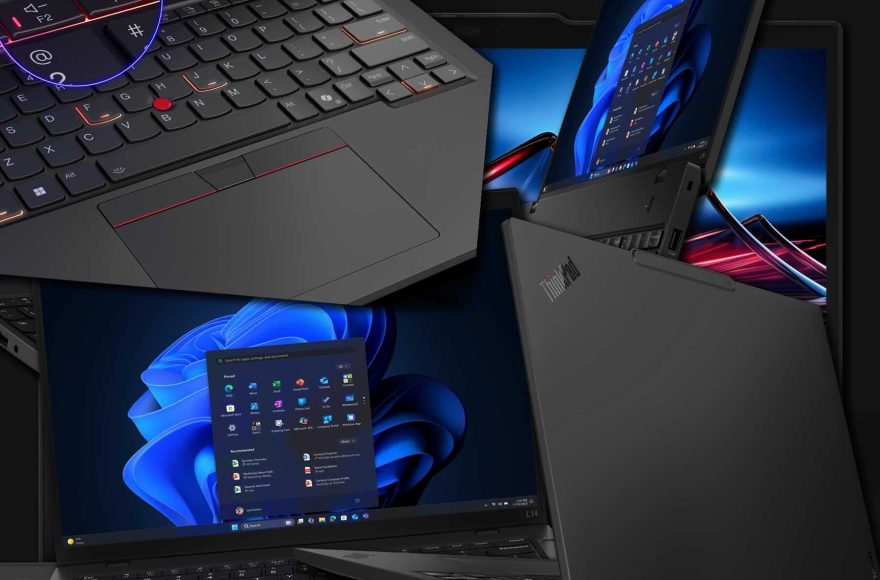
Laptop hinges have been frozen in time for decades. You adjust them manually, they stay where you put them, and the computer assumes your posture and use case never change. Lenovo’s ThinkBook Plus Gen 7 breaks that assumption. The screen rotates automatically based on how the laptop is being used, removing friction during collaboration, presentations, and shared viewing moments. No gestures. No prompts. It simply reacts. Reach for the touchscreen and the display folds into tablet orientation. Start a video call and the screen adjusts to improve camera framing. Begin a presentation and the display elevates and reorients for sharing.


What impressed most was the maturity of the mechanism. The hinge movement is deliberate, quiet, and precise. Lenovo clearly invested engineering time into making the motion feel intentional rather than flashy. Performance and thermals remain in line with expectations for a premium productivity laptop. At $1,649 arriving June 2026, this isn’t a concept. It’s shipping.
Why it earned Best in Show: A motorized hinge that responds to context instead of waiting for user input. The user no longer manages the hinge. The system does.
Who it’s for: People who move constantly between solo work and teamwork. Professionals whose laptops face outward as often as inward.
3. Lenovo Legion Pro Rollable Concept
Category: Gaming Hardware
Gaming laptops have always forced a compromise. You either buy a portable machine with a 16-inch screen that travels well, or you anchor yourself to a desk with an external monitor for real immersion.
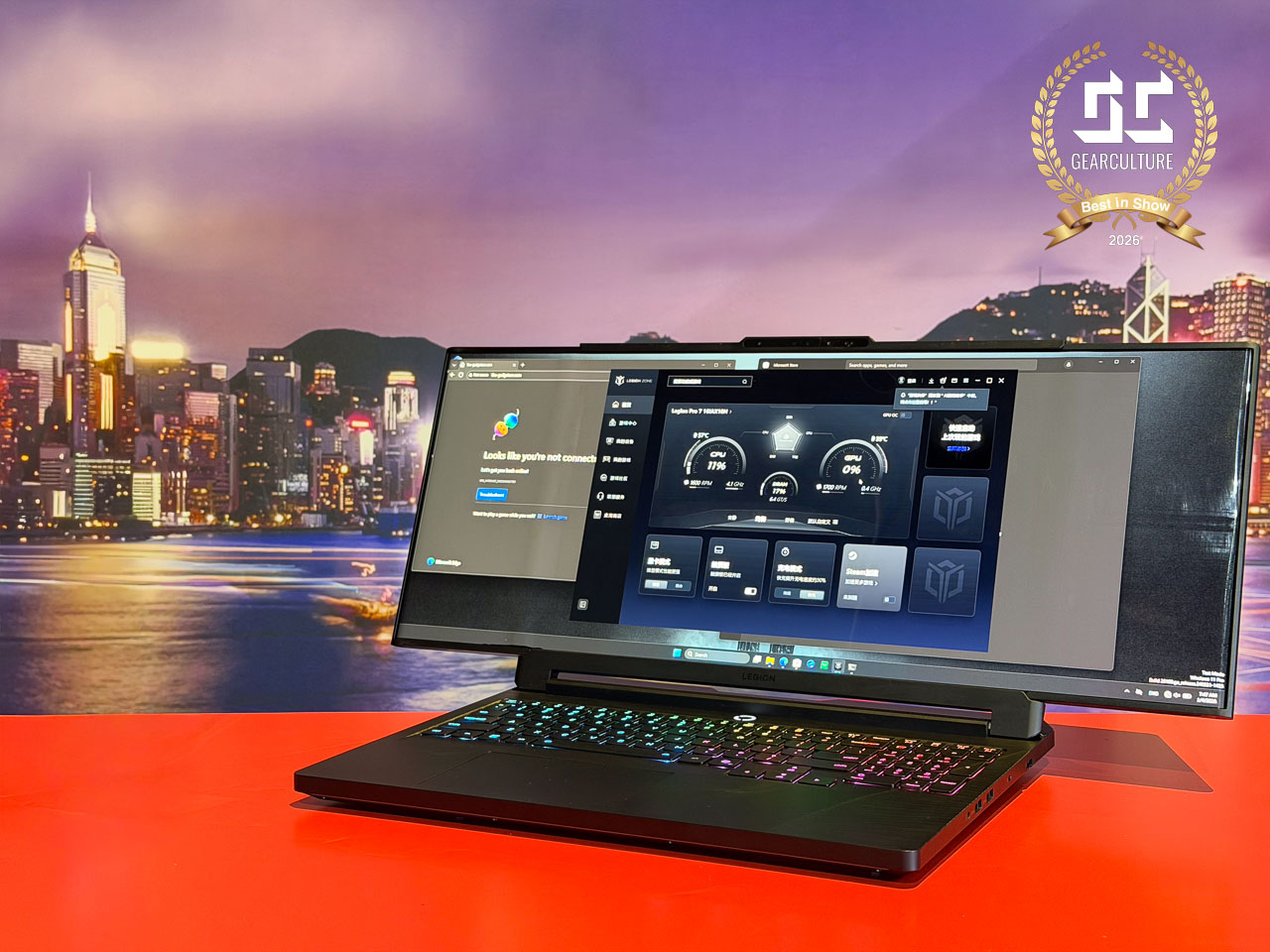
Expandable displays finally make sense in gaming, and Lenovo’s Legion Pro Rollable proves it. The screen extends horizontally to increase usable display area without compromising portability. Open it and you start with a compact 16-inch display. Trigger the mechanism and the OLED panel physically expands into a dramatically wider 24-inch surface. Lenovo demonstrated multiple aspect ratios: 16:10 for productivity, 21:9 ultrawide for cinematic gaming, and an extreme 24:9 configuration that pushes field of view into multi-monitor territory.
Unlike many rollable concepts, this one did not feel fragile or theoretical. The panel uniformity, response time, and brightness held up during demonstrations. Cooling and power delivery were clearly considered as part of the design, not afterthoughts. Full RTX-class graphics ran without downclocking regardless of screen size.


Why it earned Best in Show: A functioning rollable OLED mechanism that repeatedly expanded and retracted while driving flagship gaming performance. One machine adapts to radically different environments without accessories.
Who it’s for: Gaming enthusiasts who want ultrawide immersion on the road without hauling an external monitor.
4. Hisense 116UXS RGB Mini LED Evo
Category: Display Technology
Every TV you’ve ever owned has been lying about the color blue. Standard RGB backlighting physically cannot reproduce the cyans and teals that exist in the real world. Ocean footage looks flat. Forest canopies lose depth. You’ve never noticed because you’ve never seen the alternative.
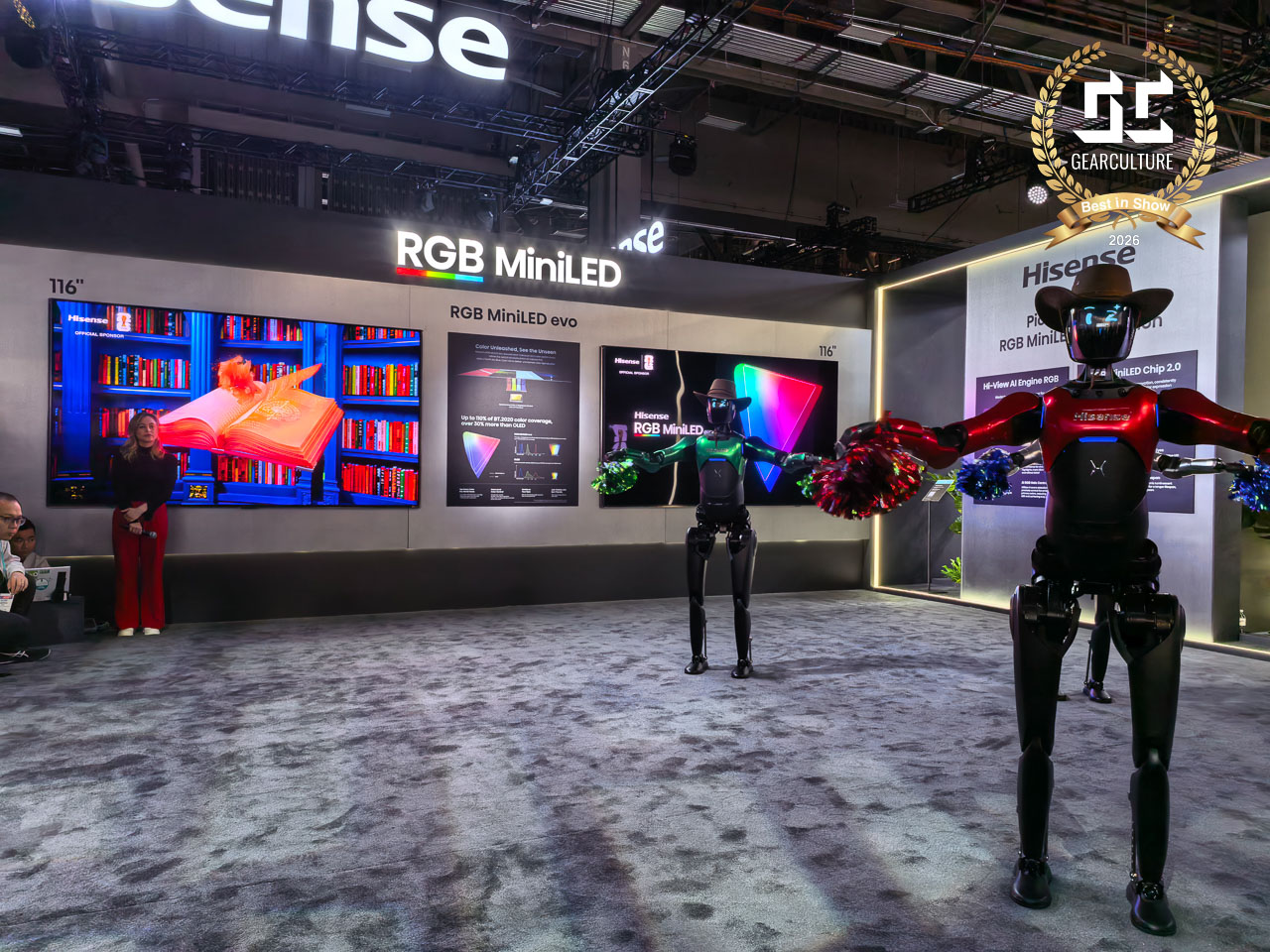
The 116UXS is the alternative. RGBC (Red, Green, Blue, Cyan) Mini LED Evo backlighting adds a dedicated cyan LED as a fourth primary, filling the color gap that’s existed since displays began. Hisense claims up to 110% of BT.2020 color coverage. The difference is immediately visible in scenes with cyan-green tones: ocean footage, forest canopies, northern lights sequences that previously looked flat now carry the depth you’d see in person.


At 116 inches, this is not a subtle announcement. But the innovation is architectural rather than aspirational. This is backlight technology, not per-pixel self-emission. The cyan primary lives in the backlight zones behind the LCD panel.
Why it earned Best in Show: It doesn’t iterate on color accuracy. It expands what color accuracy can mean. No other consumer TV at CES 2026 used a dedicated fourth-primary cyan emitter at this scale.
Who it’s for: Home theater enthusiasts and videophiles who understand why color volume matters as much as resolution. If you’ve ever wondered why your TV’s ocean footage looks flat compared to real water, this is the technology that explains the gap.
5. Beatbot AquaSense X Ecosystem
Category: Home Robotics
Pool robots have always stopped one step short of being truly automatic. They clean the water, then hand the mess back to you. Lift them out. Rinse the filter. Empty the debris. Find storage space. “Automatic” has always meant automated movement, not automated ownership.
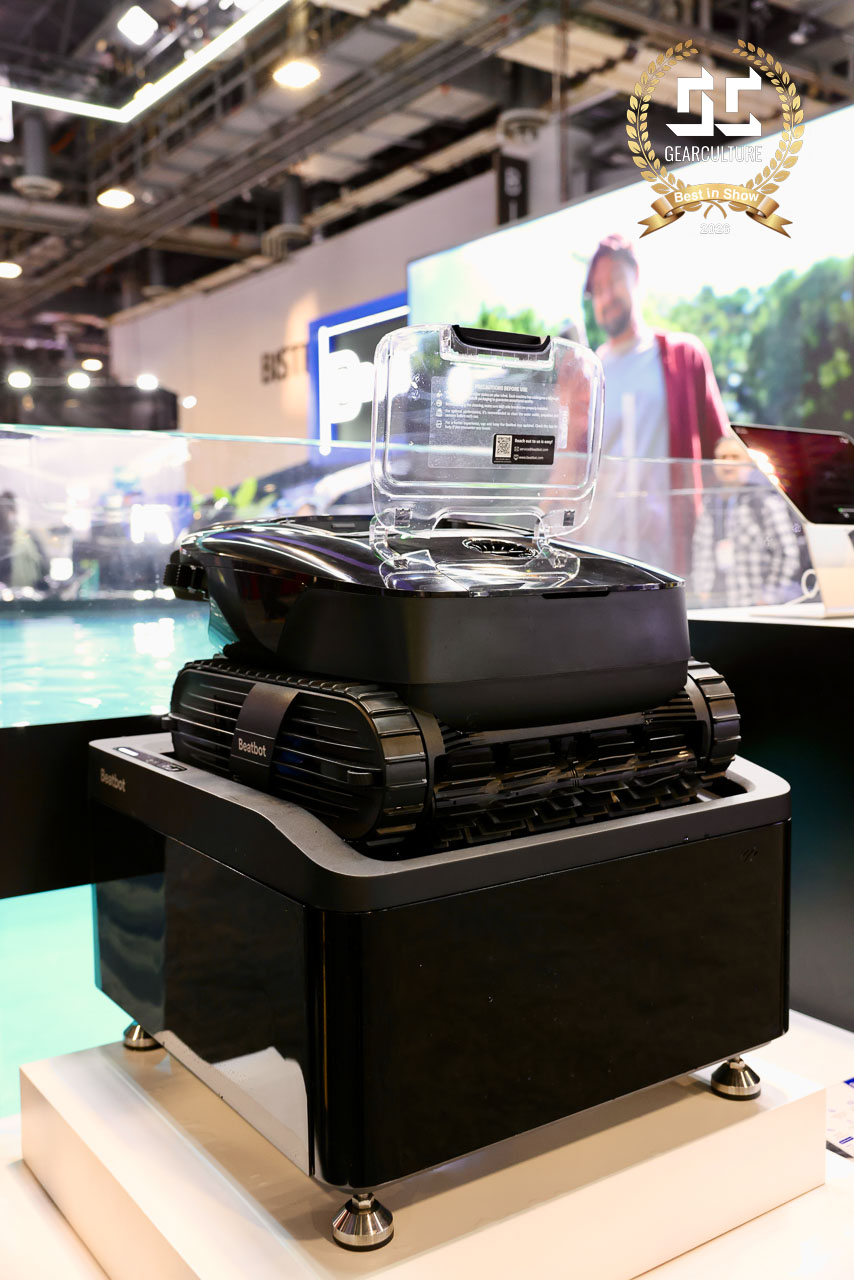
Beatbot treated pool maintenance as a design problem. The AquaSense X uses intelligent mapping, debris classification, and efficient path planning to clean pools thoroughly without redundancy. But the real story is the AstroRinse Cleaning Station. After completing a cycle, dock the robot and a high-pressure rotating backflush rinses the internal filter and evacuates debris into a sealed waste bin in roughly three minutes. Charging begins automatically. The debris container holds about 22 liters, supporting extended operation measured in weeks rather than days.
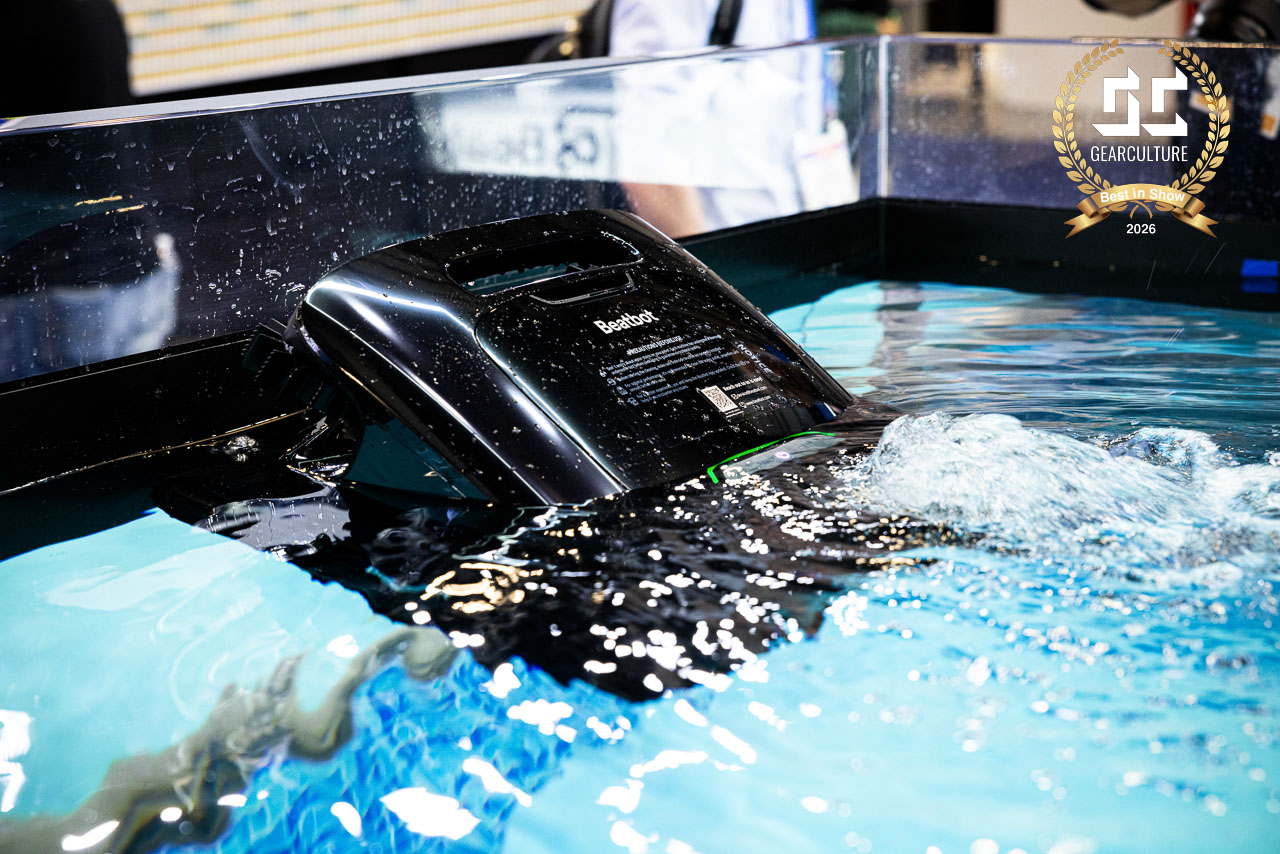
The charging dock and app interface were notably approachable. This is a robot designed for homeowners, not technicians. Dual bottom-mounted ultrasonic sensors detect steps, ledges, and shallow platforms down to 13.7 inches, allowing the system to clean complex pool geometries without exclusion zones.
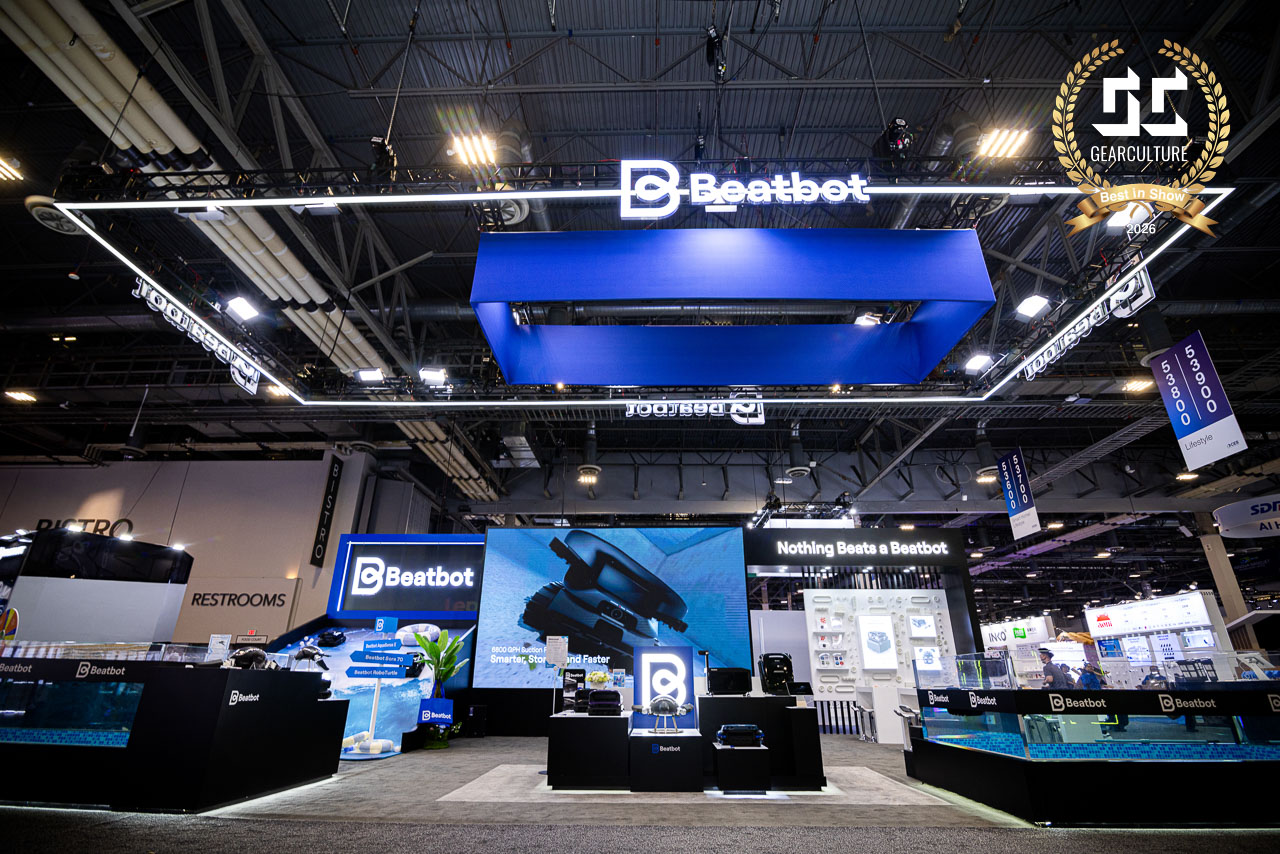
Why it earned Best in Show: The dock is not an accessory. It’s part of the product. For the first time, routine pool cleaning doesn’t end with a chore.
Who it’s for: Pool owners who want labor replacement, not just automated movement. Anyone who’s quietly avoided weekly cleaning because the post-clean ritual was annoying.
6. Even Realities G2 Smart Glasses
Category: Wearables
Picture checking a notification without reaching for your phone. Now picture doing it without anyone around you noticing. That’s the G2’s entire design philosophy.

Smart glasses have a social acceptance problem. Google Glass died because wearing it felt like a statement. Most competitors still announce themselves through bulk, balance problems, or visible tech. At just 36 grams with a magnesium alloy frame and titanium temples, the Even Realities G2 solves this by looking like beautiful, stylish glasses first. The weight matters because most smart glasses feel like equipment strapped to your face within the first hour. The G2 disappears. You forget you’re wearing anything unusual because the glasses behave like glasses.
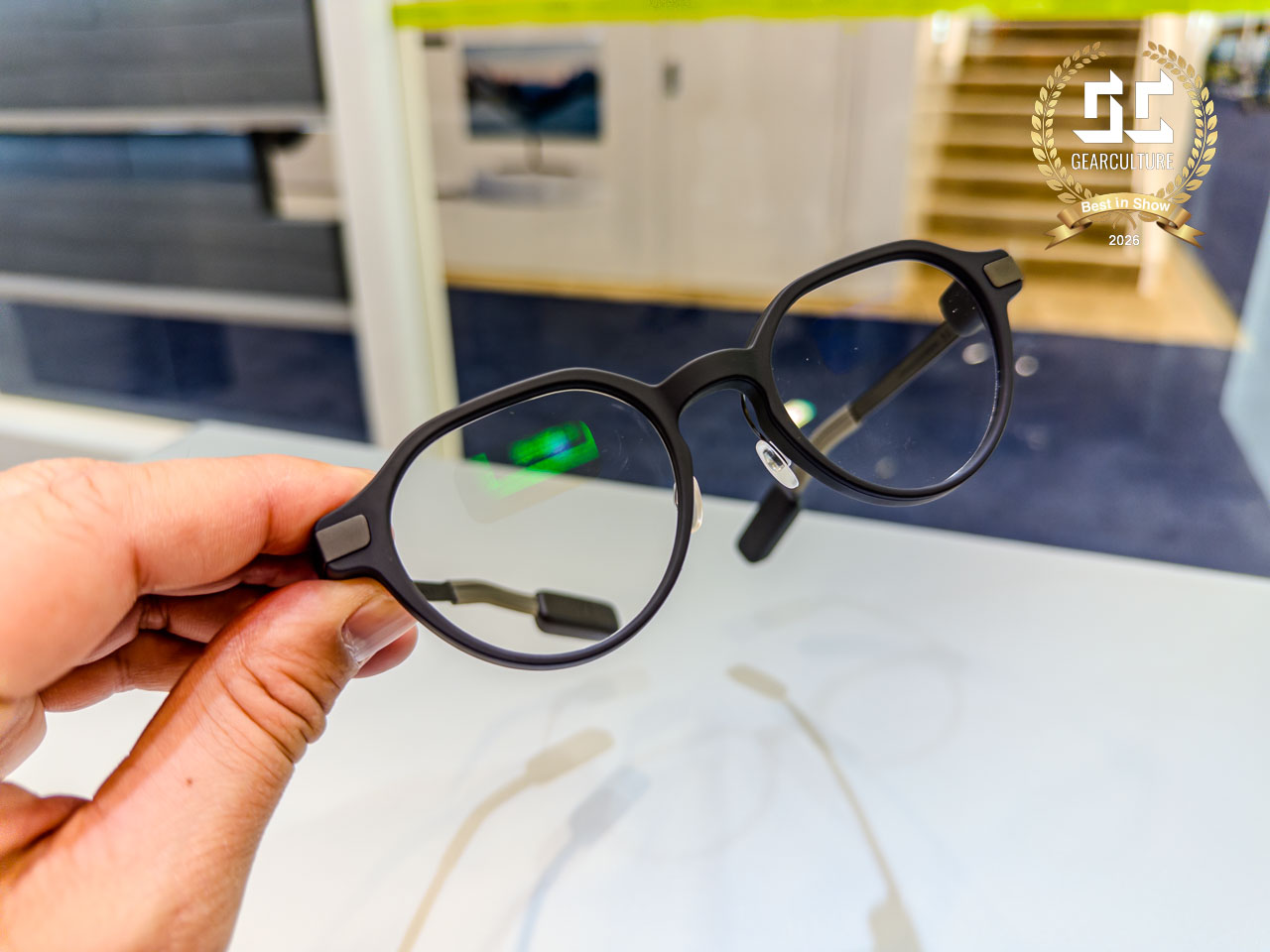
Even HAO 2.0 (Holistic Adaptive Optics) makes the projector, waveguide, and prescription lenses work together as a single tuned platform. The floating display and real world both look good at the same time. IP65 water resistance and two-day battery life make this something you can wear every day.
Why it earned Best in Show: No cameras. No speakers broadcasting to everyone nearby. Just seamless notifications, navigation prompts, and real-time translation that arrive without announcing to the world that you’re wearing a computer on your face.
Who it’s for: Professionals who need glanceable information without pulling out a phone. Anyone who values aesthetics enough to reject tech that screams “tech.”
7. Plaud NotePin S
Category: Personal Capture
Your phone can record anything. Good luck unlocking it, finding the app, and tapping record before the best part of the conversation is already over.
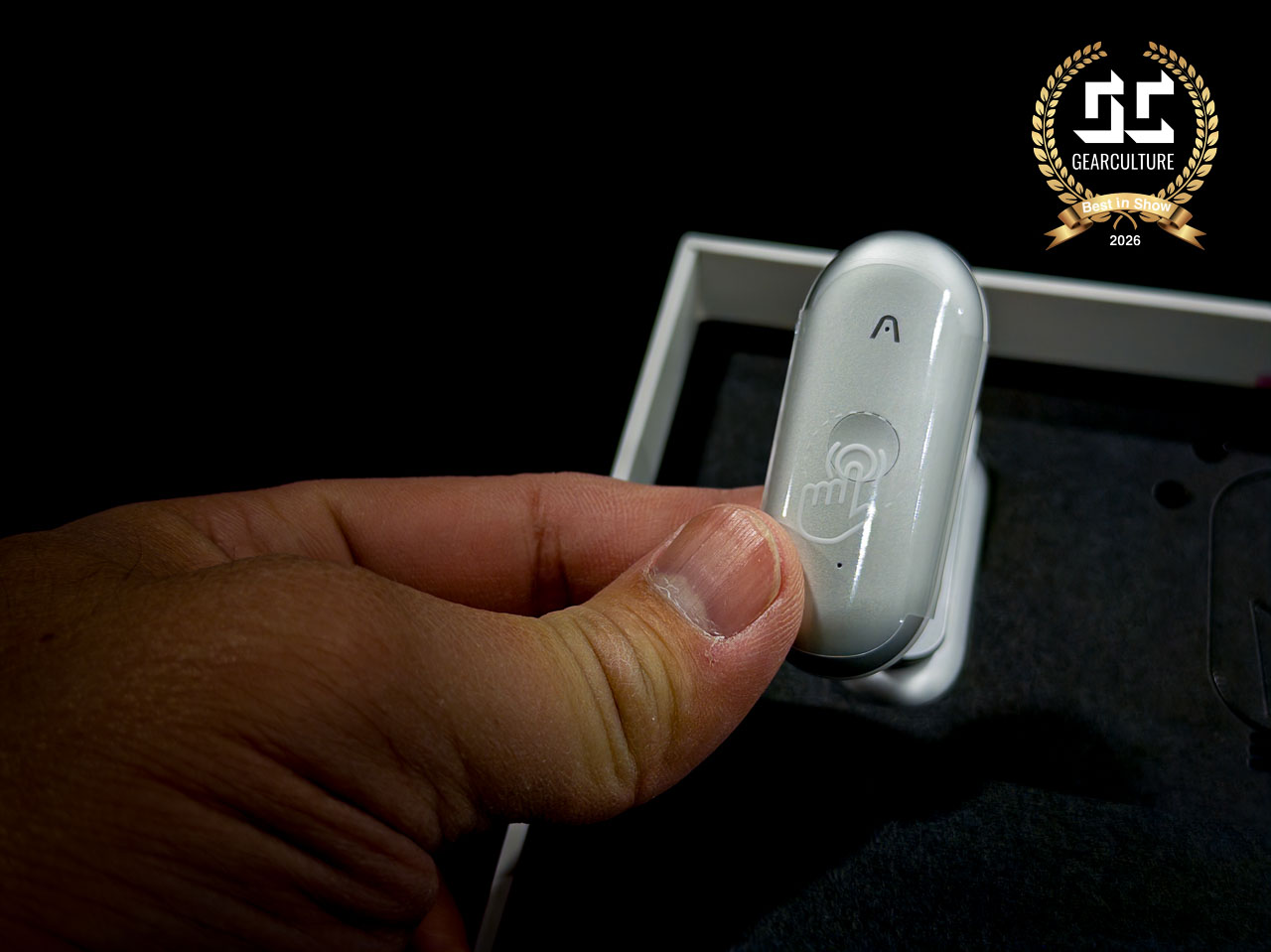
The NotePin S clips to your shirt and starts capturing with one button press. At 0.6 ounces (17g), this is the kind of device you forget you’re wearing until you need it. Dual microphones pick up audio from nearly 10 feet away. Four wearing modes (pin, wristband, lanyard, clip) fit whatever context you’re in: boardroom meetings, medical consultations, field interviews, casual conversations where you want a record without making it weird.
Press to Highlight lets you tap the device during recording to flag moments that matter. Plaud Intelligence handles transcription across 112 languages, recognizes industry jargon, and lets you search across months of recordings to find exactly what someone said and when.


Why it earned Best in Show: It removes the friction that keeps most people from recording in the first place. The cognitive load drops noticeably when you stop mentally cataloging every important point.
Who it’s for: Anyone who attends meetings, consultations, or conversations where the stakes are too high to rely on memory alone. Journalists, medical patients, legal professionals, and knowledge workers who’ve lost important details because they were too busy listening to take notes.
8. Creality SparkX i7
Category: Maker Technology
3D printing has spent years promising desktop fabrication and then burying that promise under calibration headaches, failed first layers, and forum threads written for people who already know what they’re doing.
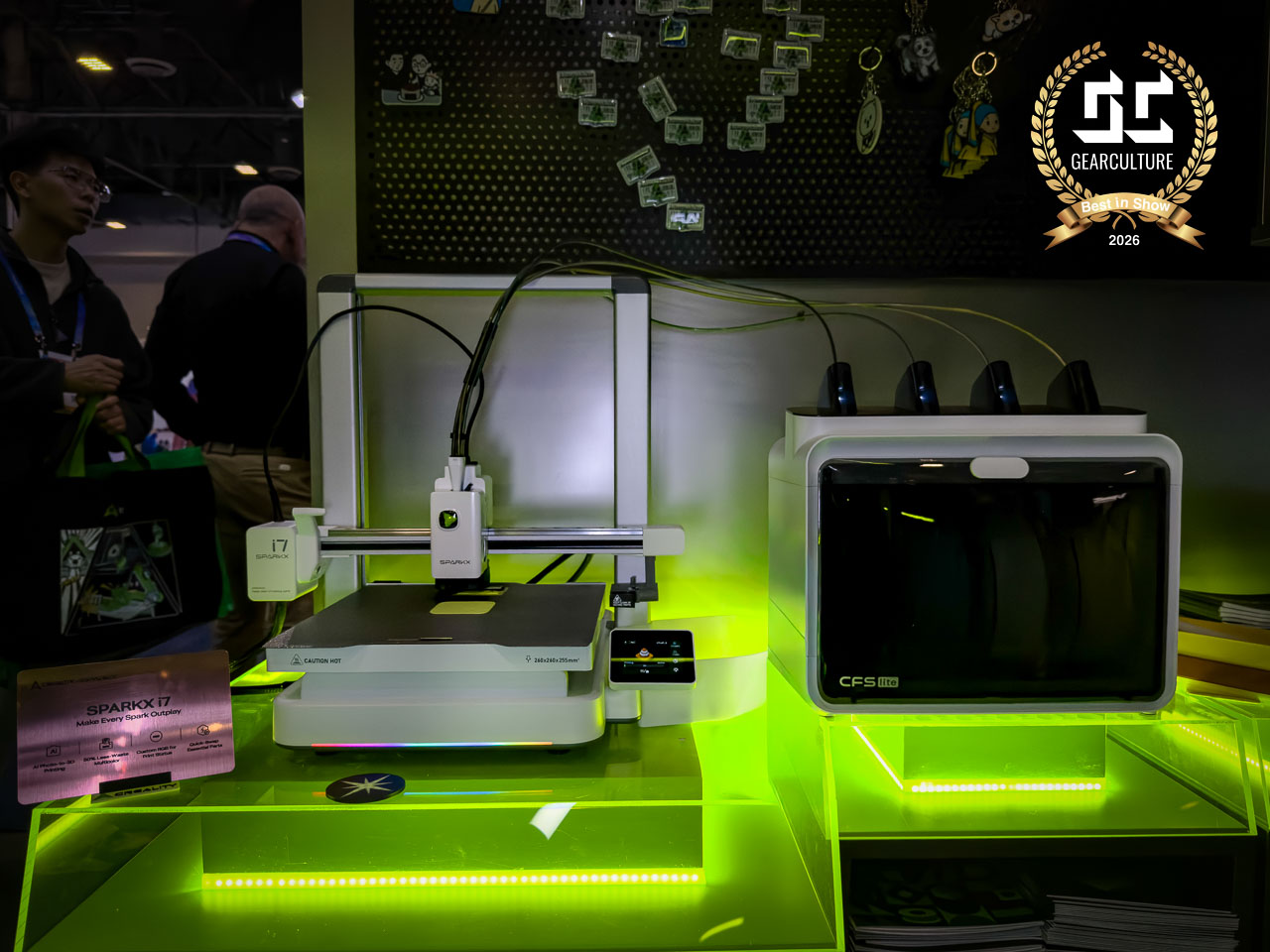
The SparkX i7 takes a different bet: the barrier to entry matters more than the spec sheet. Setup takes under ten minutes from sealed box to active motion. AI Flow Calibration and AI Build Plate Detection handle bed leveling without intervention. The touchscreen walks through each step with clear prompts, and you never need to understand what the machine is doing to benefit from it working correctly.
The numbers still impress: 500mm/s print speeds (600mm/s max), 20,000mm/s² acceleration, and a 260×260×255mm build volume. The hardened steel nozzle rated to 300°C supports PLA, PETG, TPU, and PLA-CF. But specs don’t explain why this printer earned a trophy. The experience does. Successful early prints feel routine rather than surprising.
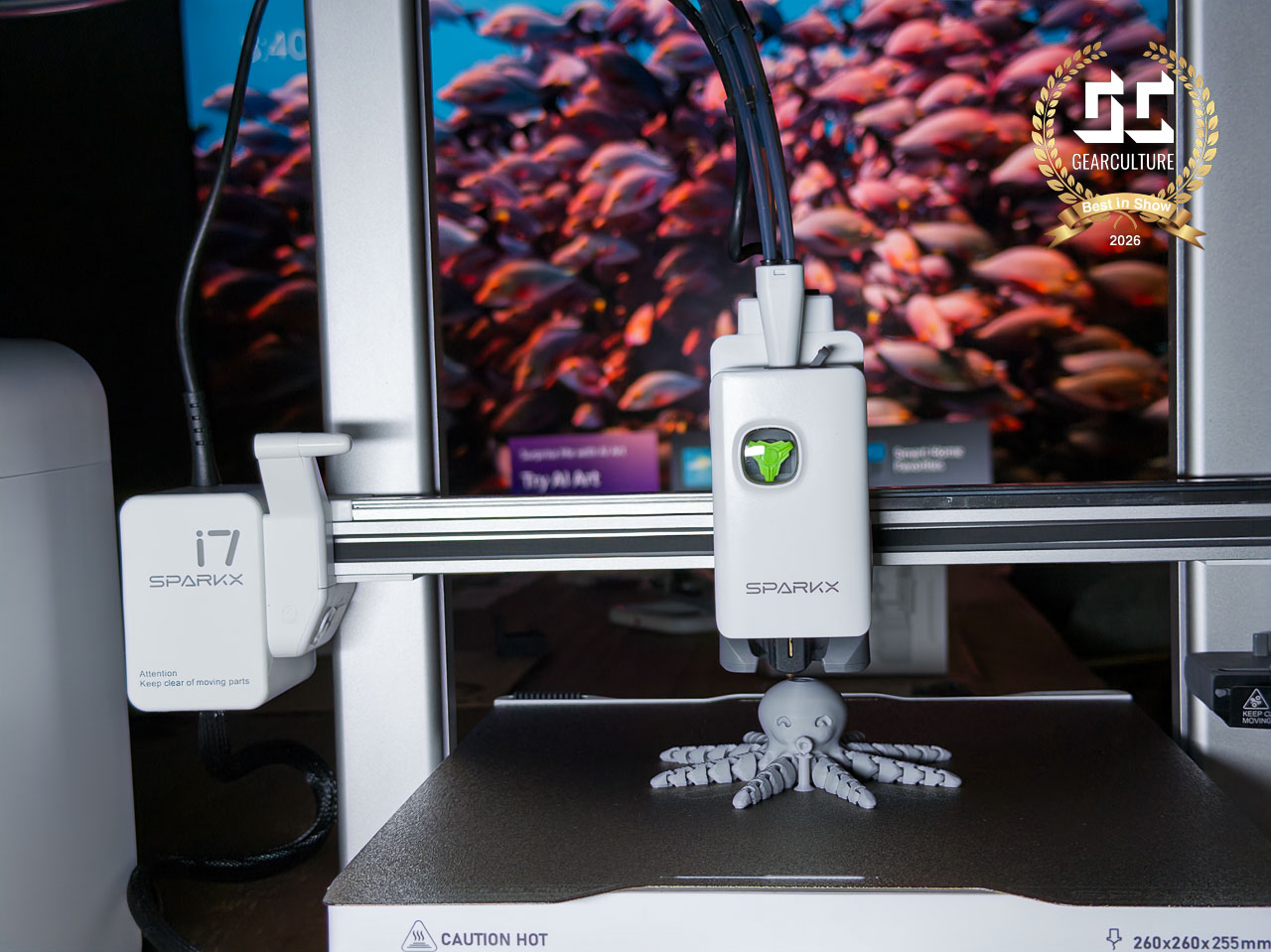
Why it earned Best in Show: At $339 early bird ($399 launch), Creality brought prosumer speeds and automation to an entry-level price. Printing becomes a casual activity rather than a technical project.
Who it’s for: Anyone who wanted to try 3D printing but never followed through because the learning curve felt too steep. Schools, makerspaces, and hobbyists who need reliable output without becoming calibration experts first.
9. Pongbot Pace S Pro
Category: Sports Training Technology
Tennis ball machines have operated on the same assumption for decades: fire balls at fixed intervals and let the player adjust. The problem is that real tennis doesn’t work that way. Recovery time varies shot to shot. Footwork demands change based on where the previous ball landed. The disconnect between mechanical repetition and actual match play has defined ball machine training since the technology existed.
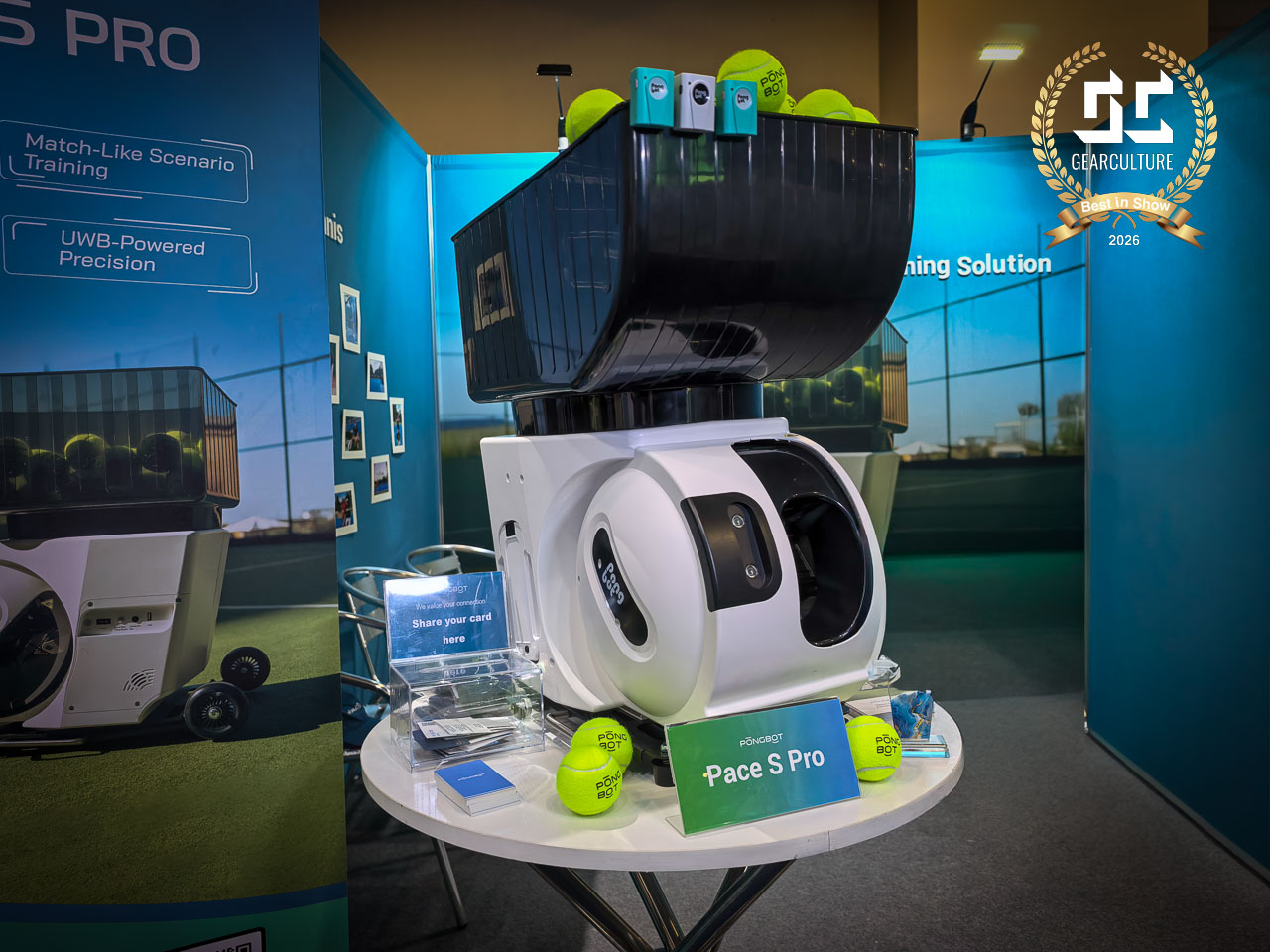
Pongbot built the Pace S Pro around a different premise: the machine should respond to the player, not the other way around. The system uses ultra-wideband tracking at 100Hz sampling with sub-10cm accuracy to monitor player position in real time. Three smart trackers worn by the player feed movement data continuously. The machine knows where you are, how quickly you moved to get there, and when you’ve settled into a ready position.
That positioning intelligence powers what Pongbot calls Recovery Trigger technology. Instead of firing on a preset timer, the system waits until recovery is complete before launching the next ball. The distinction sounds incremental until you realize it fundamentally changes how solo practice sessions feel. Traditional machines force players into a sprint-hit-sprint cycle that bears little resemblance to actual rallies. The Pace S Pro adapts to the player rather than demanding the player adapt to fixed intervals.
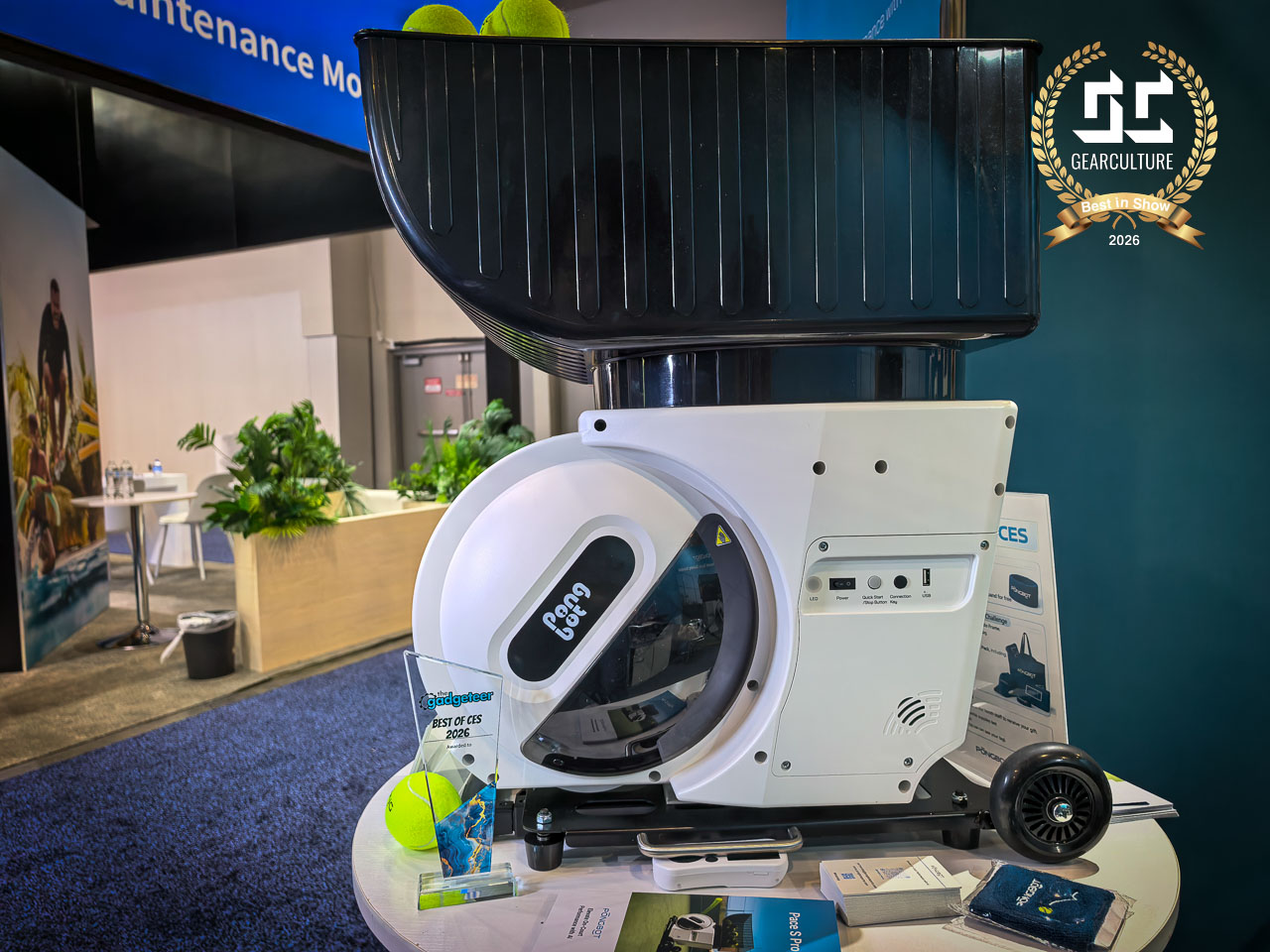
Performance specs reach professional training territory: 80 mph ball speed, 60 rotations per second spin, and 1.5-second spin switching that Pongbot claims is the fastest on the market. The 150-ball hopper and 8-plus hour battery life support extended outdoor sessions. AI algorithms trained on over 100,000 real matches shape the adaptive features and 564 preset drills.
Why it earned Best in Show: The first tennis training machine to use UWB tracking for adaptive ball delivery. Pongbot didn’t just improve specs. They questioned whether ball machines should operate on fixed timing at all.
Who it’s for: Serious recreational players who practice multiple times weekly and want that solo time to count. Coaches who need programmable drills without manually feeding balls. Anyone who’s struggled to find consistent hitting partners and wants training that feels closer to actual match play.
Final Takeaway
CES 2026 was not about louder technology. It was about better execution.
Three patterns emerged from the products that earned recognition:
Modularity over excess. Yarbo’s single platform replaces four seasonal machines. Lenovo’s rollable screen adapts to context instead of forcing users into fixed form factors. The best hardware no longer demands you commit to a single configuration.
AI receding into infrastructure. The most impressive AI implementations were the ones you didn’t notice. Navigation systems that just work. Calibration that happens without prompts. Intelligence that supports rather than announces itself.
Hardware solving physical problems. Motorized hinges. Self-docking pool robots. Tracked yard platforms that handle real terrain. The products that stood out did so by removing friction from physical tasks, not by adding features to software.
Gear Culture’s Best in Show reflects that shift. These ten products matter because they solve problems, simplify ownership, and respect users’ time. That’s the technology worth paying attention to long after CES packs up and moves on.


1 comment
Comments are closed.