Best Dash Cams: Garmin Mini 3, Vantrue N4 Pro and Viofo A229 Pro Picks
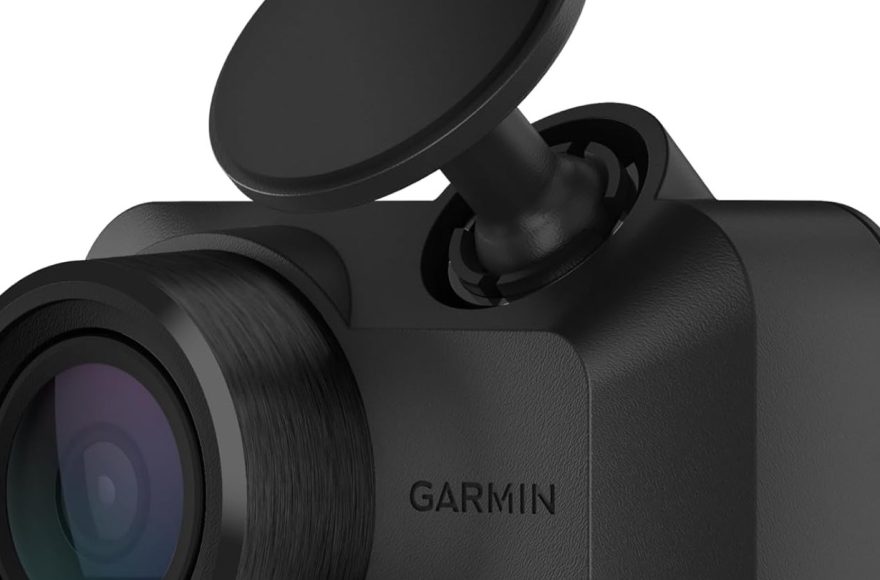
Garmin’s Dash Cam Mini 3 opens this guide at $99.99. It’s a key-sized 1080p camera with a polarizer built in. The three picks divide by coverage, not by brand loyalty or badge.
Vantrue takes the middle slot at $199.99. The N4 Pro records three channels at once and reads plates at night. Viofo closes the set at $279.99 with a 4K front and 2K rear pair.
The split between them is clean. One camera watches the road ahead and hides behind the mirror. One watches the cabin and both ends of the car from a single unit, and one runs a dedicated rear camera on a long cable for drivers who want the back window covered properly. Budgets run from $99.99 to $279.99 at today’s checked prices. Every route here sells through Amazon.
Garmin Dash Cam Mini 3: 1080p That Hides Behind the Mirror
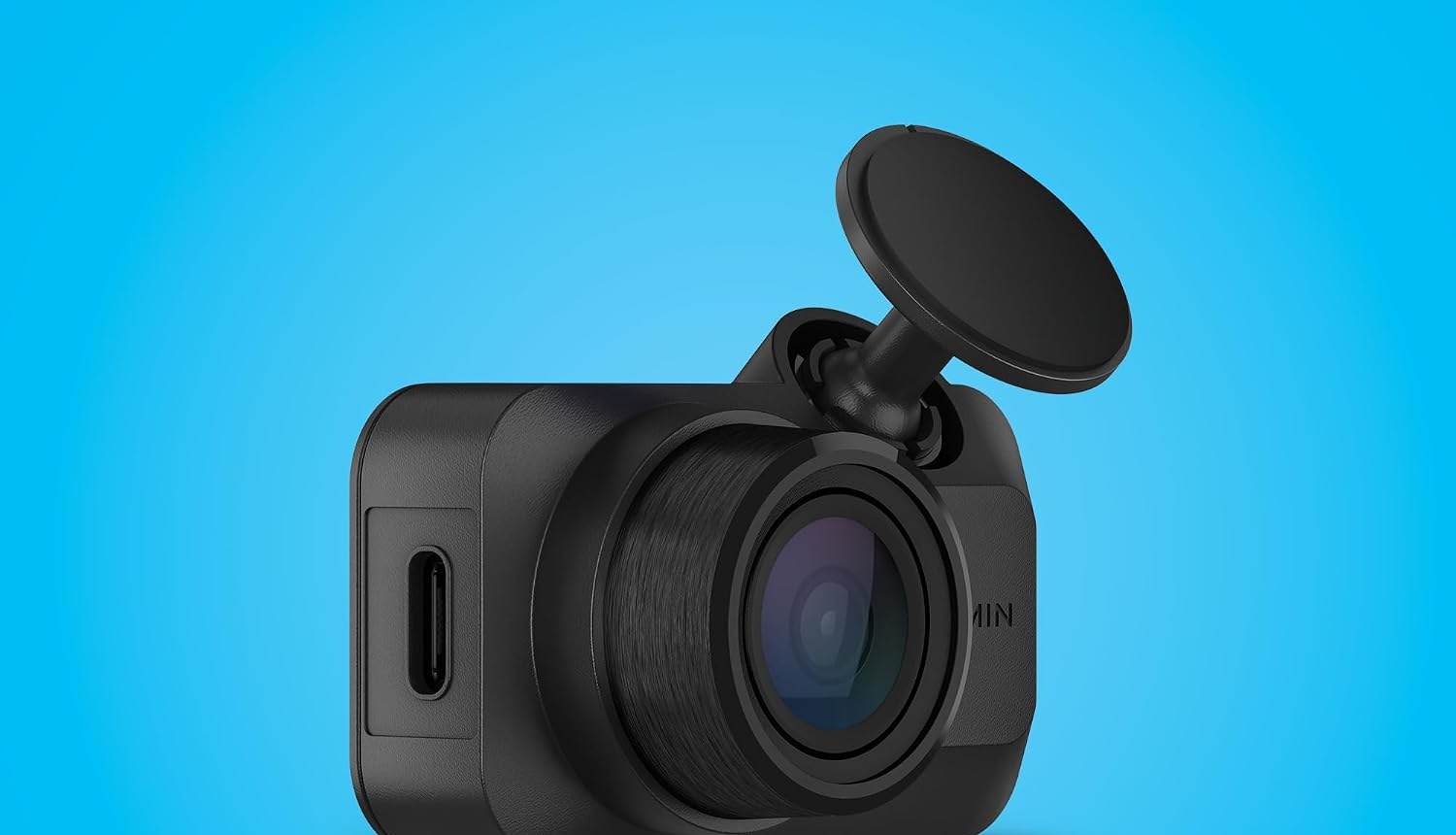
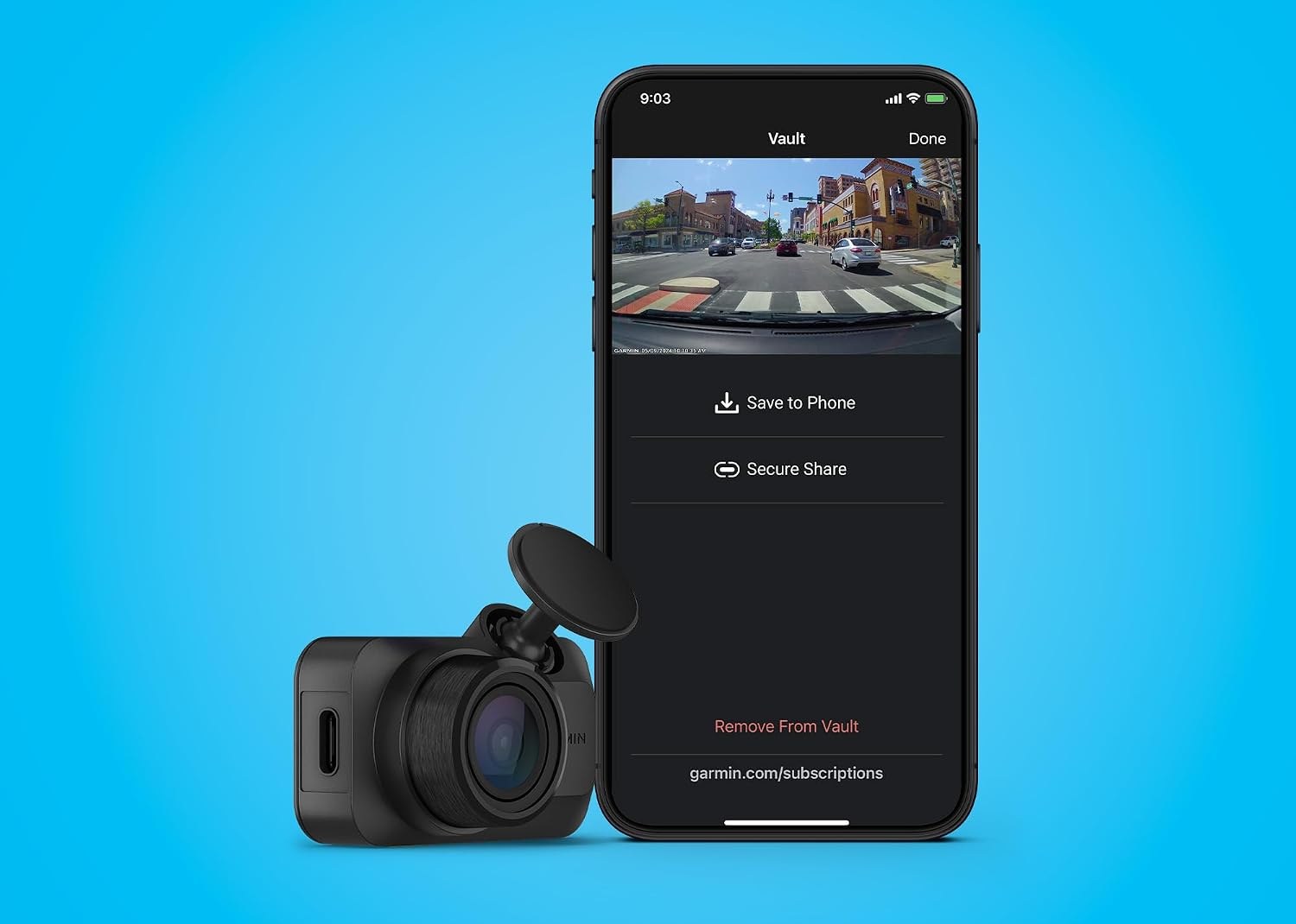
Garmin builds the Mini 3 at key size. The body measures 2 inches by 0.8 inches by 1.3 inches, and it weighs 1.1 ounces. It mounts with adhesive and stays put through summer heat.
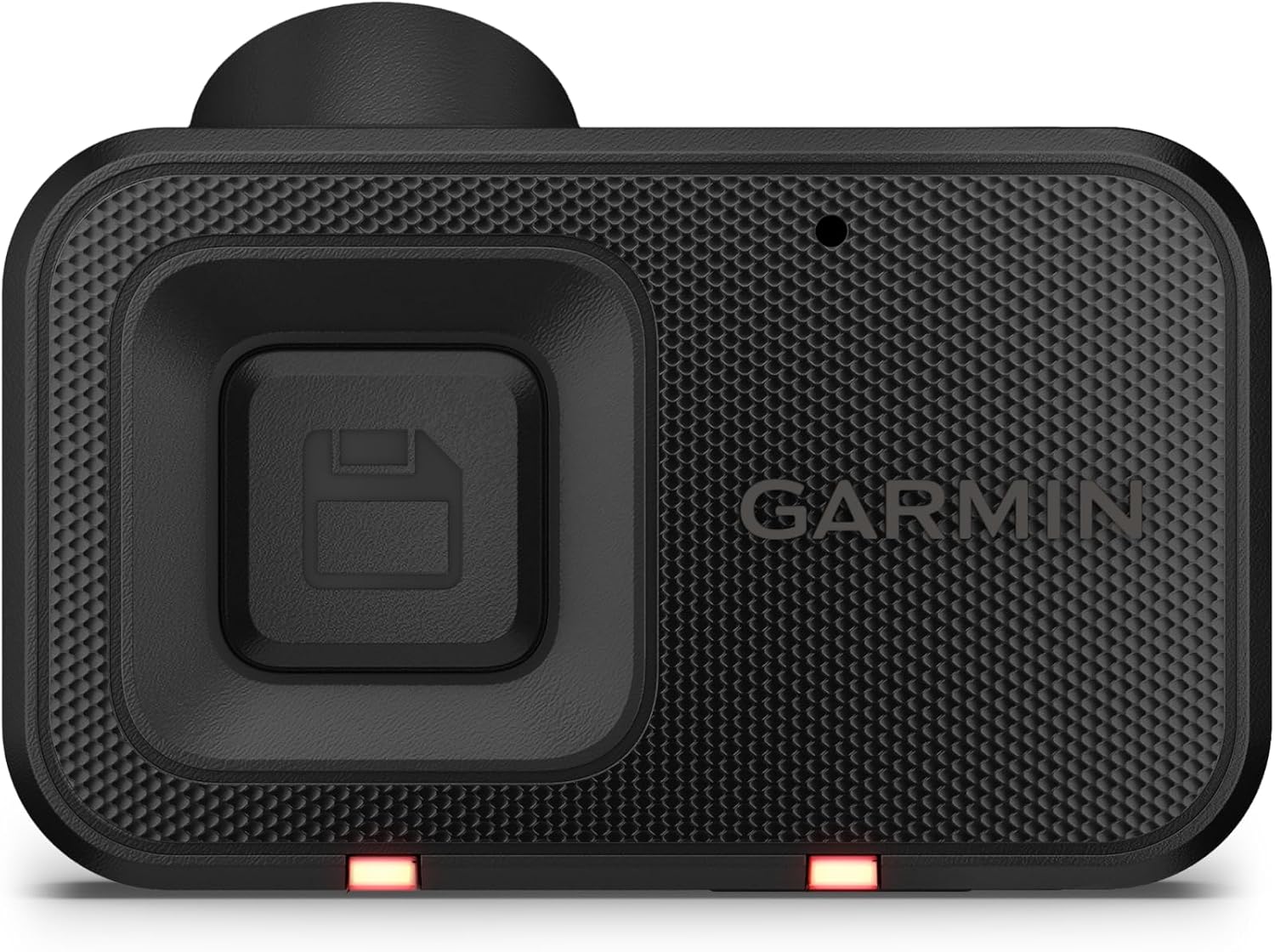
There’s no screen on the unit. Settings, live view and clip playback run through the Garmin Drive app on a paired phone, and the camera starts recording when the car powers up.
The windshield stays clean and dark. Nothing glows at the driver after dark, and that’s the point of the design for night commuters.
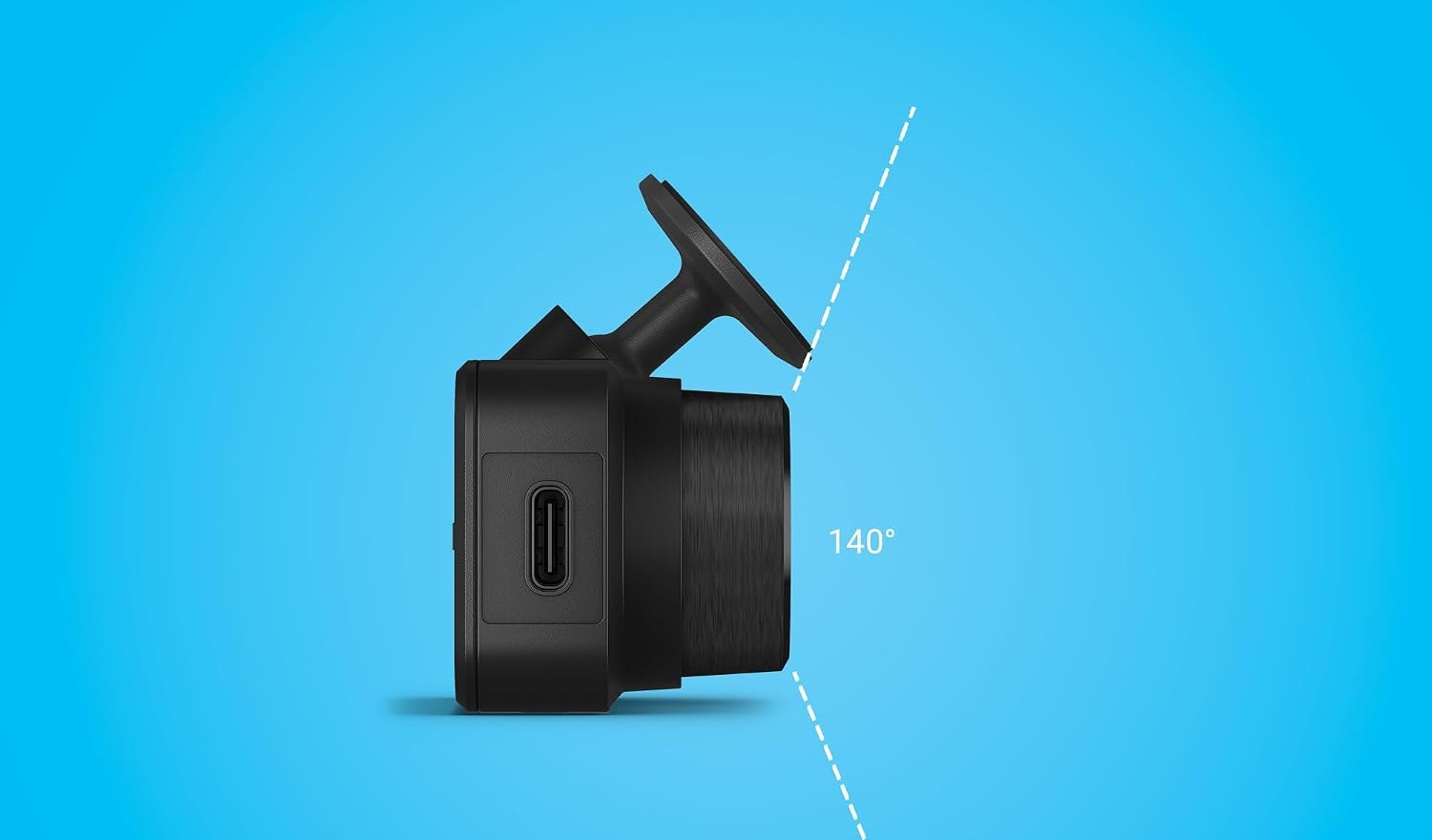
Video records in 1080p HD through a 140-degree field of view, and Garmin’s Clarity HDR optics handle the bright and dark ends of a frame together. A built-in Clarity polarizer sits over the lens. It cuts windshield glare before the light reaches the sensor, and that’s where daytime plates usually wash out.
Voice control carries the daily work, since spoken commands save a clip or start and stop audio recording in six languages while both hands stay on the wheel. Detected incidents save automatically with the date and time stamped on the footage.
The box carries the camera, a low-profile adhesive mount, a vehicle power cable and a dual-USB power adapter. A microSD card is required for recording. The box doesn’t include one, so the card belongs in the same order. Documentation rides in the box as well, and the power cable is long enough to tuck along the headliner in most cars.
The tradeoffs are structural. The Mini 3 has no built-in GPS, so location and speed data arrive when the camera syncs with a GPS-enabled Garmin dash cam that a household already runs. The online Vault, live view and parking guard features sit behind a paid Vault subscription. That subscription also needs Wi-Fi and constant power before the connected features wake up in the app.
- 1080p HD video, 140-degree field of view, Clarity HDR optics
- Built-in Clarity polarizer cuts windshield glare
- Voice control, automatic incident save, no screen
- Key-sized at 1.1 oz, adhesive mount, Garmin Drive app
Vantrue N4 Pro: Three Channels, One Windshield Unit
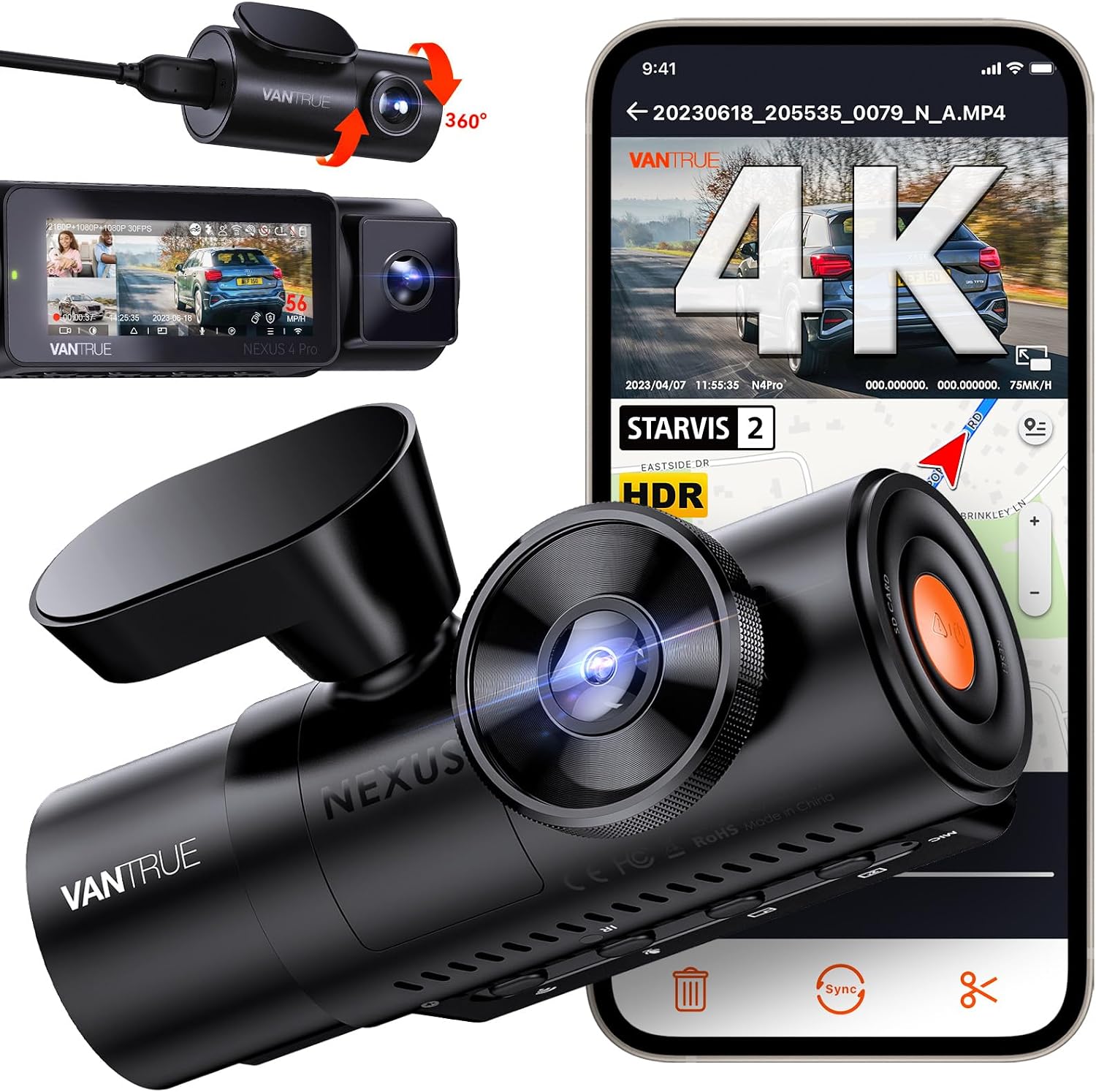
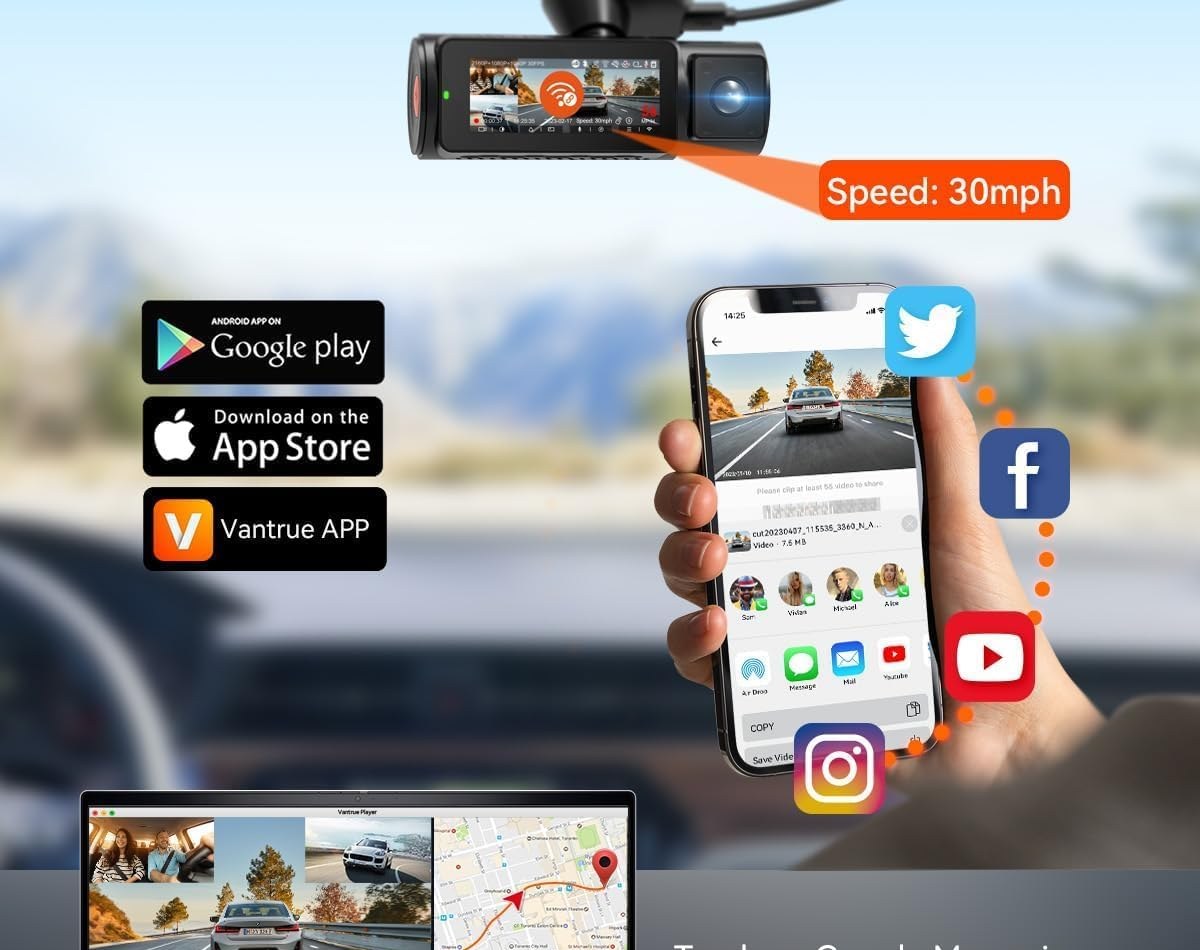
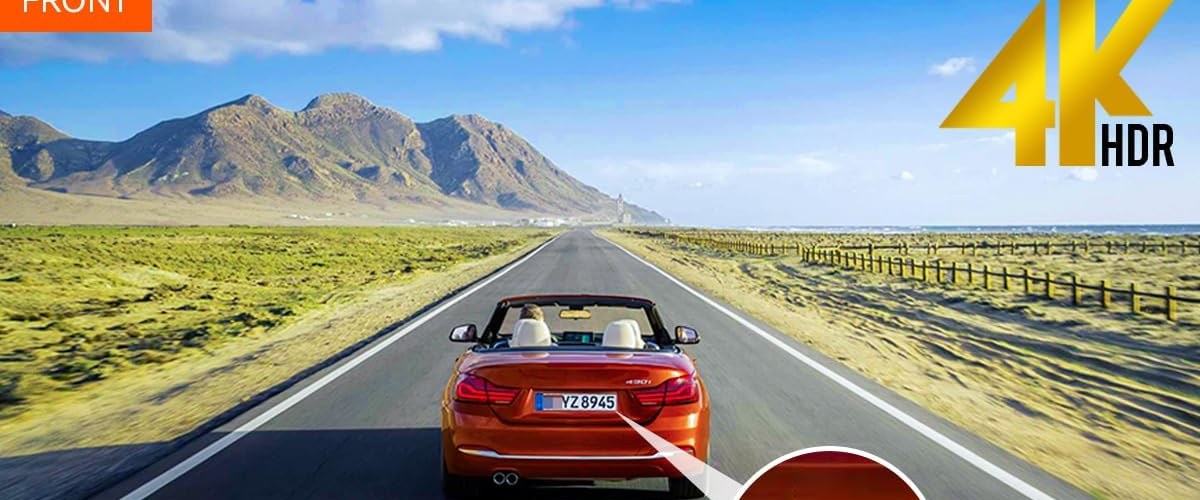
Vantrue records the road, the cabin and the rear window from one windshield unit. The front camera holds a true 4K resolution in single, dual and triple channel modes alike, and the three channels run at 4K plus 1080P plus 1080P. One unit watches every direction at once.
The front sensor is Sony’s STARVIS 2 IMX678. Vantrue pairs it with PlatePix processing and 4K HDR for plate capture after dark.
The cabin camera shoots through an F1.8 aperture with four infrared LEDs, so passenger footage stays readable in a dark interior on a night run. The rear camera rotates a full 360 degrees on its mount. It can watch the road behind, or it can turn toward the trunk in an SUV or a pickup.
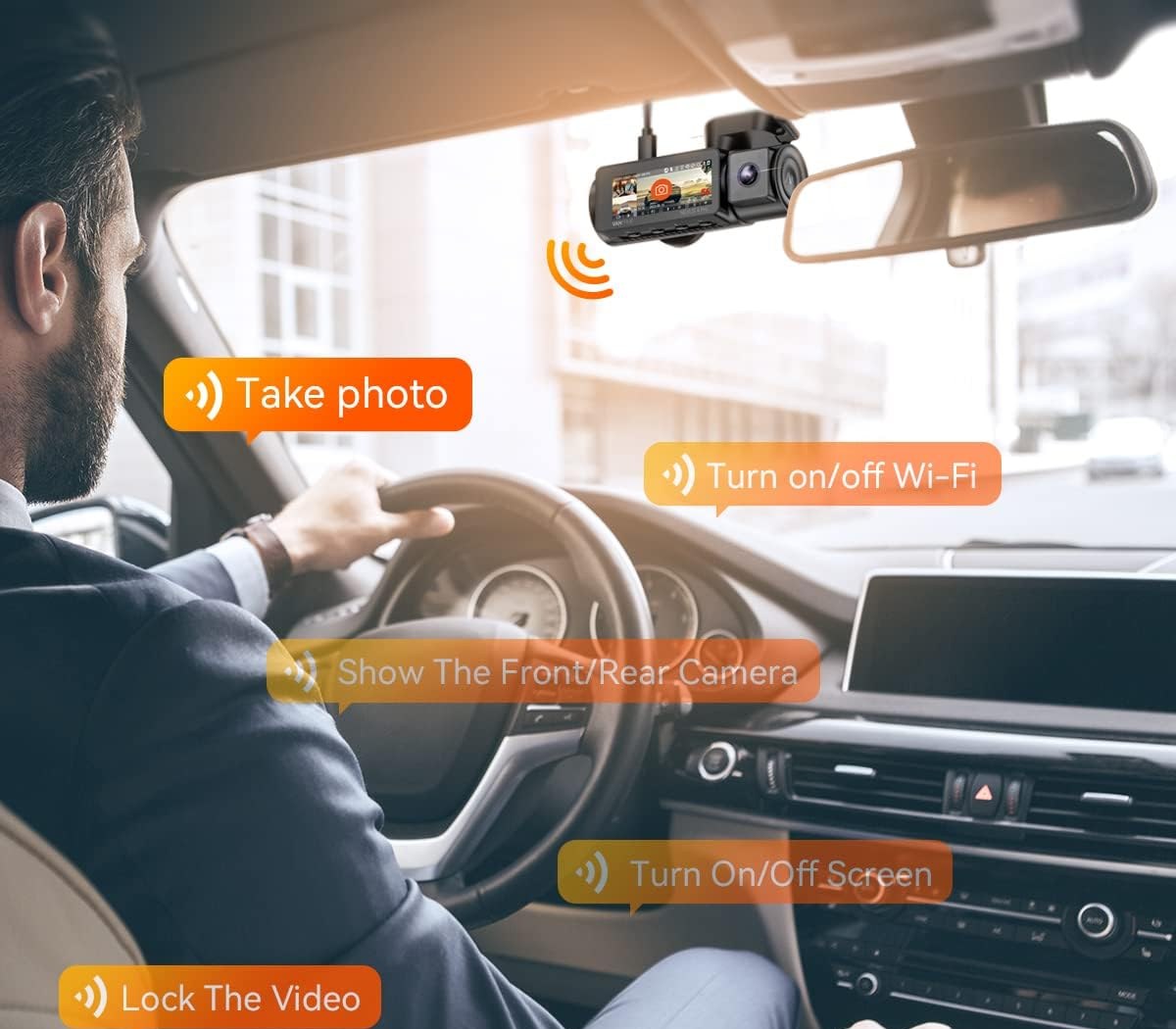
Daily handling runs through a 3.19-inch screen on the body, and 5GHz Wi-Fi moves clips to the Vantrue app without a card reader in the loop. The GPS mount logs route and speed. Firmware updates arrive over the air, voice control handles the common commands, and card support runs to 512GB on microSD. A supercapacitor stands in for a battery in summer heat, and that’s the right call for a windshield that bakes at noon.
Parking coverage is the catch in this design. The buffered motion detection mode needs a hardwire kit that Vantrue sells separately, and the buffered mode saves the seconds around a detected event rather than a blank start. The box is generous otherwise, with the rear camera on a 20-foot cable, a car charger, a trim tool and both sticker types included. Vantrue covers the unit with an 18-month warranty after registration.
- Three channels at 4K+1080P+1080P, STARVIS 2 IMX678 front
- PlatePix and 4K HDR for night plate capture
- Cabin camera with 4 IR LEDs, rear camera rotates 360 degrees
- 5GHz Wi-Fi, GPS mount, 3.19-inch screen, 512GB card support
VIOFO A229 Pro: 4K Ahead, 2K Behind, HDR on Both
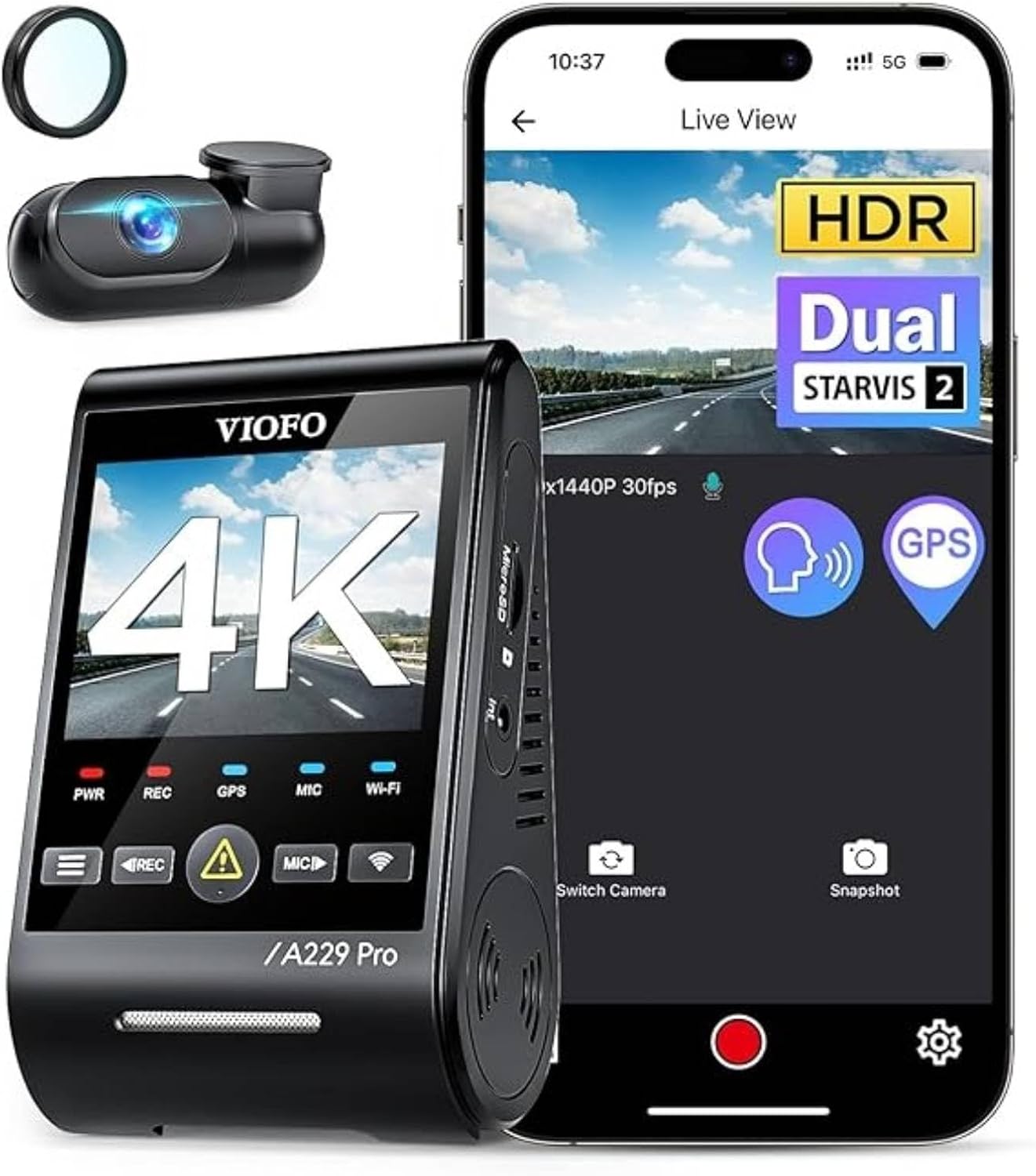
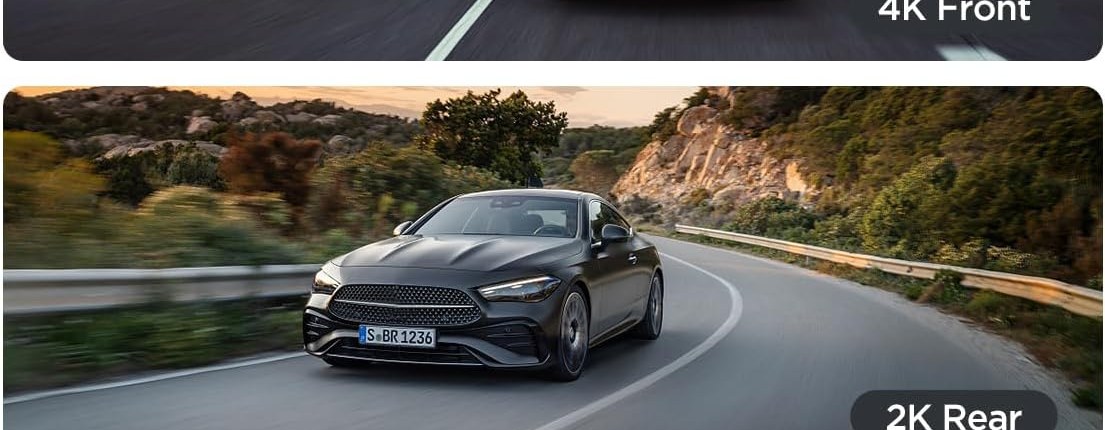
VIOFO splits the work across two cameras. The front unit records 4K, and the rear unit records 2K through the glass behind the cabin. A 6-meter cable joins the pair, and the rear camera mounts on the back glass with its own bracket.
The front sensor is Sony’s STARVIS 2 IMX678 at 8 megapixels, and the rear sensor is the STARVIS 2 IMX675 at 5 megapixels on the maker spec sheet. Both channels record at 30 frames per second with HDR running. Night plates get attention at both ends of the car, and that’s the gap most two-channel sets leave open at the rear.
Lenses run wide without bending the frame apart. The front glass covers 140 degrees at F1.8, and the rear glass covers 160 degrees at F1.9.
A CPL-200 polarizing filter rides in the box for the front camera, while the rear filter is a separate purchase. The front unit measures 2.3 by 3.9 by 1.8 inches. The rear camera is a small pod on its own mount.
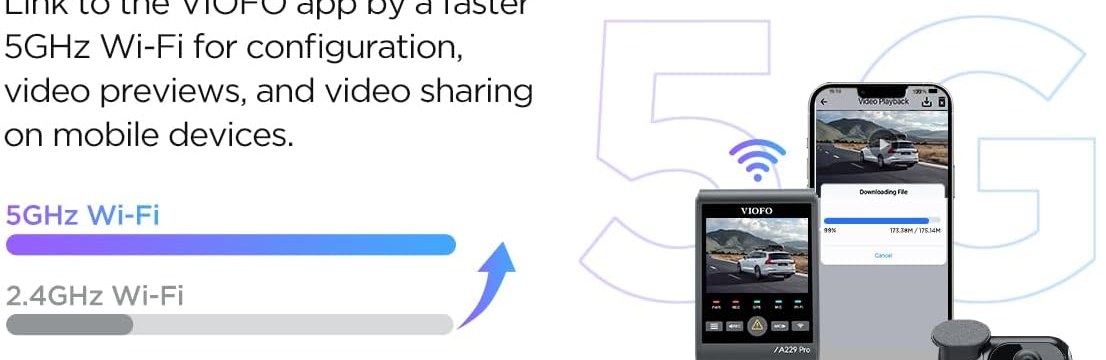
Control runs through a 2.4-inch screen, twelve voice commands and voice notifications that call out setting changes and card problems while the drive continues. The GPS module reads four satellite systems for location and speed stamps. Wi-Fi runs at 5GHz in the VIOFO app, and card support tops out at 512GB.
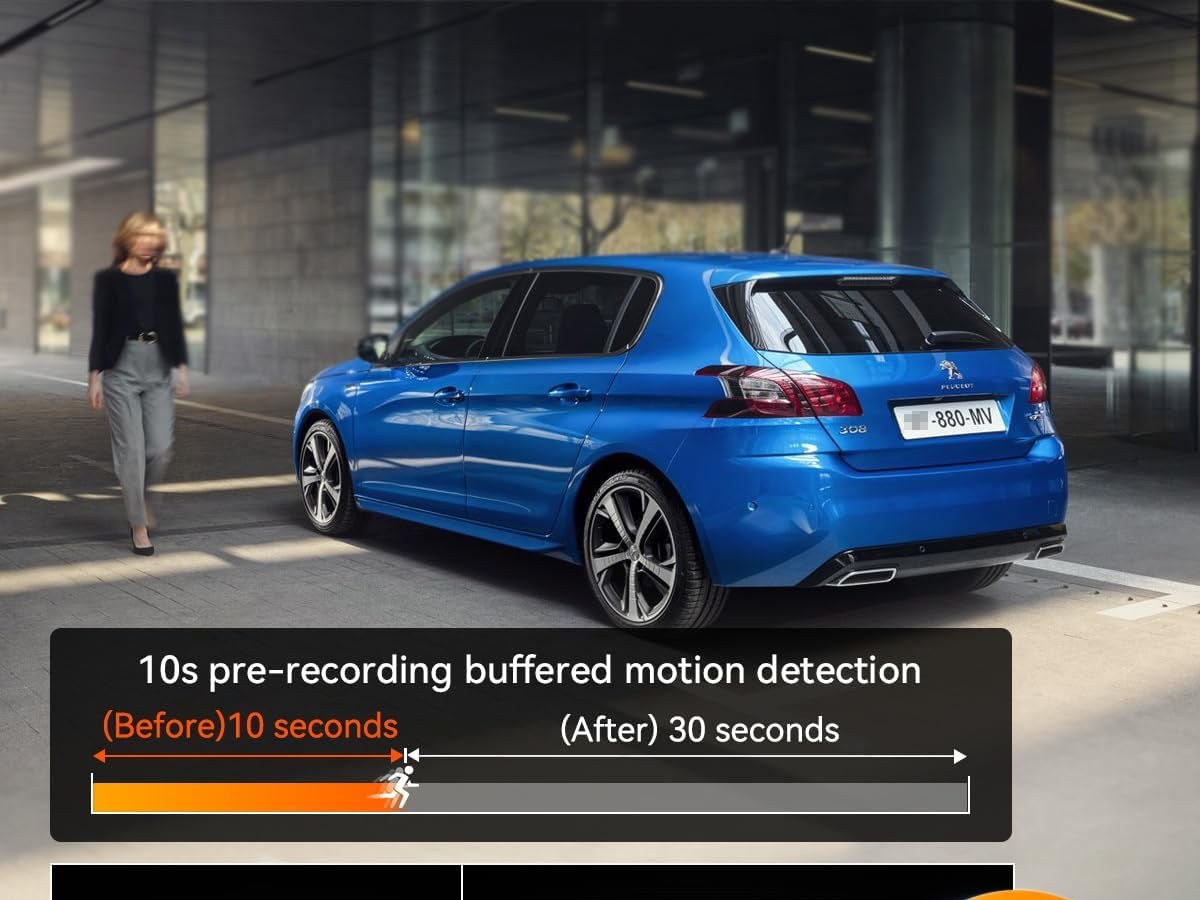
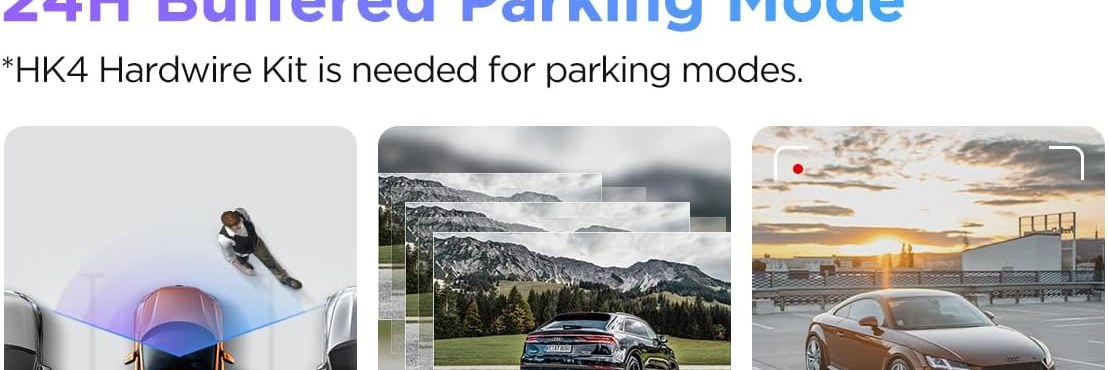
Parking mode offers three shapes. Auto event detection buffers a window around each event, low bitrate recording stretches the card, and time lapse trades frames for days of coverage in a different way. The buffered mode stores 15 seconds before an event and 30 seconds after it. Full parking coverage needs the HK4 hardwire kit, sold separately. Buyers who run front and rear cameras as a permanent install get the deepest spec sheet here.
- 4K front IMX678 and 2K rear IMX675, STARVIS 2 on both
- HDR on front and rear, CPL-200 filter in the box
- 5GHz Wi-Fi, quad-mode GPS, 12 voice commands
- Three parking modes, 512GB card support, 2.4-inch screen
The Verdict: Coverage Decides This Guide
| Product | Channels and Video | Screen and GPS | Price |
|---|---|---|---|
| Garmin Dash Cam Mini 3 | 1 channel, 1080p, 140 degrees | No screen, no built-in GPS | $99.99 |
| Vantrue N4 Pro | 3 channels, 4K+1080P+1080P | 3.19-inch screen, GPS mount | $199.99 |
| VIOFO A229 Pro 2CH | 2 channels, 4K front and 2K rear | 2.4-inch screen, quad-mode GPS | $279.99 |
| Smallest install | Garmin Mini 3, 1.1 oz | App control, voice control | $99.99 |
| Cabin coverage | Vantrue N4 Pro, IR cabin camera | Rear camera rotates 360 degrees | $199.99 |
| Rear resolution | VIOFO A229 Pro, 2K rear with HDR | CPL-200 filter in the box | $279.99 |
Buy the Mini 3 if the camera has to vanish. At 1.1 ounces behind the mirror, it covers the daily commute without a screen glowing after dark.
Buy the N4 Pro if the cabin counts, since the infrared cabin camera and the rotating rear unit record the inside story that front cameras miss entirely. Buy the A229 Pro if the rear view deserves real resolution. A 2K rear channel with HDR reads plates that 1080p rear cameras smear, and that’s the difference between footage and evidence.
Skip all three if parking surveillance tops the list and a hardwire install is off the table. Every parking mode here leans on constant power from the car, and the Garmin also asks for a subscription before its connected features wake up.
Those costs sit outside the sticker prices. They belong in the budget from the start, and they don’t show up in the Kits.
Prices were checked live on Amazon today. The stickers read $99.99, $199.99 and $279.99 in guide order.
None of the three listings carried a verified single-offer discount at the check. The guide prints the plain prices. It skips the save lines, and it prints the subscription and hardwire costs in the open where they belong.


