Nanoleaf Shapes Hexagons vs Philips Hue Play Gradient Lightstrip: Wall Art or TV Halo
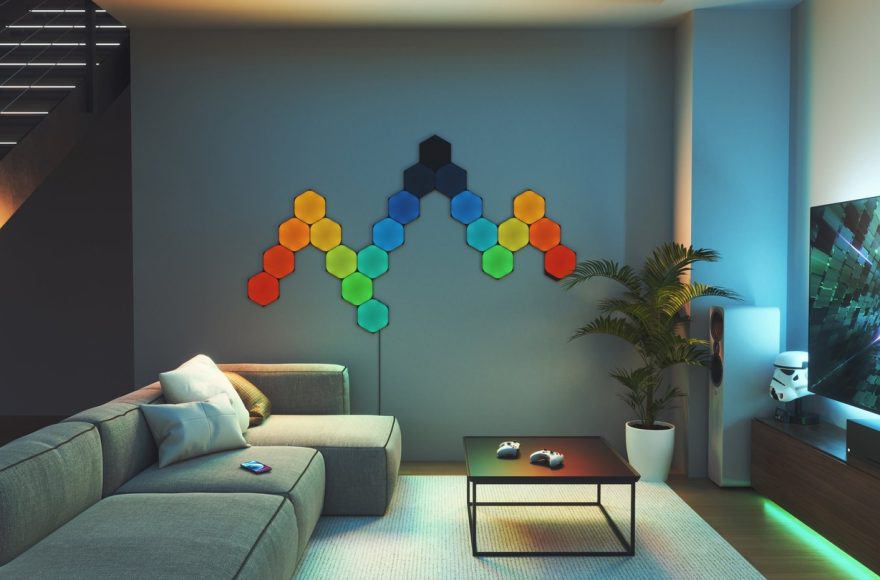
The Nanoleaf Shapes Hexagons and the Philips Hue Play Gradient Lightstrip both paint a room with color, but they start from opposite walls and opposite jobs. One’s wall art. The other is a halo that lives behind your TV and copies whatever’s on screen, so the choice comes down to where your eyes spend the evening. The gap between them is placement, not brightness or color range alone.
Nanoleaf’s seven panel kit sells for $149.99 on Amazon, while the Hue strip sells for $135.80, and that fourteen dollar gap flips once you price the Hue Bridge and sync box the strip needs. Panels win on total cost. Sticker prices mislead here.
Both kits carry a 2-year warranty and a 25,000 hour LED rating, and both answer voice assistants in the app. Placement settles it.
Nanoleaf Shapes Hexagons: Art You Build
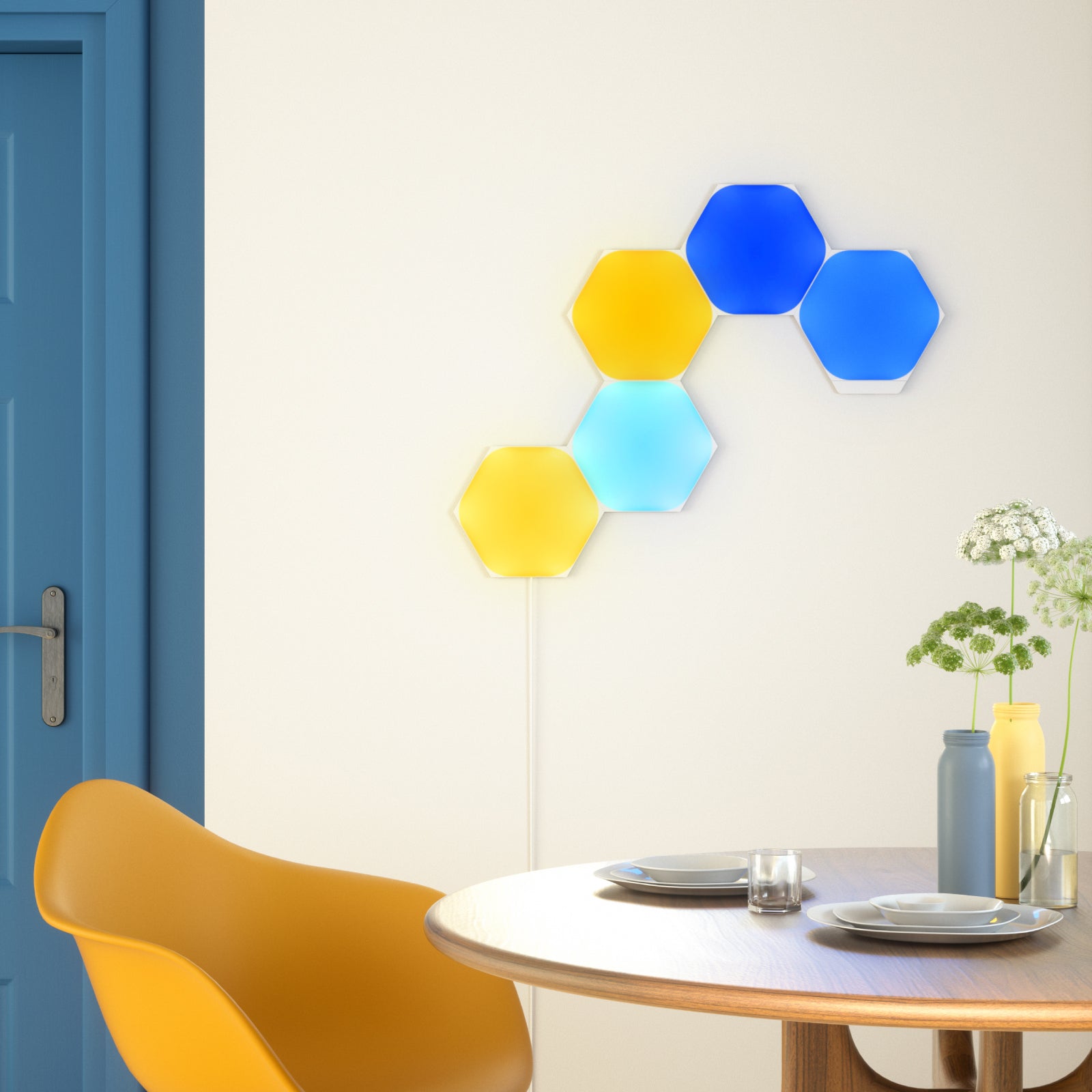
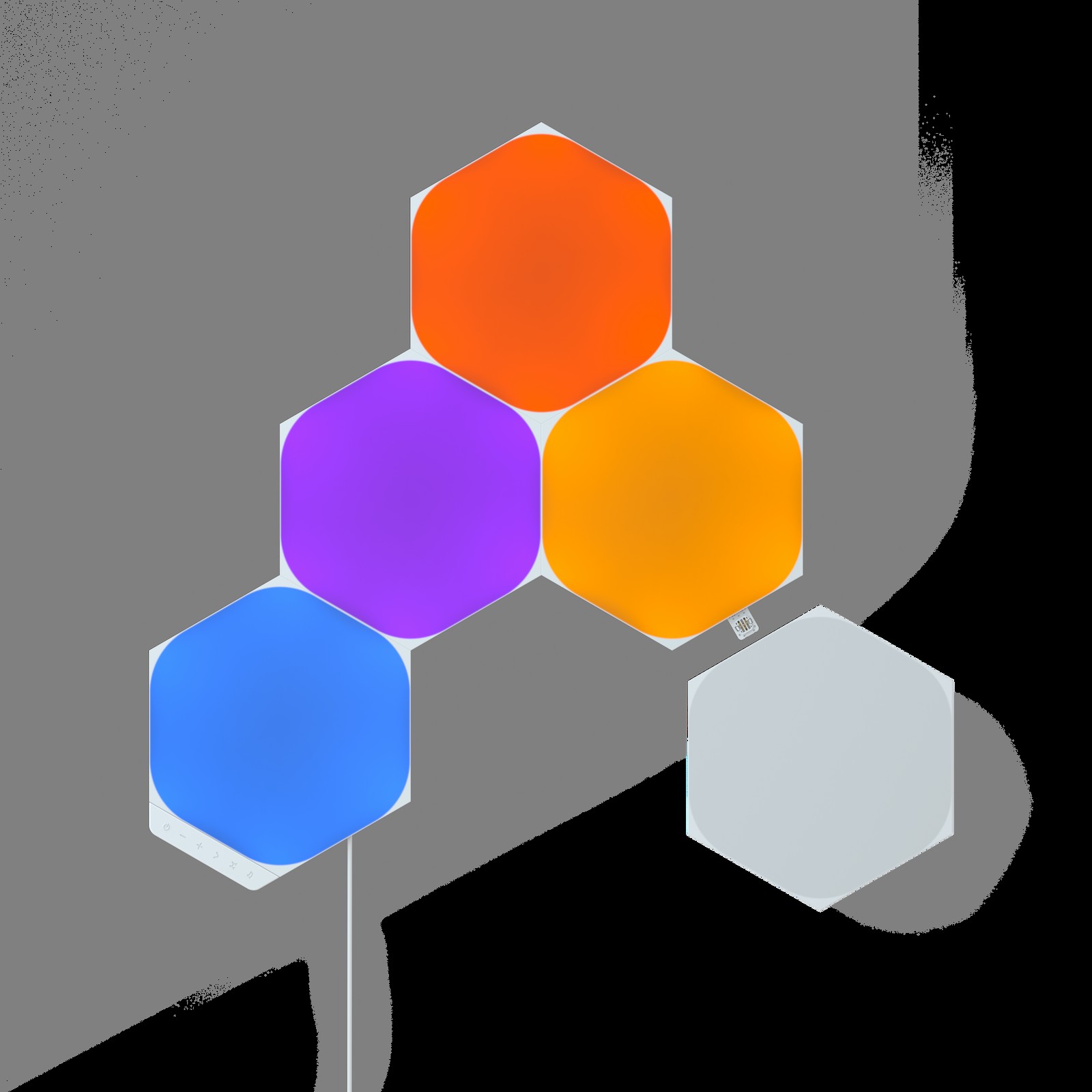
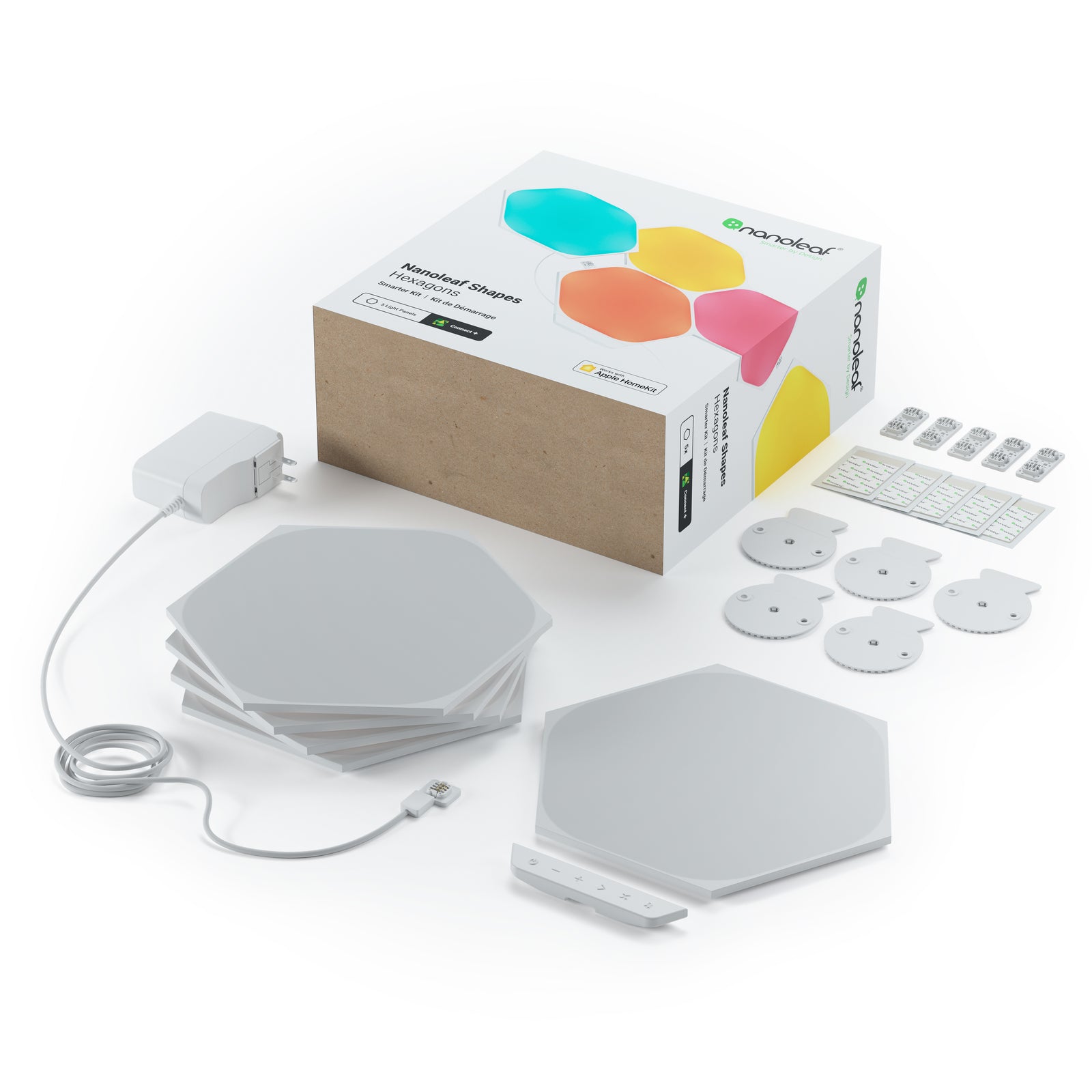
Seven hexagon panels link edge to edge in any pattern, and each panel pours out 100 lumens, so a finished shape reads as decor that happens to glow, and the lamp part comes second. Tap one and it answers. Touch controls sit inside every panel, the Rhythm mode chases music in real time, and Screen Mirror pulls colors from your monitor through the desktop app on your computer.
Colors run past sixteen million, whites tune from 1200K to 6500K, and the panels stick to the wall with included plates and tape, so renters skip the drill entirely. One controller runs 500 panels total.
Expansion packs add panels one box at a time, and one 42W power supply drives 21 hexagons, so a starter shape can grow across a whole wall across several birthdays. Growth stays cheap per step.
- Seven hexagon panels at 100 lumens each, 16M+ colors
- Touch control, Music Sync and Screen Mirror built in
- Mounts with plates and tape, Wi-Fi built in, no hub needed
- One controller supports 500 panels for later expansion

Philips Hue Play Gradient Lightstrip: The TV Halo
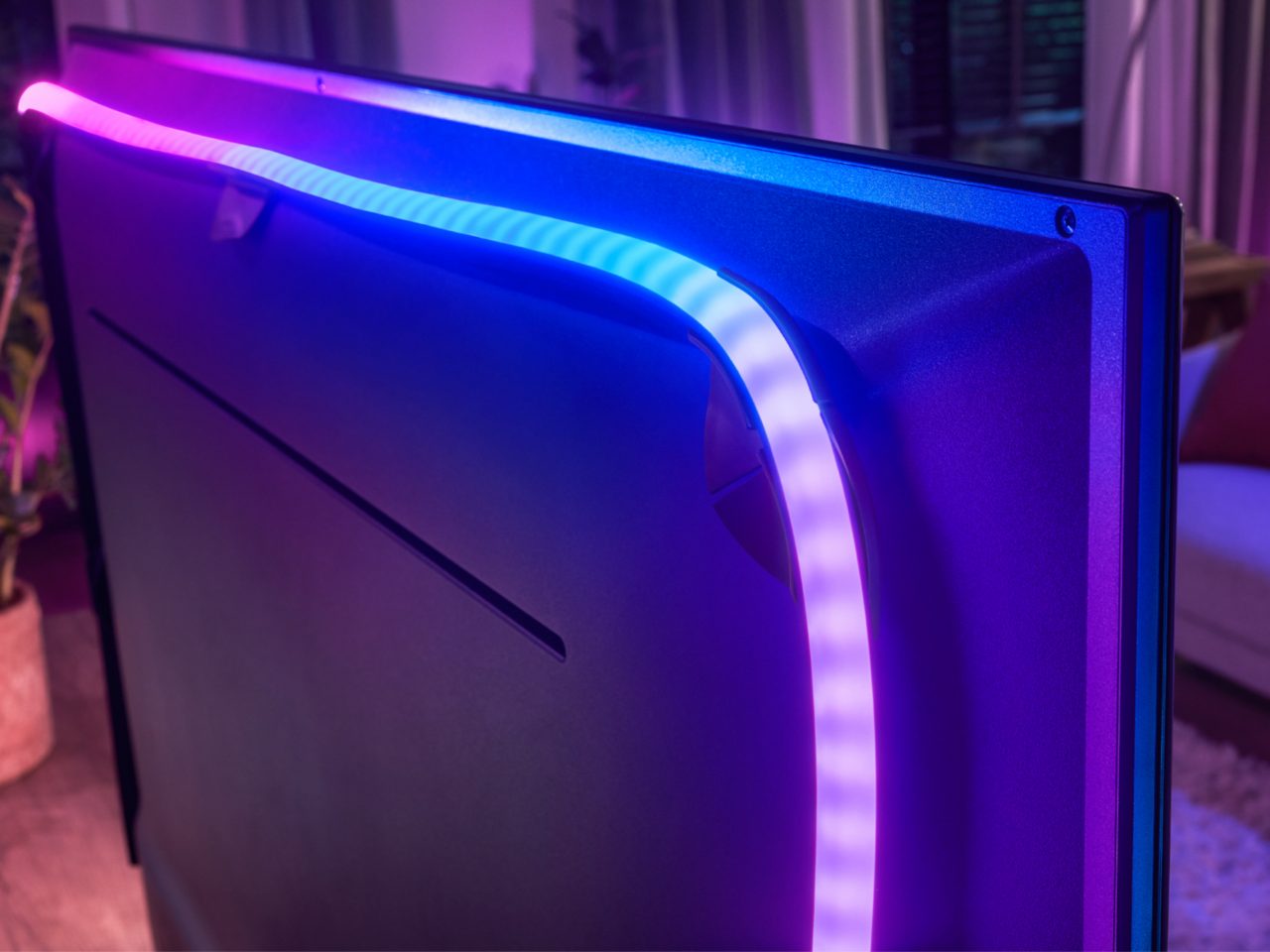
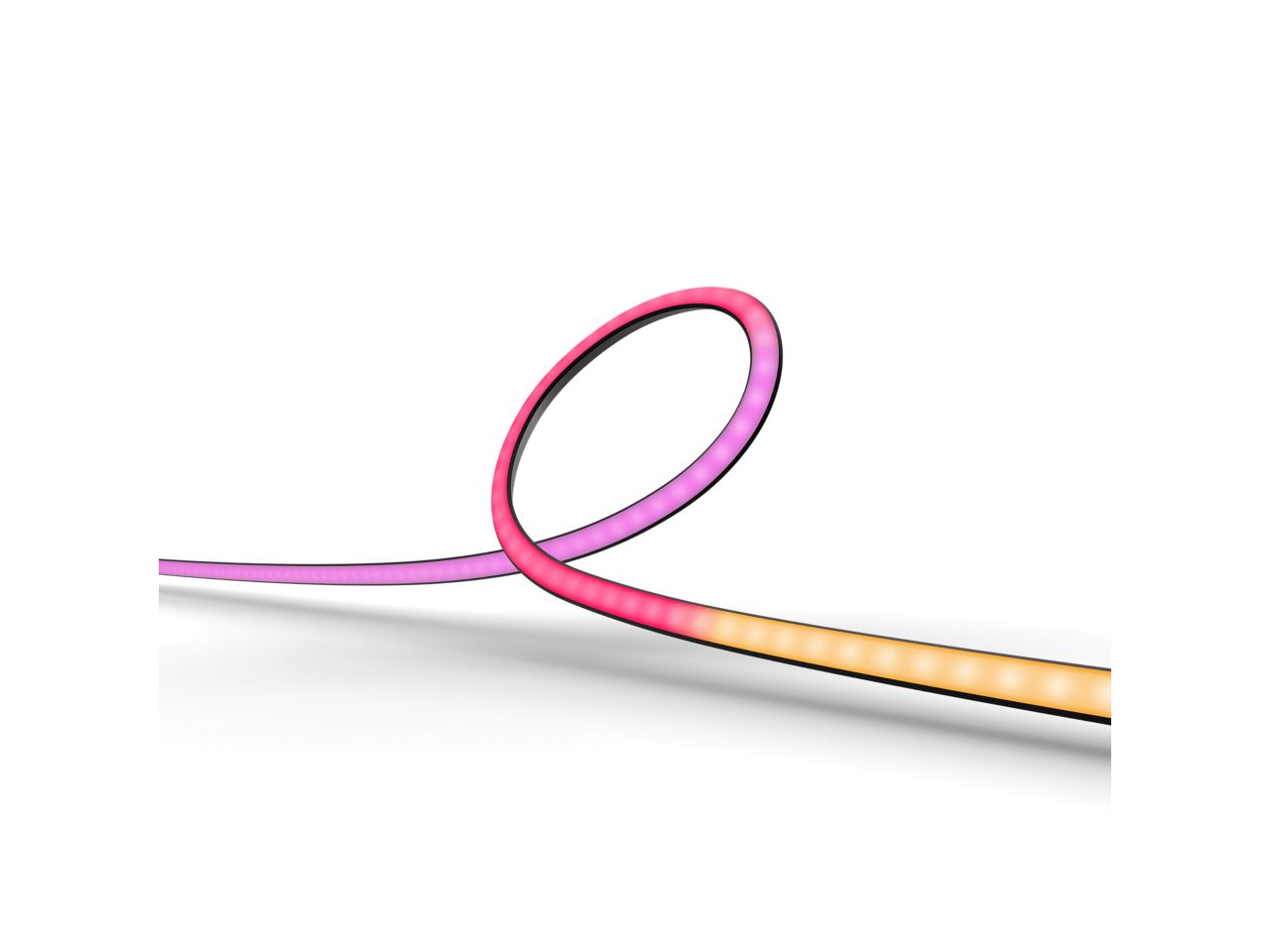
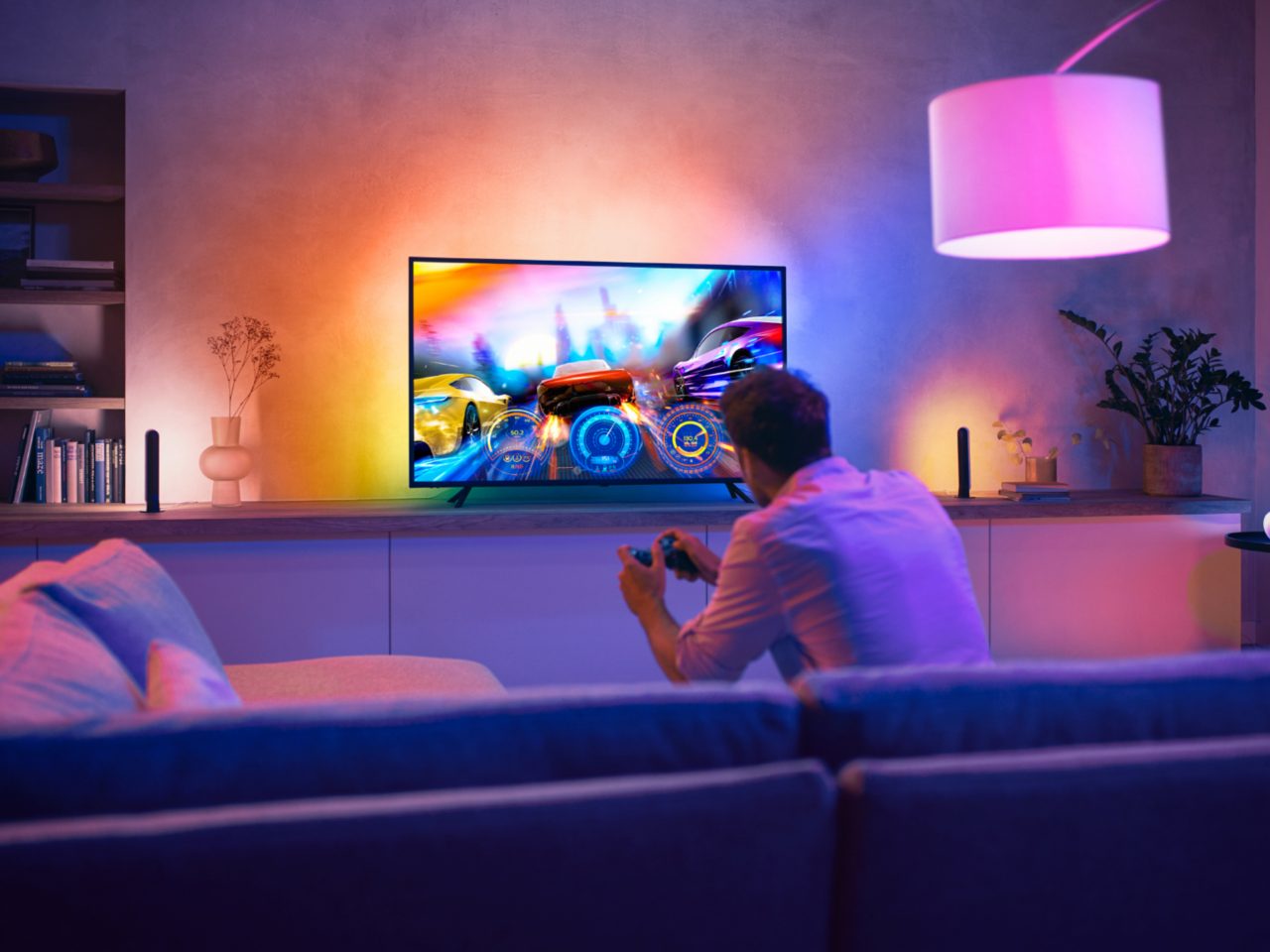
The strip bends around the top and sides of a 55 to 60 inch TV, and its gradient LEDs blend several colors along one run, so a sunset scene wraps the whole wall. It hides completely. Output hits 1,100 lumens at 4000K, whites run from 2000K to 6500K, and the strip talks Bluetooth for setup and Zigbee for the wider Hue system at home.
Screen sync is the catch, because the strip needs a Hue Bridge and a Hue sync box before it can copy a film or a game, and neither box sits in the carton. Mounts and a power supply do.
Owners deep in the Hue system gain the most here. The strip joins existing scenes, schedules and automations in the Hue app alongside bulbs and lamps you already run nightly at home. Standalone buyers pay more.
- Gradient strip for 55 to 60 inch TVs, mounts and power supply included
- 1,100 lumens at 4000K, whites from 2000K to 6500K
- Shows multiple colors at once and reacts to screen content
- Needs a Hue Bridge and a Hue sync box for screen sync

Head to Head
| Product | Nanoleaf Shapes Hexagons | Philips Hue Play Gradient Lightstrip 55in |
| Format | Wall panels, build your shape | Strip behind the TV |
| In the box | 7 hexagon panels, controller, power supply | Strip, mounts, power supply |
| Brightness | 100 lumens per panel | 1,100 lumens total |
| Whites | 1200K to 6500K | 2000K to 6500K |
| Screen sync | Screen Mirror via desktop app | Needs Bridge and sync box |
| Extra boxes | None, Wi-Fi built in | Bridge and sync box required |
| Price | $149.99 at Amazon | $135.80 at Amazon |
Brightness favors the strip on paper, yet the panels spread their light across a wall you look at directly, while the Hue throws its 1,100 lumens at a wall you never face. Different walls, different wins.
Control splits them too, since Nanoleaf panels answer a tap on the wall and run on plain Wi-Fi, while the Hue strip routes through the Bridge for whole home scenes. Your phone runs both. Taps beat apps at midnight.
The Verdict
Buy the Nanoleaf kit if your desk wall or bedroom needs the light itself to be the picture, because you get art, music response and touch control in one box with no extras. Buy the Hue strip if your evenings run on films and games and you already own Hue gear, because the halo deepens a screen in a way panels can’t match. Renters pick panels.
Skip both if you want plain white light for reading, because a basic lamp does that job for a tenth of the money and asks nothing of your Wi-Fi. Gamers split down the middle here, because the panels mirror a monitor through the desktop app while the strip mirrors the TV through the sync box, and screen size picks the winner.
- Seven hexagon panels at 100 lumens each, 16M+ colors
- Touch control, Music Sync and Screen Mirror built in
- Mounts with plates and tape, Wi-Fi built in, no hub needed
- One controller supports 500 panels for later expansion
Walls or halo, pick the surface first. The right light follows that one call every single night.


