DJI Neo: A 135 Gram Palm Launch Camera Drone
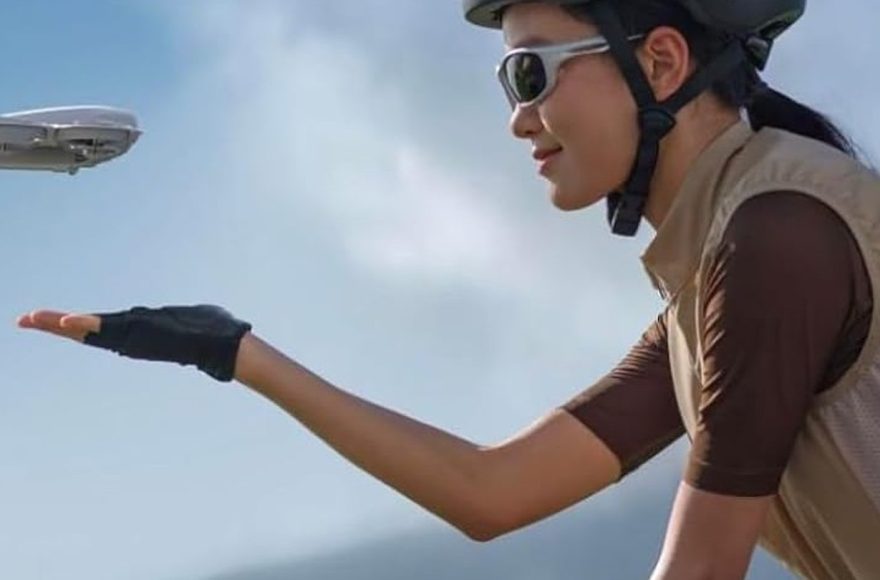
DJI’s Neo opens at $139.00 on Amazon with a pitch no other DJI drone makes. The aircraft weighs 135 g. It takes off from a hand, follows its subject and lands back on the same palm, with no controller anywhere in the base box.
This is a different machine from the DJI Mini 4K covered on this site at $299.00, and the distinction is worth stating plainly before anything else. The Mini 4K folds, carries a 3-axis gimbal and flies controller first. The Neo skips the folding arms, guards every propeller and treats the controller as an accessory rather than a requirement.
It’s also not an Osmo. Osmo is DJI’s handheld camera line, and the Neo is an aircraft.
Palm Takeoff: Flight Starts From an Open Hand
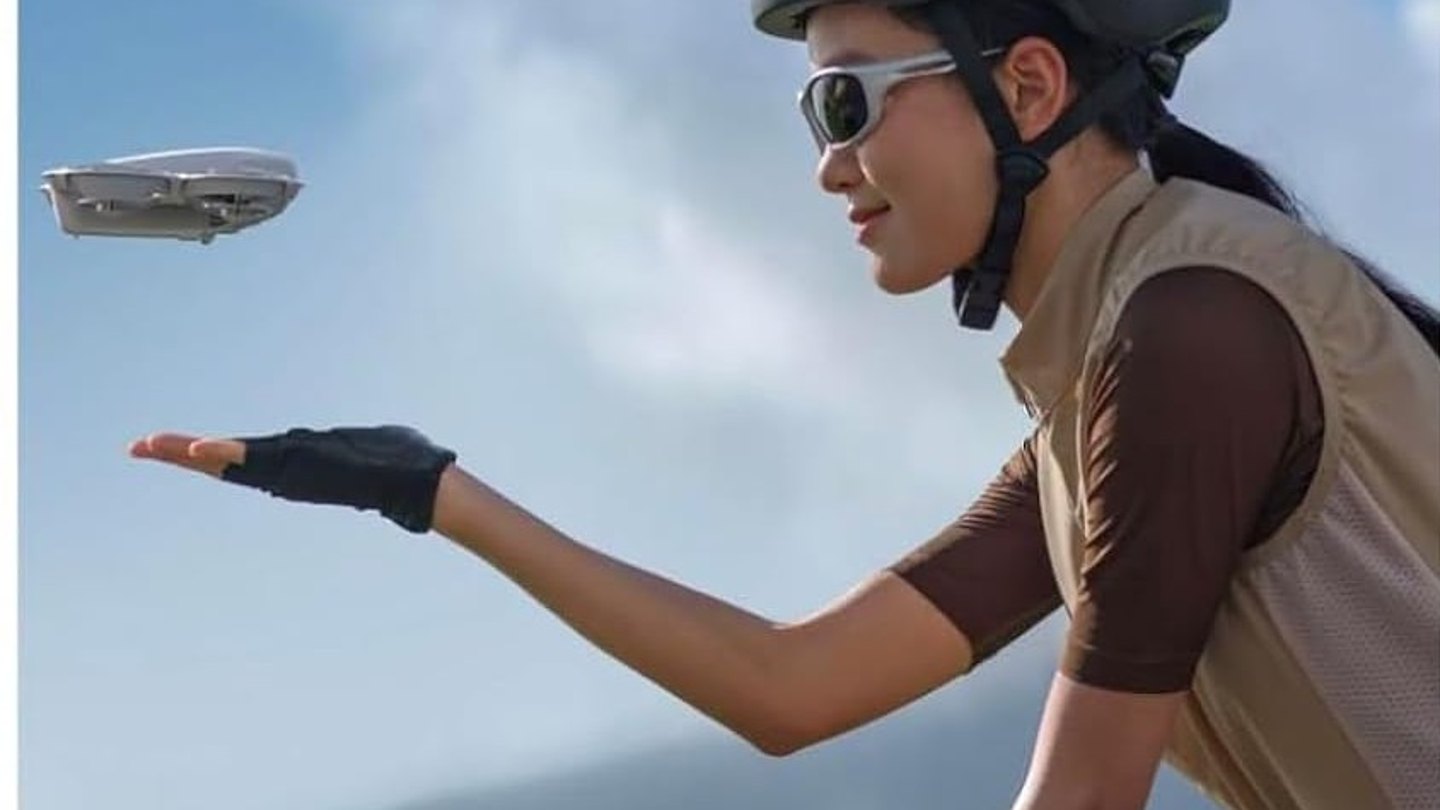
A button press on the top shell starts a palm takeoff, and the Neo climbs from an open hand without a launch pad, a phone or a paired controller in the loop. Landing runs the same route in reverse. The drone settles back onto the palm and cuts its motors, and the full-coverage propeller guards ring every rotor the whole time.
Those guards shape the whole brief. They let the aircraft work close to people at a family cookout or a trailhead without exposed blades. DJI rates the airframe at 130 by 157 by 48.5 mm, small enough for a jacket pocket. At 135 g the listing states the Neo needs no FAA registration and no Remote ID for recreational flight in the US.
Control options stack up from there. Voice control in English or Chinese, the mobile app and a paired RC all fly the same aircraft.
- 135 g takeoff weight with full coverage propeller guards
- 1/2-inch CMOS sensor, 12 MP stills, 4K video at 30 fps
- Palm takeoff and landing, controller free flight
- 18 minutes per battery in DJI controlled tests
Camera: 4K Video From a Half Inch Sensor
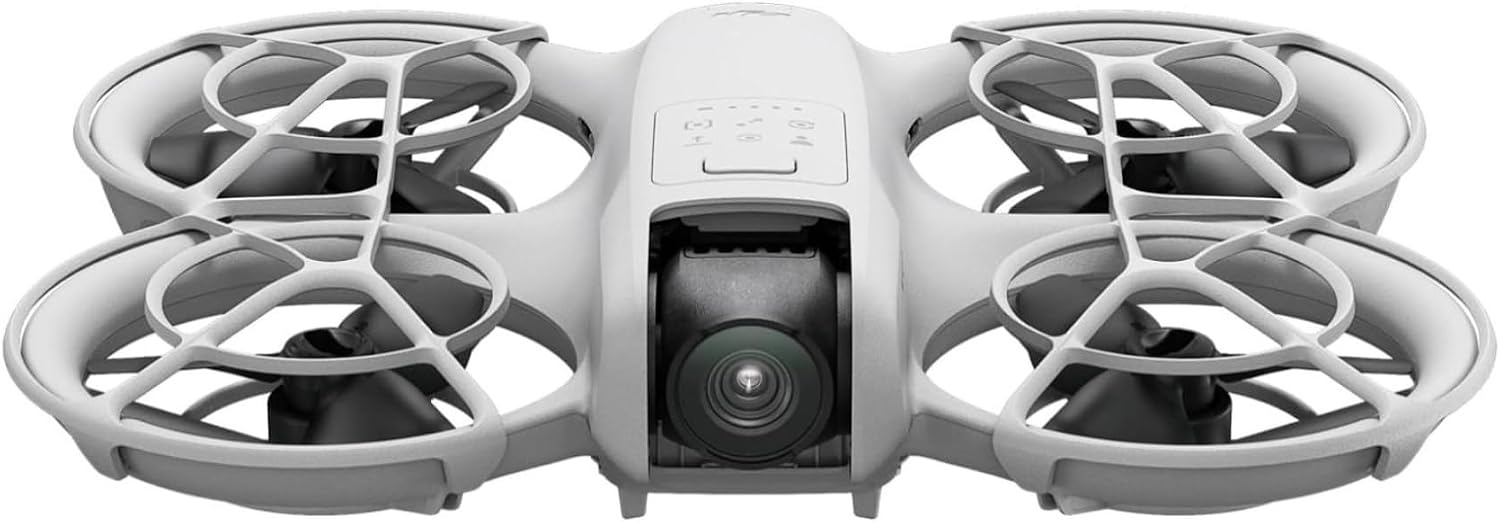
The camera pairs a 1/2-inch CMOS sensor with an f/2.8 lens and a 117.6 degree field of view, and it shoots 12 MP stills at 4000 by 3000. Video tops out at 4K. The 16:9 frame records 3840 by 2160 at 30 fps with stabilization on, and 1080p runs to 60 fps for slower playback.
Stabilization splits the work between hardware and software in a way the spec sheet states clearly. A single-axis mechanical gimbal handles tilt. RockSteady and HorizonBalancing handle the rest electronically, and vertical 1080p at 9:16 covers phone-first posting without a crop in editing. The electronic half does the horizon work in wind, and the footage holds level through turns that would tilt a fixed camera.
The tradeoff is honest and worth naming in a buying piece. There’s no 3-axis gimbal and no 4K at 60 fps here, and the max video bitrate sits at 75 Mbps. Buyers who grade footage frame by frame will feel those ceilings, while casual clips for family and social feeds sit well inside them.
Tracking and QuickShots: The Camera Follows

Subject tracking is the reason this drone exists, and the Neo locks onto a person and follows while the camera keeps them framed. The shooting runs hands free. A rider, a runner or a kid on a scooter becomes the subject, and the aircraft does the camera work from a few feet out. QuickShots automate the moves new flyers can’t fly by hand yet, with Dronie, Circle and Rocket on the menu.
DJI’s own test notes name those three modes in the battery endurance runs. Downward visual positioning holds the hover steady between 0.5 and 10 m, so the framing stays put while the subject moves through it.
Wind sets the limit here. DJI rates the Neo at Level 4 resistance, 8 m/s, and calm mornings suit it best.
Battery and the Box: 18 Minutes per Charge
DJI rates flight time at 18 minutes per battery in controlled tests, and the figure drops to 17 minutes with the propeller guards fitted for the shoot. Range in the same controlled testing reaches 7 km. Those are test bench numbers from the maker’s spec sheet, and real flights in wind and motion will land shorter. A second battery doubles the session, and the combos on the listing exist because most buyers land there.
The battery is a 1435 mAh Li-ion pack at 7.3 V and about 45 g, and direct charging through the aircraft runs about 50 minutes at 15 W. Spares are the obvious add-on. The Fly More and Three-Battery combos on the same listing exist for exactly that reason, at $240.00 and $199.00 at the live check.
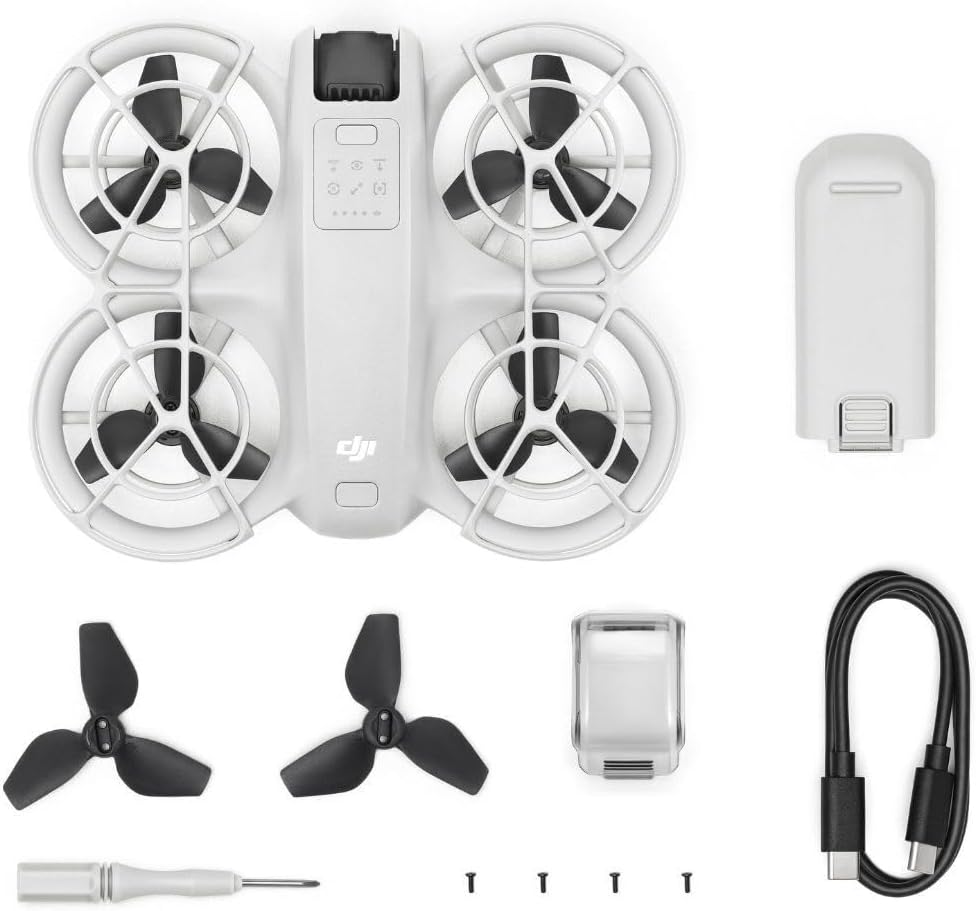
The base box covers the aircraft and its guard set without a controller anywhere in it. No controller ships in it. Buyers get the Neo, one Intelligent Flight Battery, a gimbal protector, the propeller guard pair, a spare propeller pair, four spare screws, a screwdriver and a Type-C to Type-C PD cable. Buyers planning untethered afternoons should price a combo before a lone spare battery.
The Verdict: Small Drone, Specific Buyer

| Item | Spec |
|---|---|
| DJI Neo | Palm launch camera drone, controller free in the base box |
| Weight and size | 135 g takeoff weight, 130 x 157 x 48.5 mm |
| Camera | 1/2-inch CMOS sensor, 12 MP stills, f/2.8 lens |
| Video | 4K at 30 fps, 1080p at 60 fps, 75 Mbps max bitrate |
| Flight time | 18 minutes per battery in DJI controlled tests, 17 with guards |
| Battery | 1435 mAh Li-ion at 7.3 V, USB-C charging |
| Wind rating | Level 4 resistance at 8 m/s |
Buy the Neo if the footage you want is yourself, filmed from a few feet out, with nobody free to hold a controller. The palm launch, the tracking and the guards make it the simplest DJI aircraft to live with.
Skip the Neo if the work is landscape range, high wind or long flights on a single battery. The Mini 4K at $299.00 answers that brief with a folding frame and a 3-axis gimbal. That brief belongs to the Mini.
- 135 g takeoff weight with full coverage propeller guards
- 1/2-inch CMOS sensor, 12 MP stills, 4K video at 30 fps
- Palm takeoff and landing, controller free flight
- 18 minutes per battery in DJI controlled tests

The listing starts at $139.00 today for the controller-free aircraft, checked live this run. Each figure matches DJI’s spec sheet at the hour this piece published, Central time.


