Best Portable Projectors: Capsule 3, Freestyle 2nd Gen and Mars 3 Air
Anker’s Nebula Capsule 3 opens this guide at $379.99, the soda can pick. Samsung’s Freestyle 2nd Gen answers at $597.99.
Three projectors, three shapes, one shared brief. Each streams solo and sets itself up in seconds.
Friction decides whether a portable projector gets used. Every pick here streams, corrects its own picture and plays through its own speaker. Battery freedom splits the field, since two of the three run untethered while the Samsung needs a wall outlet or a USB-C battery pack to leave the house. Brightness splits it again, and the prices land $220.00 apart at each step. A fixed media room gains nothing here, and that reader should shop the home theater shelf instead.
Every route sells through Amazon, checked live today at ASIN level on each listing. The Freestyle and the Mars 3 Air carry verified discounts of 25% and 20%, and their buying boxes print the savings. The Capsule 3 prints flat, because its listing sits inside a Nebula model family with no single-offer discount behind the figure.
Nebula Capsule 3: The Soda Can Pick
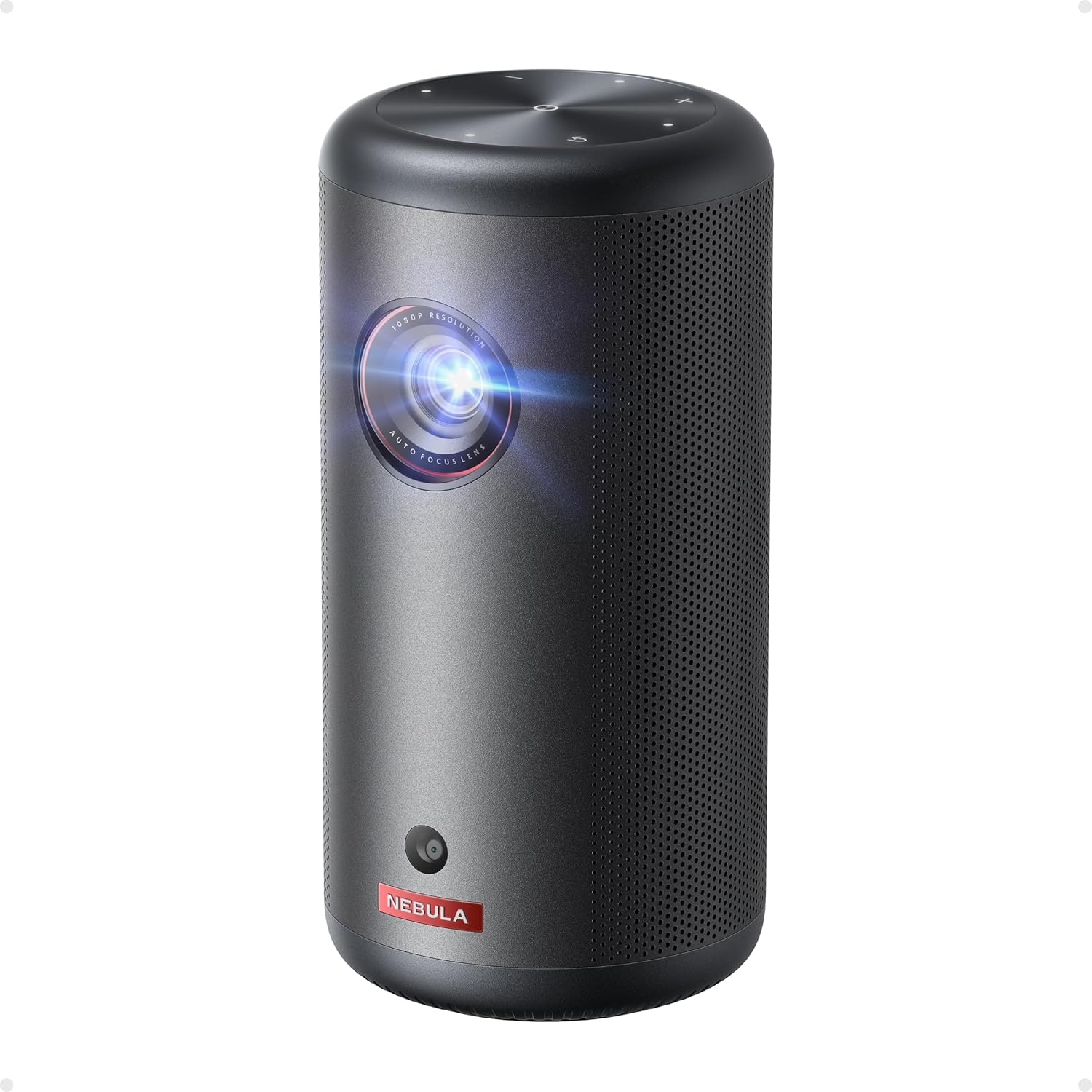
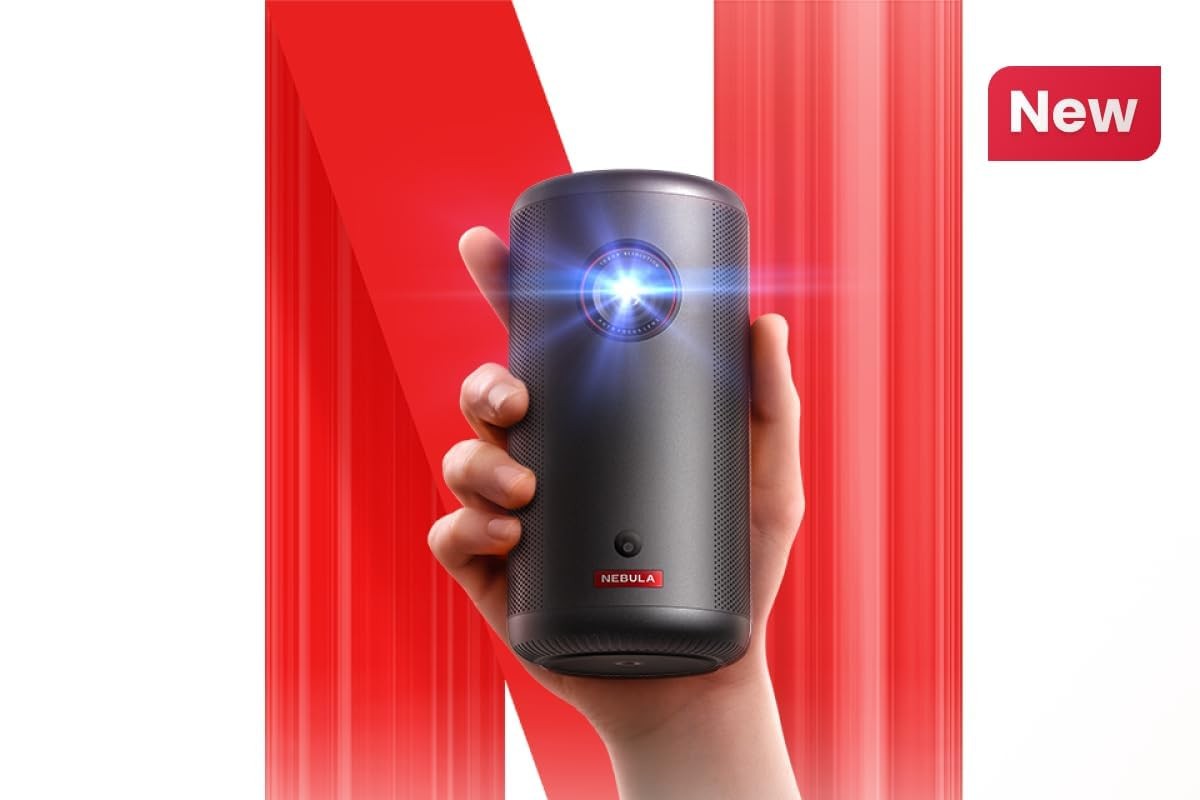
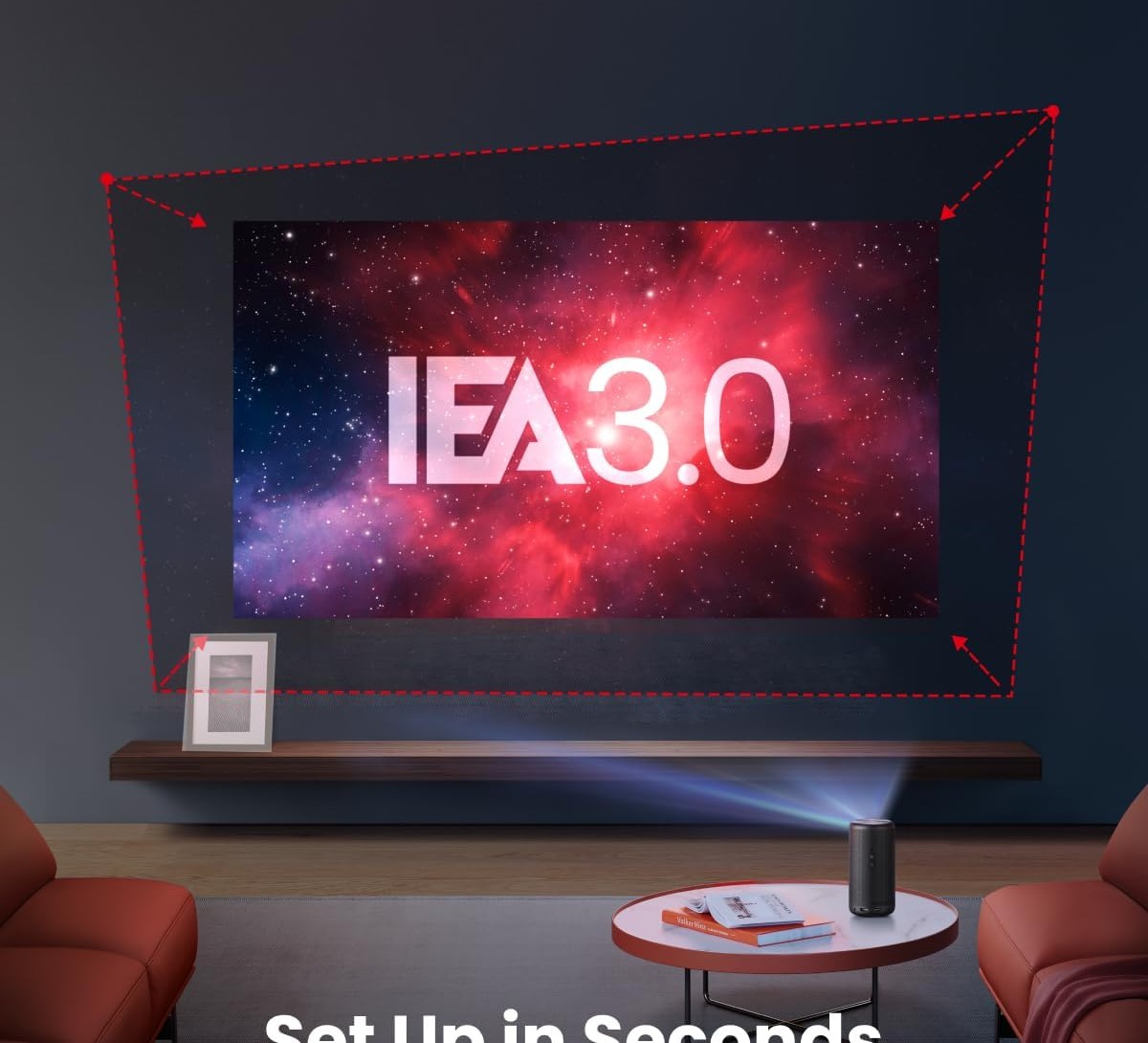
The Capsule 3 is the can in this guide, a black cylinder that stands where a drinks can stands and weighs 0.85 kg. Google TV runs the show. Netflix comes licensed on board. The shape travels in a jacket pocket. The body measures 78 by 78 by 160 millimeters, a tall can footprint.
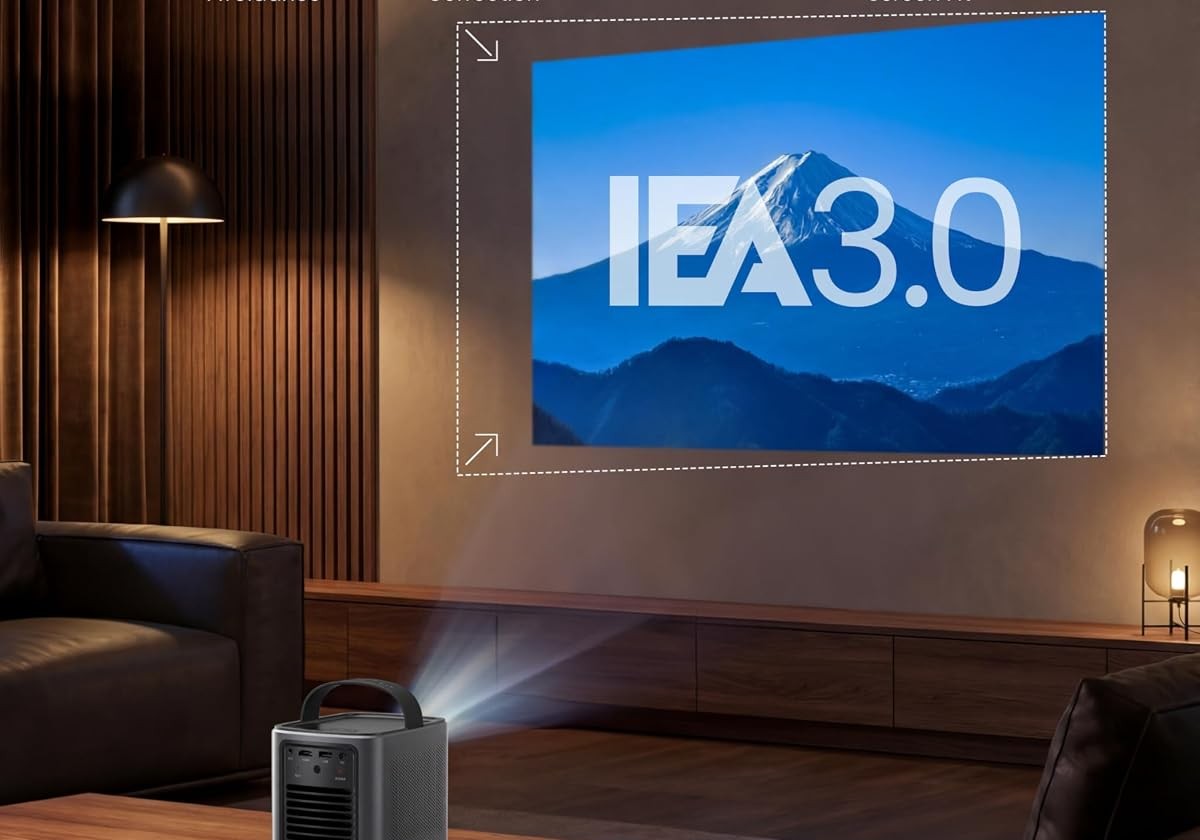
The picture runs at 1920 x 1080 from a DLP engine rated at 200 ANSI lumens, and the image stretches from 40 to 120 inches as the can moves back from the wall. Nebula’s setup routine handles screen fit, keystone correction, autofocus and obstacle avoidance in 3 seconds. A single 8W speaker carries Dolby Audio, so the can plays a backyard film without a second box on the table.
The battery is the reason the can leaves the house, rated for 2.5 hours of video and 8 hours of music on a single charge in eco mode. The tradeoff is brightness, stated plainly. Two hundred lumens wants a dark room or a night sky, and a bright living room at noon washes the picture thin.
- 1920 x 1080 DLP picture, 200 ANSI lumens
- 40 to 120 inch image with 3 second auto setup
- 2.5 hours of video and 8 hours of music per charge
- Google TV with Netflix, 8W Dolby Audio speaker
Samsung The Freestyle 2nd Gen: The Point and Play Pick
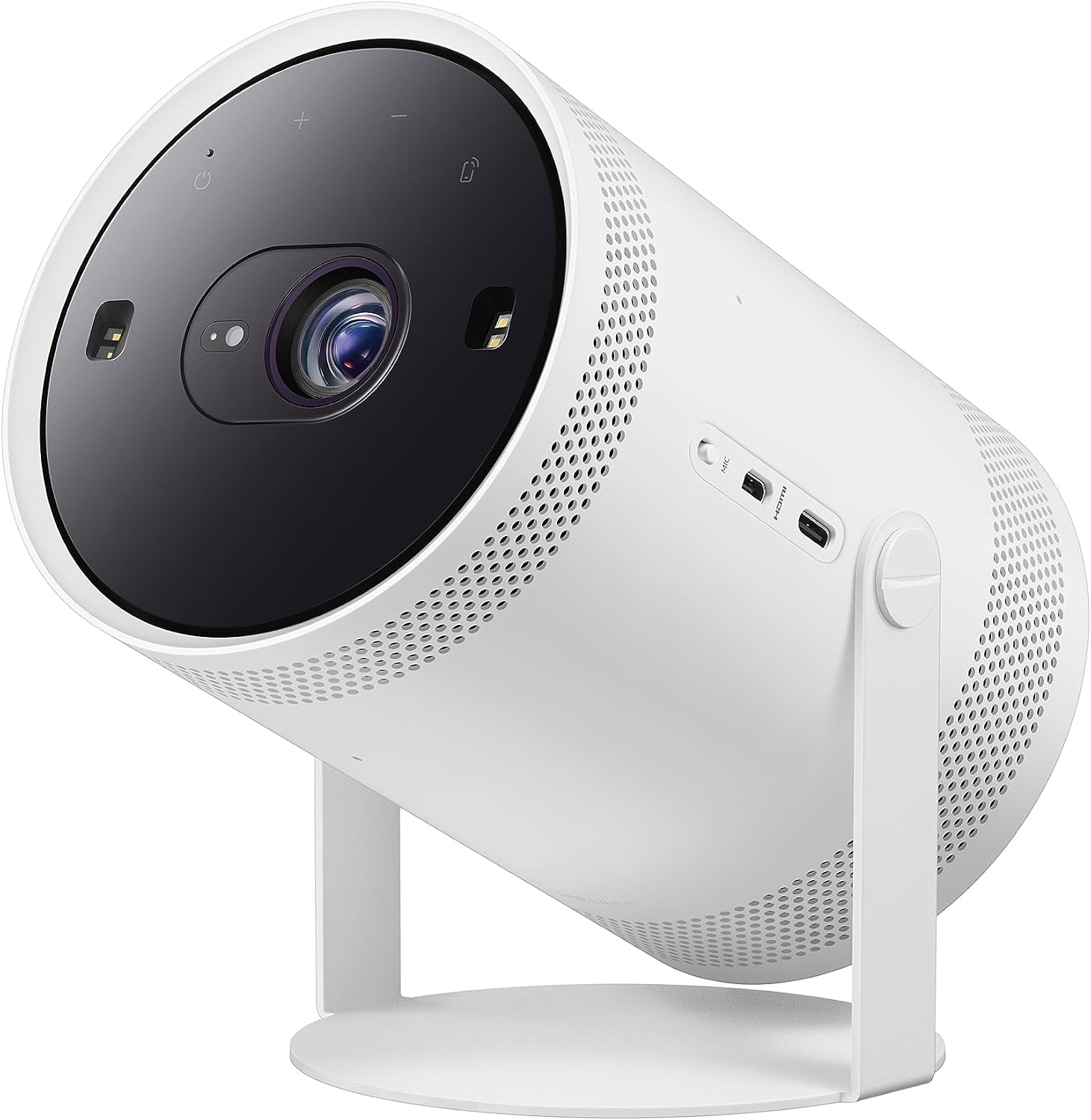
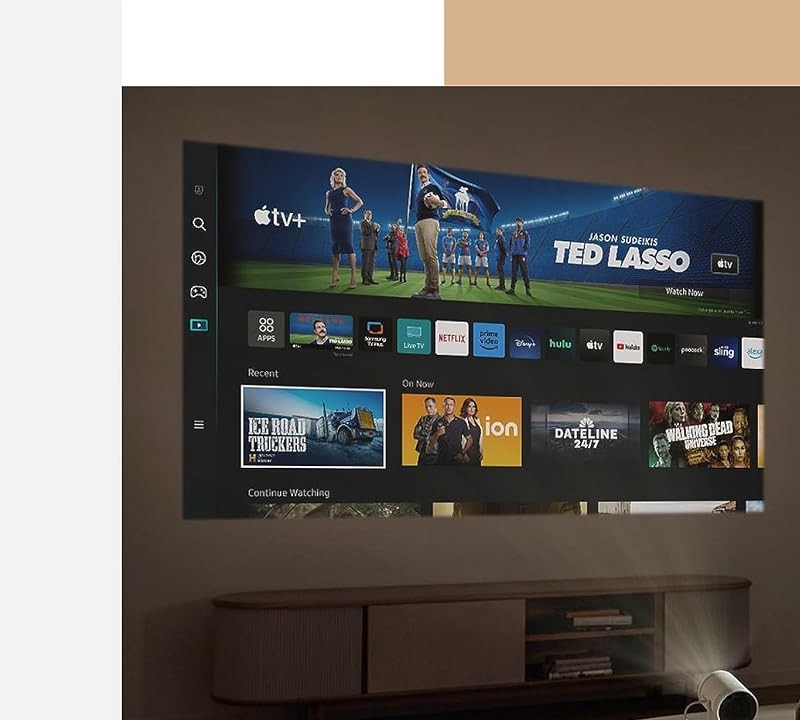
Samsung built the Freestyle around a cradle that tilts through 180 degrees, so the lens points at a wall, a screen or the ceiling over a bed. Point it, and the picture follows. The cylinder weighs 0.83 kg.
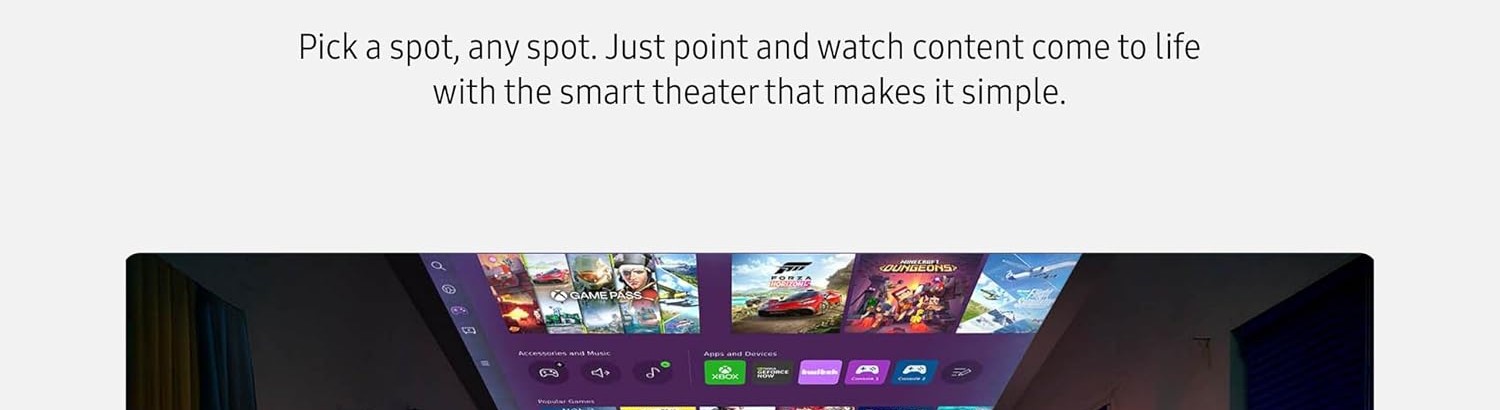
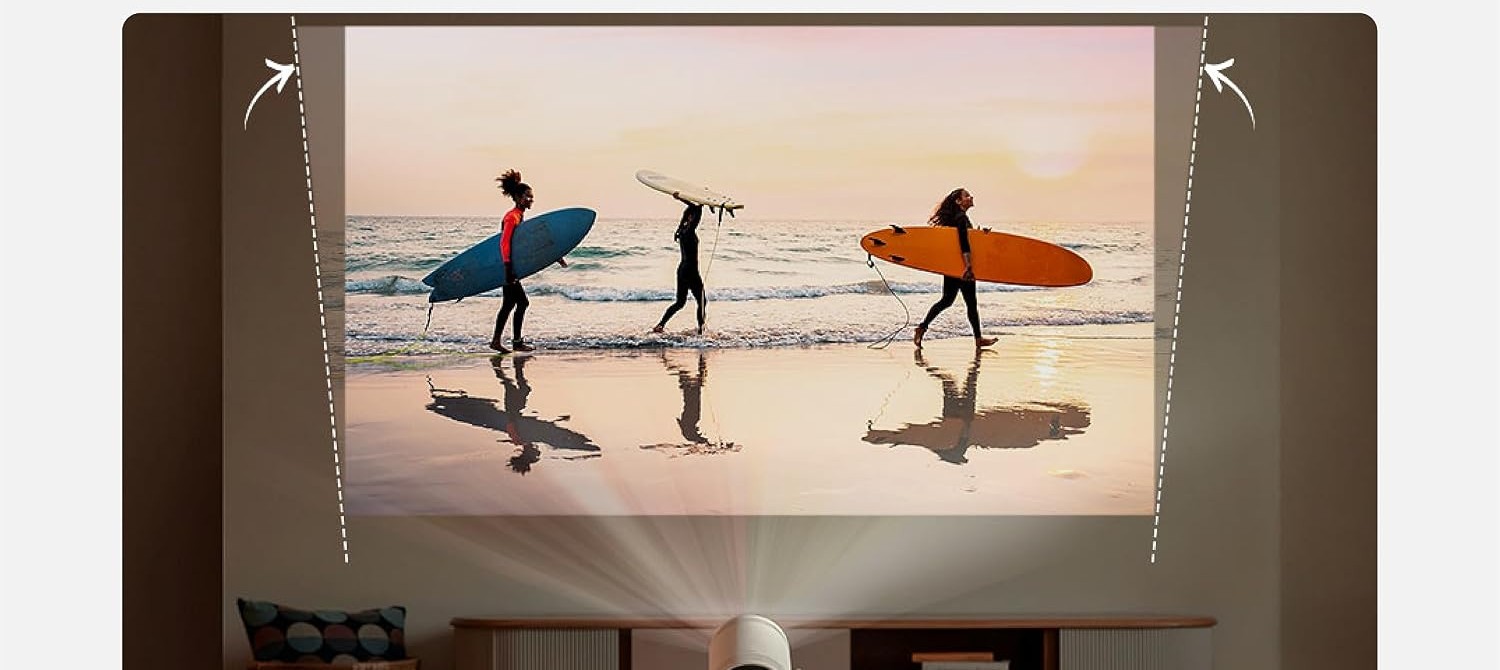
The image runs at 1920 x 1080 with HDR support, sized between 30 and 100 inches, and Samsung rates the LED engine at 230 ANSI lumens with a 30,000 hour life. Auto Leveling, Auto Focus and Auto Keystone square the picture on their own. The Gaming Hub streams console games without a console in the room, and the built-in speaker spreads sound in 360 degrees around the body.
Smart Calibration through a phone tunes color and contrast against the wall in front of the lens, a trick neither Nebula offers here. The SolarCell remote in the box charges from household light, so battery swaps leave the routine for good. The tradeoff is the power cord, because the Freestyle carries no battery inside the body. A USB-C battery pack sold separately frees it from the wall, and that pack adds cost and a second lump in the bag.
- 1920 x 1080 picture with HDR, 230 ANSI lumens
- Cradle tilts 180 degrees for wall or ceiling
- Auto Leveling, Auto Focus and Auto Keystone
- Gaming Hub streaming, 360-degree sound
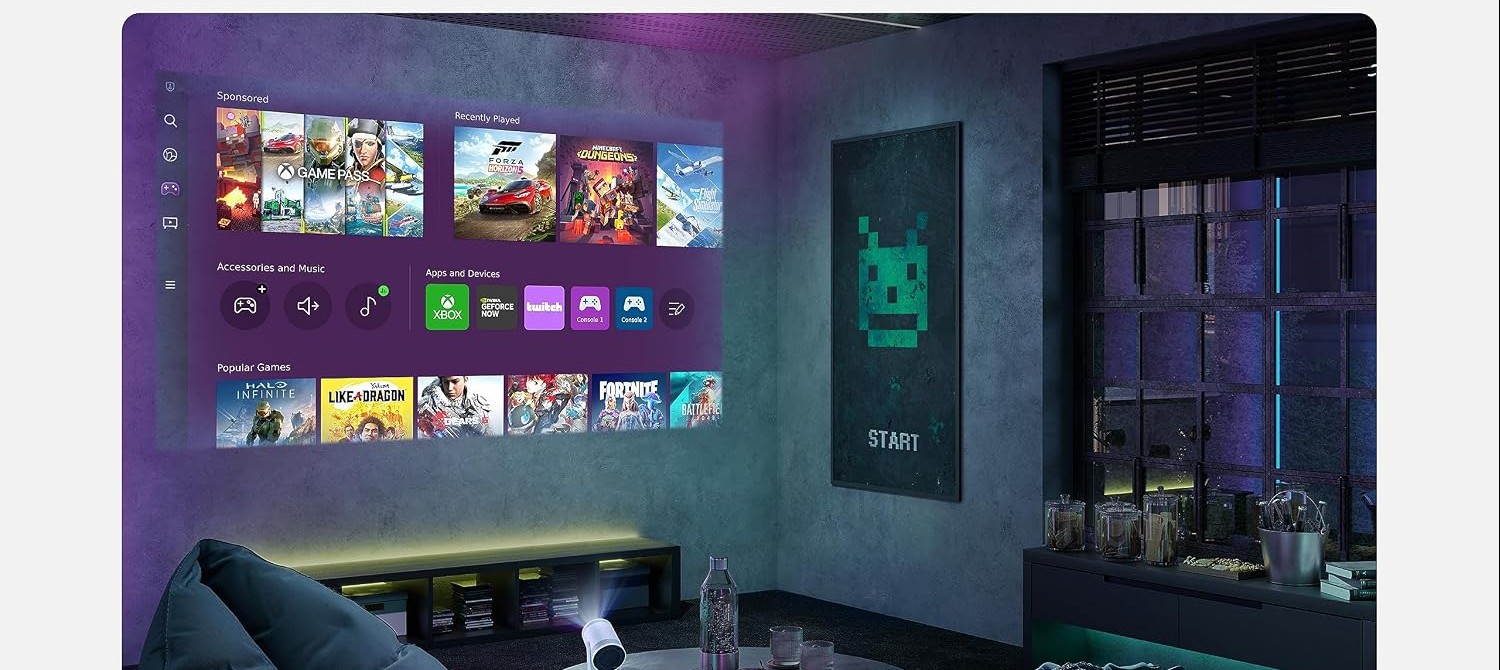
Nebula Mars 3 Air: The Bright Box Pick
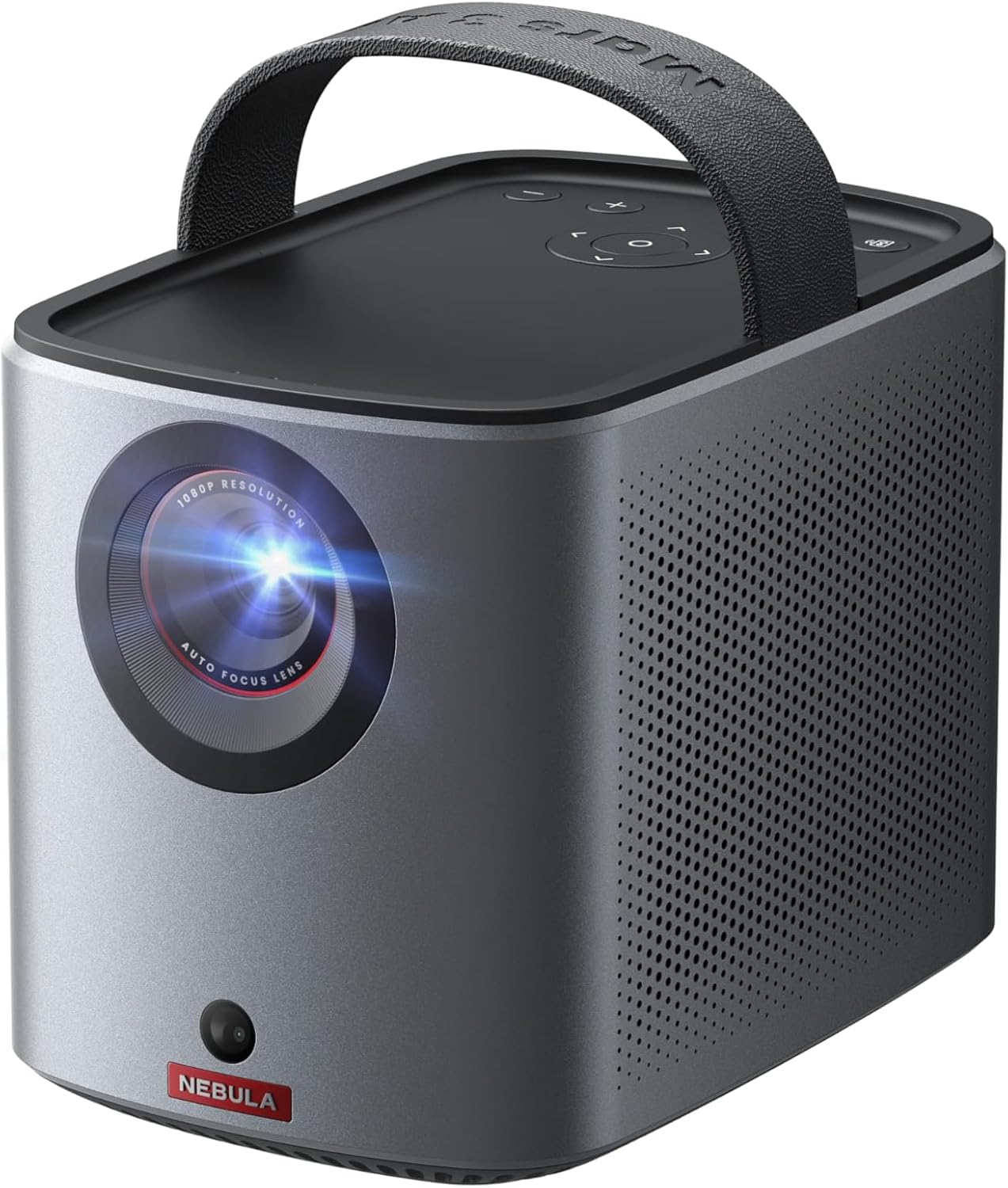
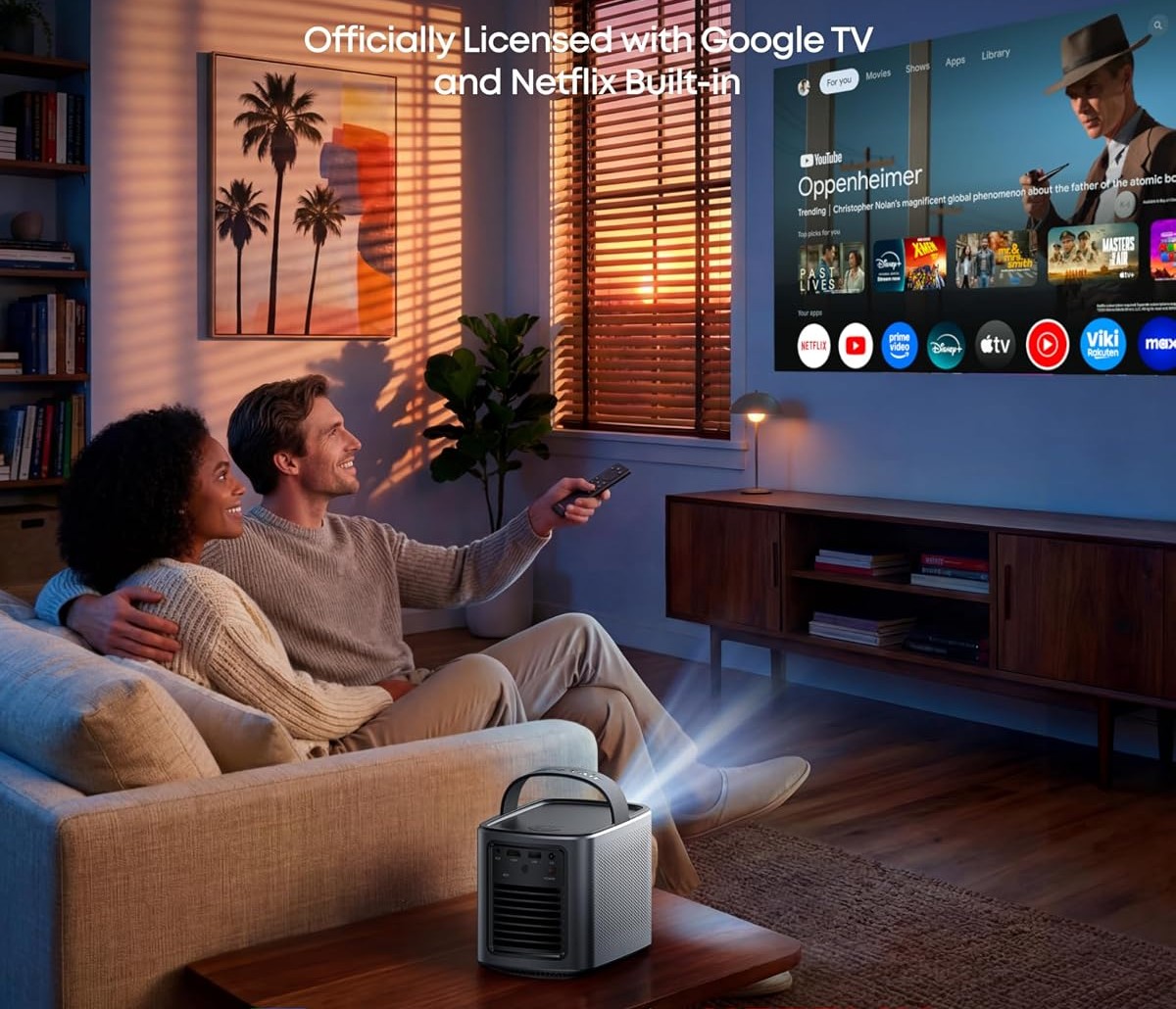
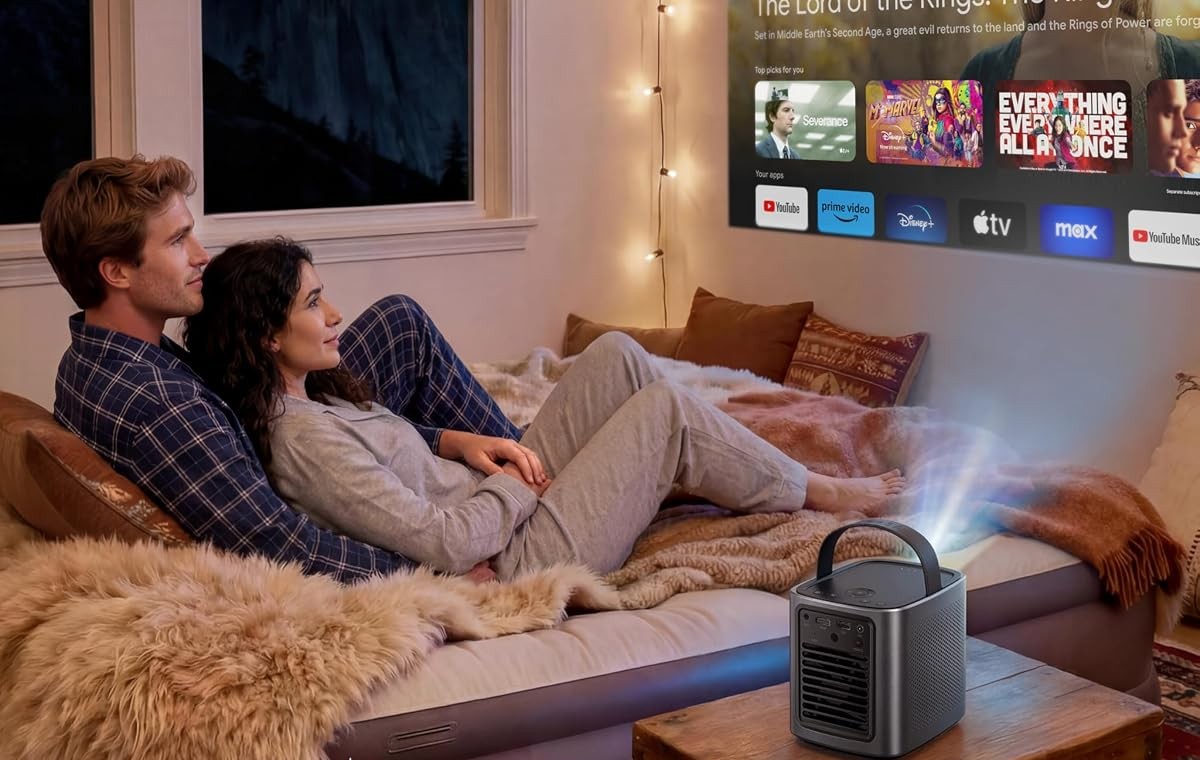
The Mars 3 Air is the box in this guide, a squared body with a carry handle riding on top and a lens the size of a coaster. Google TV runs it with Netflix included, and the handle says the quiet part out loud.
Brightness leads the pitch at 400 ANSI lumens, double the Capsule rating, and the 1080p picture carries HDR on a screen that stretches to 150 inches. Dual 8W speakers carry Dolby Audio, the strongest sound in this guide, and the pair turns the projector into a party speaker when the film ends. Setup runs through the same 3 second routine of autofocus, keystone correction, screen fit and obstacle avoidance.
The battery matches the Capsule figure at 2.5 hours of video and 8 hours of music, and the box still packs flat enough for a weekender bag. The tradeoff is size and money together. The Mars body is the bulkiest shape here, and at $479.99 it costs $100.00 more than its smaller sibling while sharing the same streaming brain.
- 1080p HDR picture, 400 ANSI lumens
- Image stretches to 150 inches, 3 second auto setup
- Dual 8W Dolby Audio speakers
- 2.5 hours of video and 8 hours of music per charge
The Verdict: Can, Cradle or Box
| Product | Brightness | Battery | Price |
|---|---|---|---|
| Nebula Capsule 3 | 200 ANSI lumens | 2.5 hours of video | $379.99 |
| Samsung The Freestyle 2nd Gen | 230 ANSI lumens | None built in, USB-C pack ready | $597.99 |
| Nebula Mars 3 Air | 400 ANSI lumens | 2.5 hours of video | $479.99 |
| Pocket pick | Capsule 3, for the can shape | 0.85 kg body | $379.99 |
| Ceiling pick | Freestyle, for the tilting cradle | 180 degrees of tilt | $597.99 |
| Brightness pick | Mars 3 Air, for the 400 lumens | Dual 8W speakers | $479.99 |
Buy the Nebula Capsule 3 if the projector rides along on trips and the screen appears wherever the night lands. Dark rooms reward it, and the battery keeps the cord at home.
Buy the Samsung Freestyle 2nd Gen if the picture moves between wall and ceiling inside one home and games join the films. The cradle and the Gaming Hub carry that brief. At $597.99 against a $797.99 list, the discount narrows the premium today.
Buy the Nebula Mars 3 Air if brightness and sound lead the brief and the bag has room for the box. At $479.99 against a $599.99 list, it splits the price gap and doubles the Capsule light output. The handle proves its worth on every carry.
Prices were checked live on Amazon today: $379.99, $597.99 and $479.99, with verified savings on the Samsung and the Mars 3 Air. Each figure matches its listing at publish hour, Central time.


