Apple Watch Series 11 vs Garmin Venu 4: Health Depth or Twelve-Day Battery

The Apple Watch Series 11 and the Garmin Venu 4 promise a fuller health picture. They chase it from opposite charger drawers.
Amazon lists the Series 11 at $308.21. The Venu 4 rides at $449.00 against a $549.99 list, and the Series 11 already has a solo deal write-up on this site.
Your phone settles half the argument before it starts, since the Apple Watch pairs with iPhone and the Venu 4 works across iPhone and Android. Cross that line and the contest turns on health depth against battery freedom, with price pulling hard in Apple’s favor. Both watches are strong. They are strong in opposite directions, and the right pick depends on which trade your wrist can live with.
Apple builds the Series 11 around the S10 chip with 64GB of storage, and the Always-On Retina display runs LTPO3 OLED panels at 2000 nits peak brightness. The screen drops to 1 nit at rest. A dim face at 3 a.m. is a courtesy, and the case measures 9.7 mm thin in 42 mm and 46 mm sizes.
Apple Watch Series 11: Health Sensing With a Nightly Charge
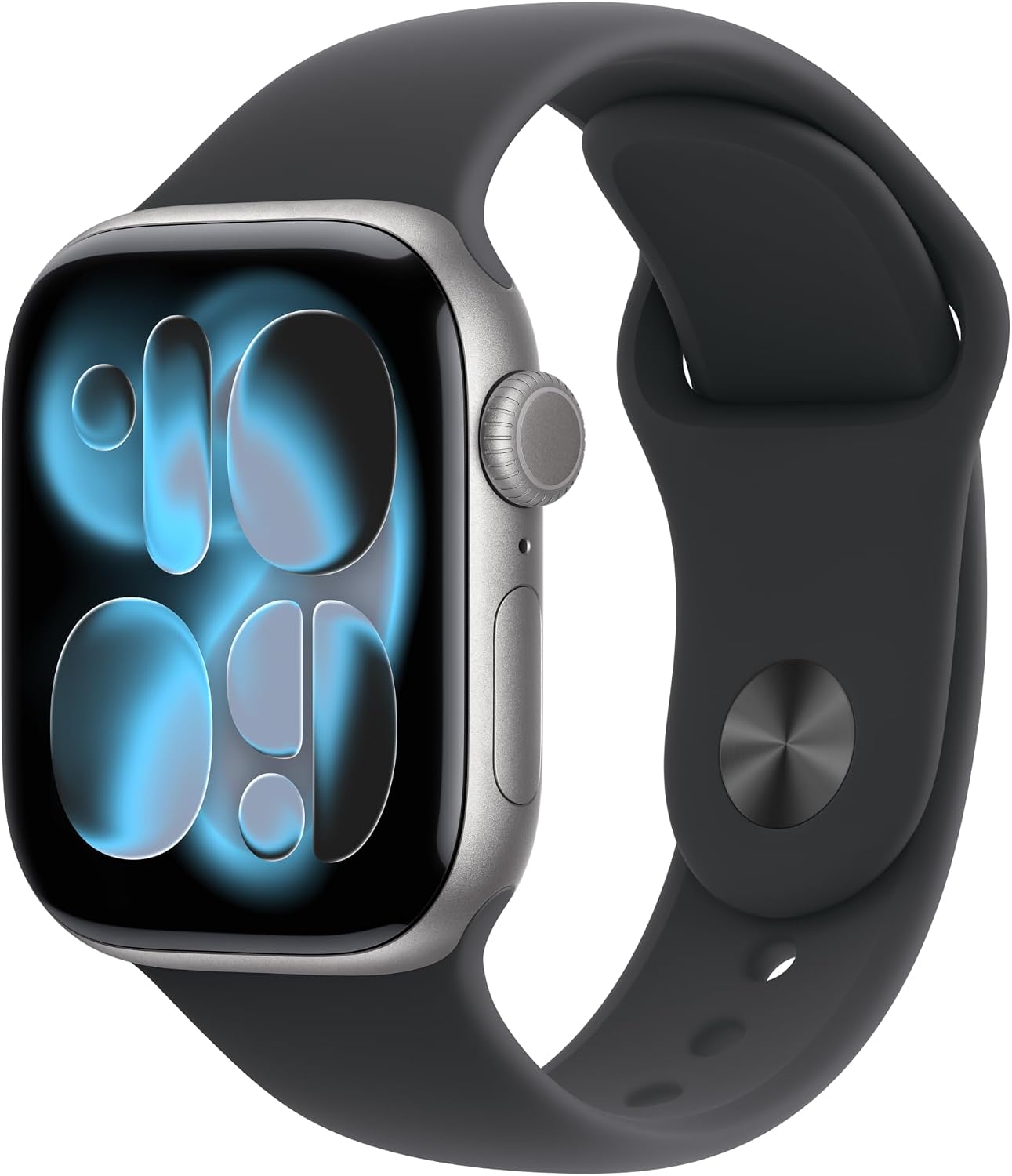
The health stack runs deep here. You get an ECG app, a blood oxygen sensor, wrist temperature sensing and the Vitals app reading your overnight metrics each morning.
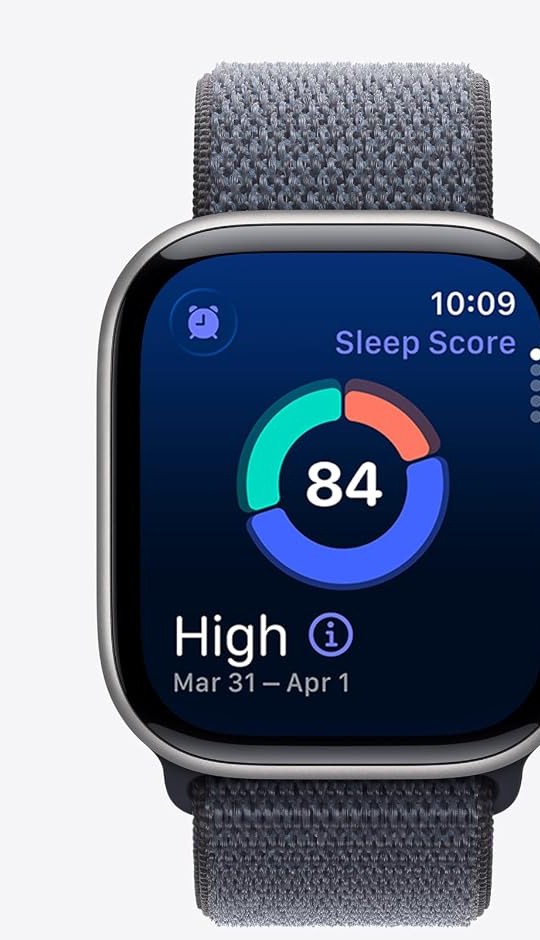
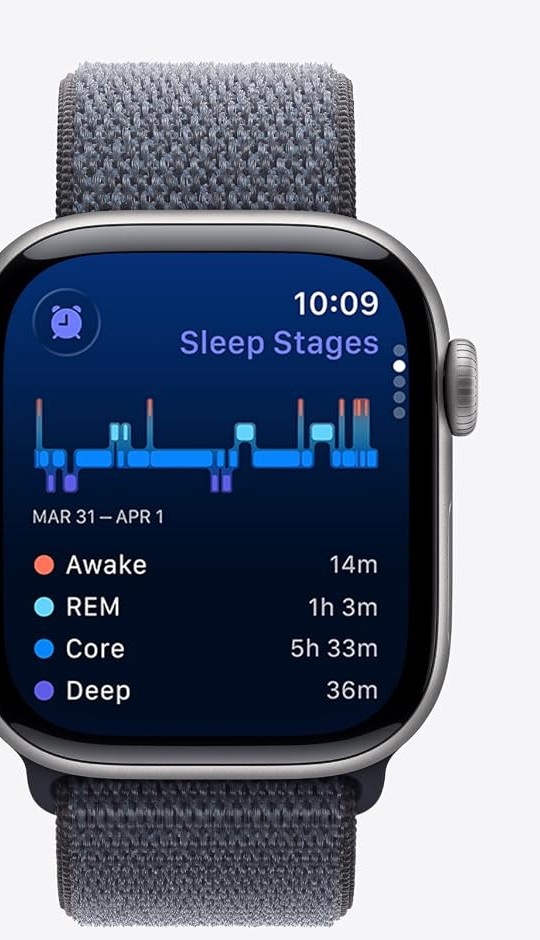
Sleep gets a headline feature this generation. The watch hands you a daily sleep score beside the stage breakdown, and it watches for sleep apnea across the night while flagging possible hypertension.
Those hypertension readings come from how your blood vessels respond to each heartbeat across weeks of data, and they turn a fitness tracker into an early-warning system for a condition most owners never test. The aluminum build pairs Ion-X glass with a ceramic coating that Apple rates at twice the scratch resistance of the older glass.
Double tap and wrist flick gestures answer calls and scroll lists with the watch hand. Crash Detection and Fall Detection ride along for the bad days, and the gestures sound minor until a grocery run proves them.
Charging is the tax on all of it, because Apple rates the watch at 24 hours of normal use and 38 hours in Low Power Mode. The fast charge fights back well. A 15-minute stop on the magnetic puck buys 8 hours of normal use, and 30 minutes takes the battery to 80%.
- S10 chip with 64GB of storage
- Always-On Retina LTPO3 display, 2000 nits peak
- Sleep score and hypertension notifications
- Battery rated at 24 hours, fast charge
Garmin Venu 4: Twelve Days Between Charges
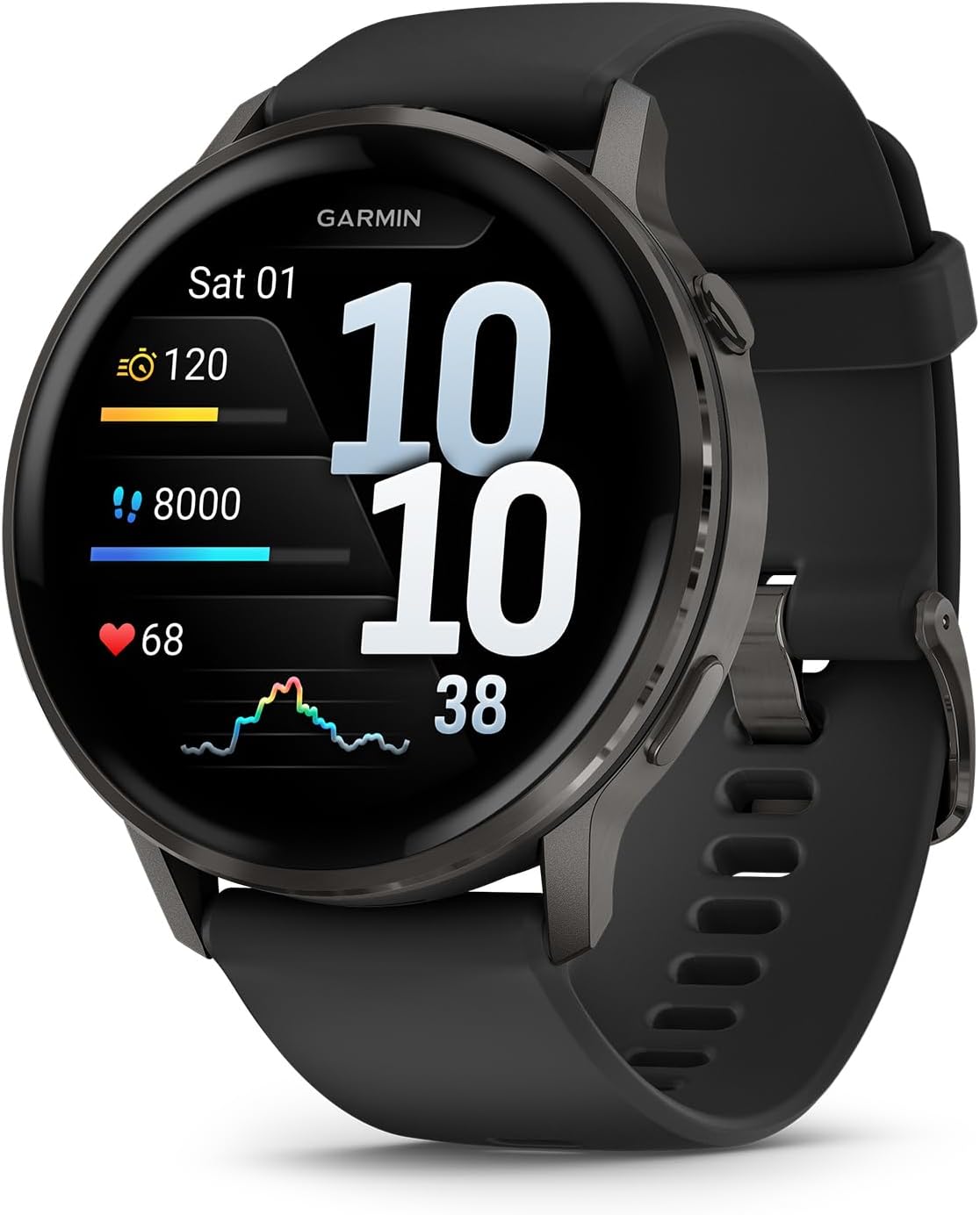
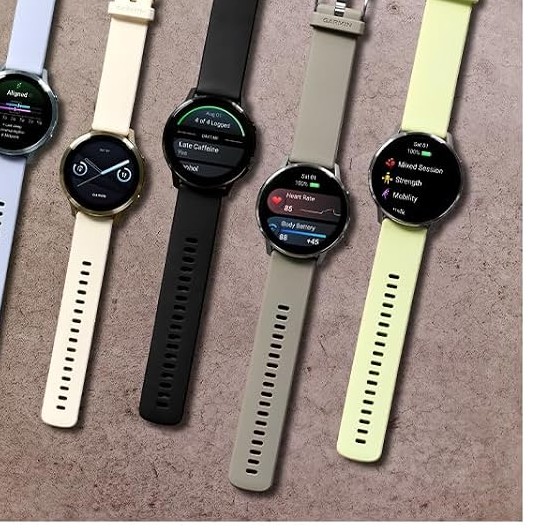
Garmin answers with stamina. The 45 mm Venu 4 carries a battery rated at 12 days in smartwatch mode, and battery saver mode stretches that figure to 25 days. The smaller 41 mm case rates 10 days on the same system.
The 1.4-inch AMOLED screen resolves 454 x 454 pixels behind a stainless steel bezel. Leave the display always on and the battery rating still holds at 4 days, while a built-in LED flashlight rides on the case for dark paths. The case fits wrists from 135 to 200 mm around.
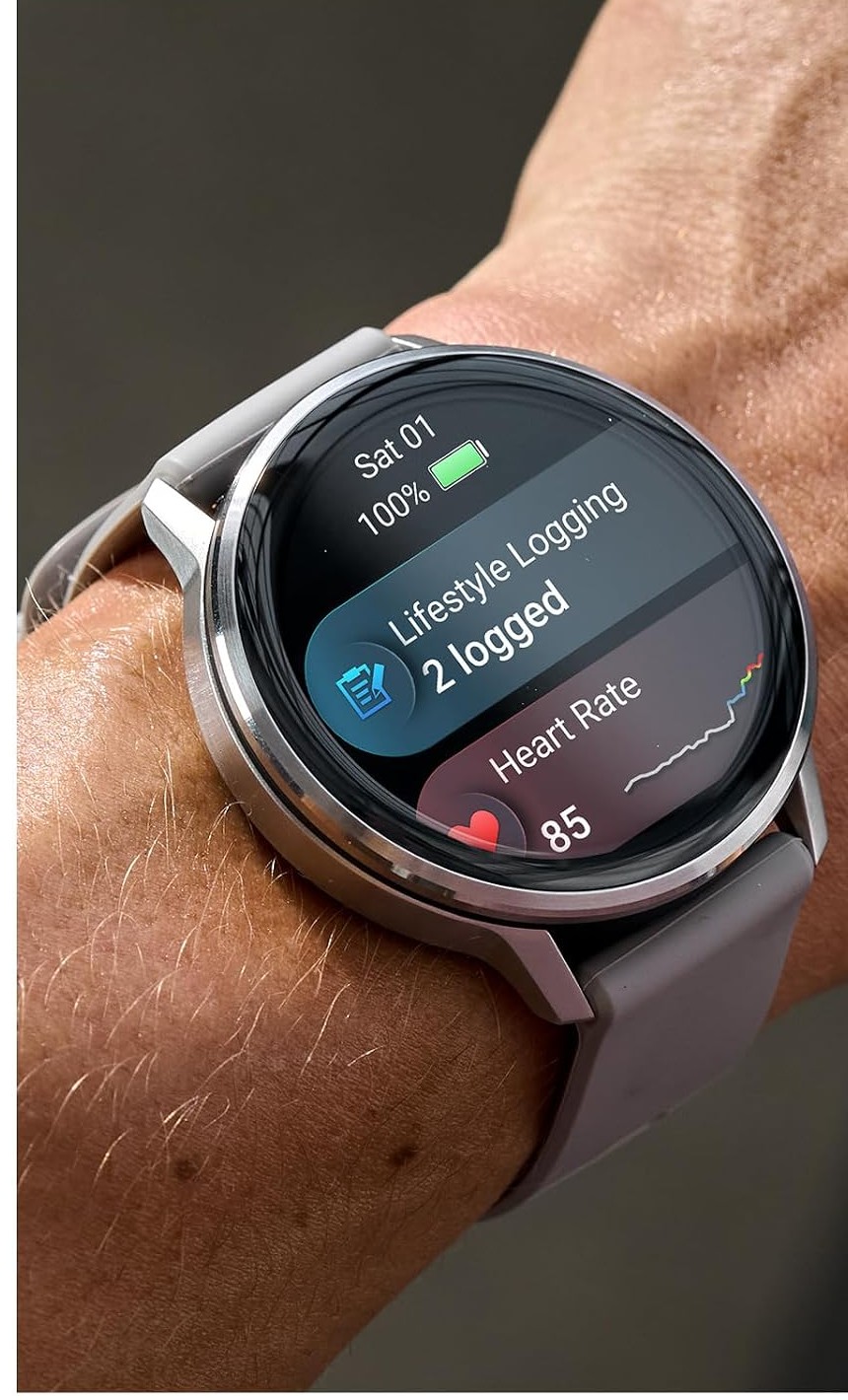
Health tracking leans on Garmin’s long-running toolkit, with Body Battery energy scoring, HRV status, sleep score with coaching and Pulse Ox spot checks all feeding the same morning picture in Garmin Connect. The Health Snapshot logs a two-minute session and builds a report you can hand to a doctor. A health status feature watches your heart rate, HRV and skin temperature for drift, and lifestyle logging ties caffeine and alcohol entries to your sleep and stress graphs.
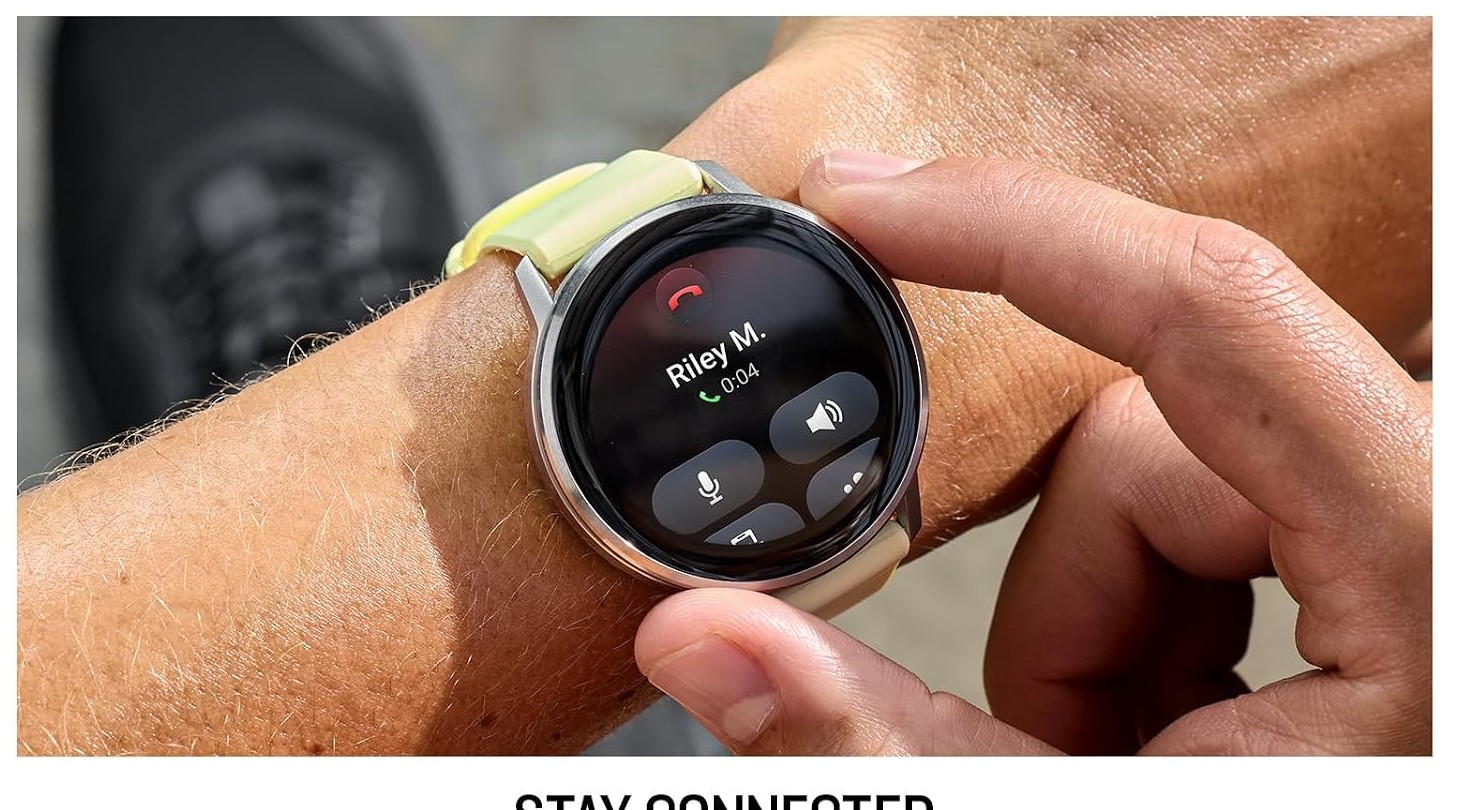
Training tools run wider than Apple’s set, since multi-band GPS sharpens route accuracy on city streets and the GPS-only mode holds a charge for 20 hours of tracked activity across a race weekend. Music storage lives on the 8 GB of memory. Garmin Pay and a speaker with a microphone for wrist calls round out the daily kit, and Android owners get the full watch here.
- 1.4-inch AMOLED display at 454 x 454
- Battery rated at 12 days in smartwatch mode
- Multi-band GPS and a built-in LED flashlight
- Body Battery, HRV status and Health Snapshot

Battery, Water and the Daily Carry
Battery life is the widest gap on this page, and it’s not close. Garmin counts in weeks.
Water resistance ties at 50 meters on both watches, so pool laps and open-water swims sit inside the spec for either pick. Apple adds IP6X dust resistance. Garmin answers with a 5 ATM rating and a metal bezel.
Software splits the pair again, since watchOS brings the deeper app bench and the tighter iPhone link, with Workout Buddy reading your nearby phone for workout feedback during a run. Garmin Connect keeps training load, recovery and route tools in one free app. Neither watch asks for a subscription, and that restraint deserves credit on both sides of the table.
The Verdict: Pick Your Trade

| Product | Display and Case | Battery and Rating | Price |
|---|---|---|---|
| Apple Watch Series 11 GPS 42mm | Always-On Retina LTPO3 OLED, 2000 nits, 42 mm at 9.7 mm thin | Rated 24 hours, 50 m water resistance, IP6X | $308.21 |
| Garmin Venu 4 45mm | 1.4-inch AMOLED at 454 x 454, stainless steel bezel, 45 mm | Rated 12 days, 5 ATM water resistance | $449.00 |
| Health call | Sleep score, hypertension and sleep apnea notifications | Body Battery, HRV status and Health Snapshot | Apple |
| Battery call | Fast charge to 80% in about 30 minutes | 12 days rated, 25 days in battery saver mode | Garmin |
| Phone call | iPhone 11 or later with iOS 26 | iPhone and Android through Garmin Connect | Garmin |
| Value call | Deep health stack at $308.21 | An 18% cut on a twelve-day watch | Split |
Buy the Series 11 if your wrist time revolves around an iPhone and you want the deepest health sensing either brand sells. The hypertension and sleep apnea notifications carry real weight, and at $308.21 you’re paying less for the stronger sensor stack.
Buy the Venu 4 if charging a watch every night sounds like a chore you’d drop by February. The 18% cut persuades, the twelve-day battery lands, and the metal case works with either phone family your household runs.
One wrist can hold either watch happily, since the pair divides along a clean line of ecosystem and endurance. The Apple side wins the health argument. The Garmin side wins the calendar by eleven days.
- 1.4-inch AMOLED display at 454 x 454
- Battery rated at 12 days in smartwatch mode
- Multi-band GPS and a built-in LED flashlight
- Body Battery, HRV status and Health Snapshot


